Sports and 🌎 News: December 2025

Wednesday, 31 December 2025

Afghan border closure brings down terrorist violence in Pakistan

ISLAMABAD: Pakistan has recorded a significant drop in cross-border terrorist attacks and violence-linked fatalities after it closed down the border to Afghanistan on October 11.

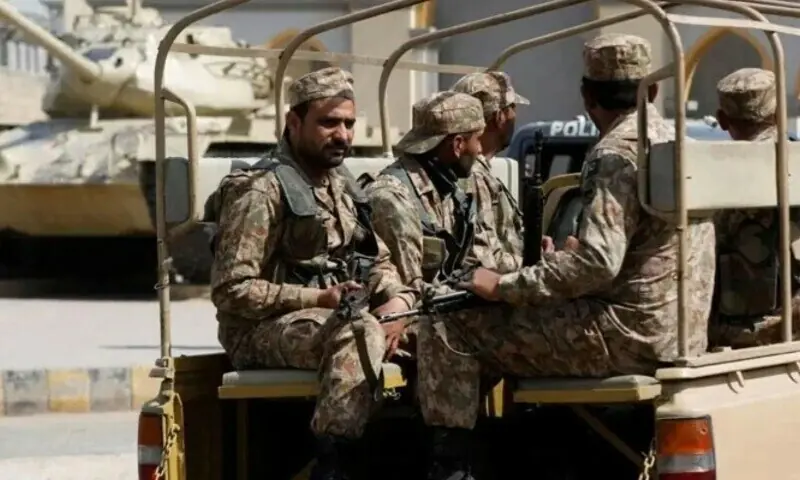
Terrorist attacks went down by almost 17 per cent in December, preceded by 9pc decline in November. Terrorist violence-linked fatalities among civilians and security officials also fell in the last quarter of 2025, by nearly 4pc and 19pc each in November and December, shows data collected by the Centre for Research and Security Studies (CRSS) as part of its annual security report 2025.

With an almost 34pc surge in overall violence, the year 2025 went by as the most violent year for Pakistan in a decade, says the report. The country has suffered a sustained escalation in violence for five consecutive years since 2021, coinciding with the Taliban’s return to power in Afghanistan; with almost 38pc in 2021, over 15pc in 2022, 56pc in 2023, nearly 67pc in 2024, and 34pc in 2025.

The comparative data for 2024 and 2025 reveals a sharp escalation in terrorism and counter-terrorism linked violence nationwide, with fatalities rising from 2555 in 2024 to 3417 in 2025, marking an increase of 862 deaths, or a roughly 34pc year-on-year surge in violence.

CRSS report says most significant surge in violence recorded in KP

The most significant surge in violence was recorded in Khyber Pakhtunkhwa, where the fatalities rose from 1620 in 2024 to 2331 in 2025, an absolute increase of 711 deaths, accounting for over 82pc of the net national rise and marking almost a 44pc year-on-year surge in violence in the province.

Balochistan also had an upward trend, with fatalities increasing from 787 to 956; an additional 169 deaths, which are nearly 22pc higher than the previous year’s figures.

Regional impact of violence

Violence remained heavily concentrated in the country’s northwestern KP and southwestern Balochistan provinces, with both accounting for over 96pc of all fatalities and almost 93pc of violent incidents recorded during the entire 2025.

KP was the worst-hit region, suffering over 68pc (2331) of the total violence-linked fatalities, and around 63pc (795) of the incidents of violence, followed by Balochistan, accounting for 28pc (956) of the fatalities and over 30pc (386) of the incidents of violence.

In contrast, Punjab and Sindh experienced comparatively lower levels of violence. The former recorded 25 incidents of violence resulting in 40 fatalities and 24 injuries, representing just 1.15pc of total casualties, while the latter saw 51 incidents causing 56 fatalities and 40 injuries; 1.73pc of the total.

In Azad Jammu and Kashmir and the Islamabad Capital Territory though incidents numbers remained minimal, the injury figures were relatively high, with the former recording 103 injuries, and the latter registering 38, from just five incidents at each location.

Gilgit-Baltistan remained the least affected region. Compared to last year, though small in absolute numbers, the region recorded a four-fold increase from one to four fatalities.

Published in Dawn, January 1st, 2026


from Dawn - Home https://ift.tt/VNRKMl2

Basant to be celebrated only in Lahore; no plans for festival in rest of Punjab: home department

LAHORE: In a major policy shift, the Punjab government on Wednesday announced that it has no plans to celebrate the Basant festival across the province and that it will instead be celebrated only in Lahore.

Basant is returning to Lahore after 18 years, following the passage of the Punjab Regulation of Kite Flying Bill, 2025 by the provincial assembly on December 24.

So far, only the Lahore deputy commissioner has notified the three-day festival starting on February 6, 2026, while deputy commissioners in other districts were expected to follow suit.

However, the 46th Cabinet Committee on Law and Order — chaired by Khawaja Salman Rafique — met at the Punjab Home Department today and noted that Basant would be celebrated only in Lahore and on a limited scale.

Though there was no need for all divisional commissioners and deputy commissioners to be present at the meeting, sources in the Home Department told Dawn that they were specially invited to attend via video link, particularly for the “Basant agenda”.

Punjab Home Secretary Dr Ahmad Javed Qazi told the cabinet committee meeting, “The provincial cabinet had allowed limited Basant on February 6, 7 and 8 in Lahore only,” adding that kite-flying would remain completely banned elsewhere in the province under the Punjab Regulation of Kite Flying Bill, 2025.

A divisional commissioner, on the condition of anonymity, told Dawn that an official informed the meeting that Basant would not be allowed across the district.

The Home Department had held several meetings on the revival of Basant and discussed permitting the festival at specific locations or at specially notified rooftops, both in the Walled City and elsewhere in the district.

The department had also instructed all divisional commissioners and deputy commissioners to begin registering twine and kite manufacturers ahead of Basant.

Meanwhile, the divisional commissioner said the government was piloting Basant in Lahore, calling it an opportunity for citizens to demonstrate responsibility and adherence to instructions, a move that could lead to the festival’s revival on a larger scale.

“People should watch their neighbourhoods and ensure that no illegality is committed and that no one is injured … in the best interest of the Basant festival,” he said.

Expressing apprehension, the commissioner noted that any serious accident during the festival could lead to Basant being banned for good.

Punjab Chief Minister Maryam Nawaz directed buses and rickshaws on city roads to offer free rides and minimise the use of motorcycles in Lahore. The government may employ buses from city colleges and universities during the three-day festival.

Eventually, the Home Department wrote to all commissioners, deputy commissioners, and senior police officers in the province regarding incidents of kite flying and injuries caused by stray kite twines on Wednesday, seeking action against those involved in the activity in violation of the Punjab Regulation of Kite Flying Ordinance, 2025.

The home department has expressed concern in the letter about illegal kite flying observed in certain parts of the province. It stated that incidents were being reported in which passersby had been injured.

In the letter, the department said, “such practices pose a serious threat to human life and public safety,” adding that action could be taken against violators, including the arrest of kite fliers and the manufacturers and suppliers of kite flying material, in accordance with the law.

The meeting also instructed authorities to adopt foolproof security arrangements for New Year’s Eve, besides taking strict action against those involved in aerial firing, hooliganism and one-wheeling.

Additionally, the meeting approved the extension of the deployment of Rangers in Mianwali, Attock, and Dera Ghazi Khan.

Kite flying has been the cause of multiple injuries and fatalities across the province, usually caused by kite strings coated with chemicals or glass, or made from metal.

Last Saturday, a six-year-old girl was injured by a kite string near Adda Maan on Ganda Singh Road, within the jurisdiction of the Saddar Police Station.

The victim was riding on the front of a motorcycle with her brother when a chemical-coated twine slashed her throat. She was immediately rushed to the DHQ Hospital for medical treatment.


from Dawn - Home https://ift.tt/AGLEpUu

PTCL completes acquisition of 100pc issued share capital of Telenor Pakistan and Orion Towers

Pakistan Telecommunication Company Limited (PTCL) on Wednesday completed the acquisition of 100 percent of the issued share capital of Telenor Pakistan and Orion Towers, said a press release.

The Pakistan Tele­communication Authority (PTA) approved the merger of Telenor Pak­i­stan with PTCL earlier in December.

The regulator, however, imposed strict conditions to prevent abuse of market power and to bind the new entity to invest in upcoming spectrum auctions.

“Telenor Pakistan and Orion Towers will operate as 100% owned subsidiaries of PTCL, alongside Pak Telecom Mobile Limited (PTML) commonly known as Ufone 4G, and U Microfinance Bank.”

However, Telenor Pakistan will continue to operate as a separate entity during the transition period, said the statement, adding that PTML and Telenor will then be merged as a single entity in “due course of time”, subject to regulatory approvals.

Acknowledging the contribution of Telenor to Pakistan’s telecom landscape, PTCL said the telco “played a defining role in elevating service quality and expanding connectivity over nearly two decades”.

“This milestone brings together complementary strengths to create a platform with a stronger focus on customer centricity, broader reach, and accelerated innovation,” added the press release.

“This is a proud moment for PTCL and a significant milestone for Pakistan’s telecom sector. Our focus remains on delivering a customer-centric, seamless, and high-quality services for improvement in user experience as we bring combined strengths at scale upon completion of regulatory approvals,“ said the press release, quoting President & Chief Executive Officer PTCL and Ufone Hatem Bamatraf.

“Together, we will build a stronger, future-ready organisation that serves customers better, empowers its people, and advances Pakistan’s digital future,” he added.

In October, the policy board of PTCL accepted the terms and conditions set by the Competition Commission of Pakistan (CCP) for the merger with Telenor Pakistan.


from Dawn - Home https://ift.tt/GmulYDU

Tuesday, 30 December 2025

Pakistan to enter 2026 as fifth-most populous country

ISLAMABAD: The United Nations Population Fund (UNFPA) says that as Pakistan enters 2026 as the world’s fifth most populous country, with a population exceeding 225 million, high population growth and fertility rates, persistent gender inequality, and rising climate vulnerability, the urgency of addressing population dynamics has intensified.

These realities underscore the need to view population not as a burden but as a strategic driver of sustainable and inclusive development, UNFPA Pakistan said in a statement on Tuesday.

Looking ahead to 2026, UNFPA called for a shift in how population is reflected in national planning and financing, particularly in the NFC formula.

Moving beyond population size as the primary det­e­rminant, a forward-loo­k­ing appro­ach should rew­ard provinces for measurable progress in gender equ­ality, climate resilience, bal­anced population outco­mes, and improvements in the quality of health and education services.

Such reform would align fiscal incentives with human development res­ults, encourage innovation and accountability, and help translate population policy into tangible gains for people and communities, the statement said.

UNFPA also urged the implementation of the recommendations of the Council of Common Interests with clear accountability mechanisms, defined timelines, and sustained domestic financing, supported by strong population data and evidence-based planning.

Despite gains, challenges remain, the agency said. High maternal mortality, unmet need for family planning, early marriages, gender-based violence, and unequal access to quality reproductive health services, particularly in remote communities, continue to demand attent­ion. These challenges are also closely lin­ked to stalled fertility decline and uneven development outcomes, UNFPA said.

Published in Dawn, December 31st, 2025


from Dawn - Home https://ift.tt/0ajXfhL

China fires missiles on second day of military drills around Taiwan

China launched missiles and deployed dozens of fighter aircraft and navy vessels around Taiwan on Tuesday for a second day of live-fire drills aimed at simulating a blockade of the self-ruled island’s key ports and assaults on maritime targets.

Taipei, which slammed the two-day war games as “highly provocative and reckless”, claimed the manoeuvre failed to impose a blockade on the island.

China claims Taiwan as part of its sovereign territory and has refused to rule out military action to seize the island.

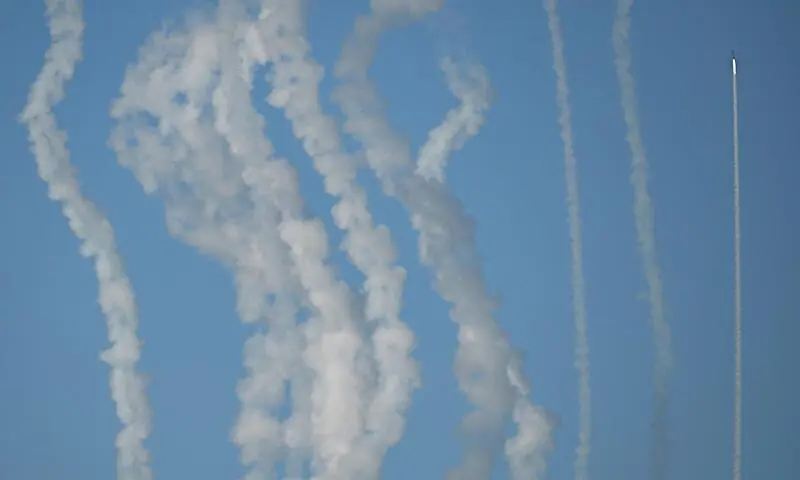
AFP journalists in Pingtan, a Chinese island at the closest point to Taiwan’s main island, saw a volley of rockets blast into the air at around 9:00am (6am PKT) on Tuesday, leaving trails of white smoke.

At least 10 were launched in quick succession, sending a booming sound reverberating across the sky and drawing tourists towards the seafront to snap photos and videos on their phones.

Taiwanese authorities counted 27 rockets fired by Chinese forces on Tuesday.

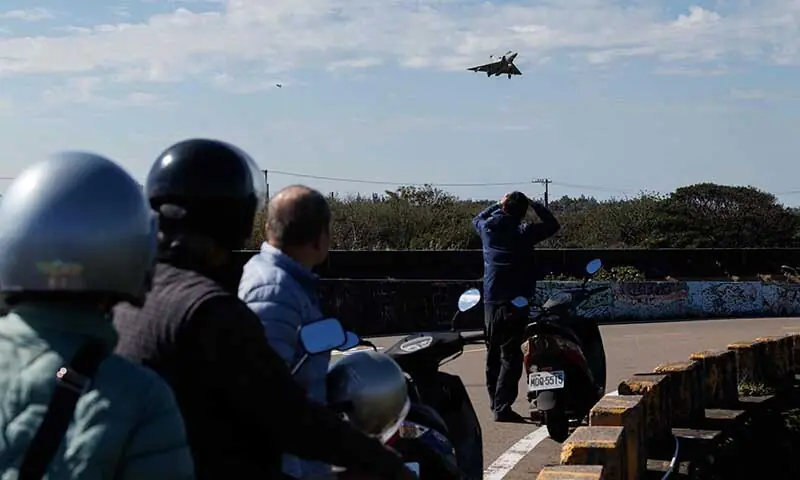
A Taiwanese Air Force Mirage 2000 fighter jet takes off at Hsinchu Air Base in Hsinchu, Taiwan on December 29. — AFP

China’s People’s Liberation Army (PLA) said in a statement that it had “conducted long-range live fire drills in the waters to the north of the Taiwan Island and achieved desired effects”.

The show of force follows a bumper round of arms sales to Taipei by the United States, Taiwan’s main security backer, and comments from Japan’s prime minister that the use of force against Taiwan could warrant a military response from Tokyo.

China’s top diplomat Wang Yi said on Tuesday that Beijing would “forcefully counter” large-scale US weapons sales to Taiwan, adding that any attempt to obstruct China’s unification with the island “will inevitably end in failure”.

This handout photo, taken on December 29 and released on December by the Taiwanese Coast Guard, shows a Taiwanese coast guard ship (L) sending warnings to a Chinese coast guard ship in the waters off Taiwan’s Cape Fugui. — AFP

Chinese foreign ministry spokesman Lin Jian called the drills a “punitive response to Taiwan independence separatist forces and a necessary action to defend national sovereignty”.

Meanwhile, Taiwan’s President Lai Ching-te expressed his “strongest condemnation” and said Beijing was “deliberately undermining regional stability through military intimidation”.

“This is a blatant provocation,” he wrote on Facebook, adding that Taipei would not escalate the situation.

‘Live-fire training’

China said on Tuesday it had deployed destroyers, frigates, fighters and bombers “to conduct drills on subjects of identification and verification, warning and expulsion, simulated strikes, assault on maritime targets, as well as anti-air and anti-submarine operations”.

A statement from the PLA’s Eastern Theatre Command said the exercises in the waters to the north and south of Taiwan “tested capabilities of sea-air coordination and integrated blockade and control”.

State broadcaster CCTV reported that a core theme of the exercises was a “blockade” of key Taiwanese ports, including Keelung in the north and Kaohsiung in the south.

However, senior Taiwanese military official Hsieh Jih-sheng told reporters that the intended blockade “essentially did not happen”.

“The main reason they did this was to make the public believe that they had achieved the goal they were pursuing,” he said.

Chinese People’s Liberation Army soldiers fire a rocket into the air as they conduct military drills on Pingtan island, in eastern China’s Fujian province, the closest point to Taiwan, on December 30. — AFP

Chinese authorities published a map of five large zones around Taiwan where the war games would take place. They were due to finish at 6:00pm (3pm PKT) on Tuesday, although there was no confirmation that they had ended.

Taiwan said the zones, some of which are within 12 nautical miles of its coast, had affected international shipping and aviation routes.
Hundreds of flights were either cancelled or delayed, according to the island’s Civil Aviation Administration.

Taiwan’s defence ministry said on Tuesday it had detected at least 130 Chinese military aircraft near the island, as well as more than 50 vessels, including 27 navy ships, over the course of the drill.

The Taiwanese coastguard said it deployed 14 ships to monitor the naval activity, “employing a one-on-one shadowing approach to forcefully deter the vessels”.

Stoic reaction

Taiwan’s Military News Agency said forces conducted several drills in response to the Chinese exercise, including one in the Taipei area focusing on the deployment of river obstacles and rapid troop response.
Many ordinary Taiwanese reacted stoically.

“There have been so many drills like this over the years that we are used to it,” said fishmonger Chiang Sheng-ming, 24, at a market in Taipei.

“If you stand your ground, there’s nothing to be afraid of,” added fruitseller Tseng Chang-chih, 80.

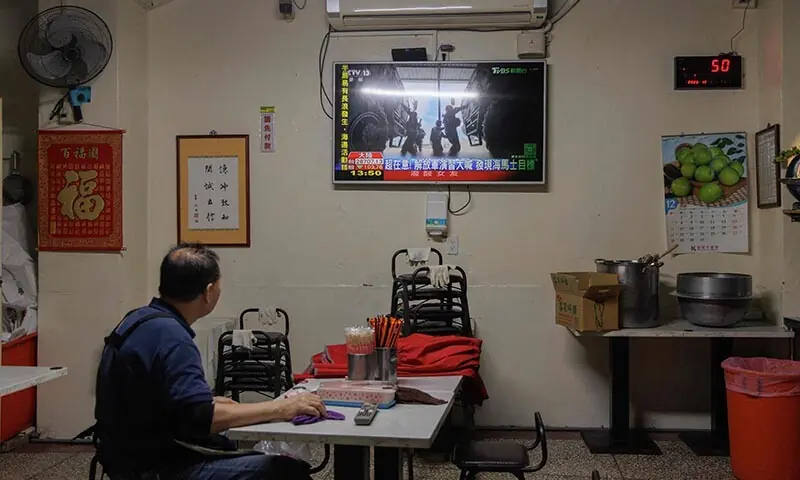
A man watches TV news coverage of the Chinese People’s Liberation Army (PLA) military drills around Taiwan in Keelung, Taiwan on December 30. — AFP

“War? Impossible. It’s just posturing. If they really attacked Taiwan, they would have to pay a price.” China’s military last held large-scale drills involving live firing around Taiwan in April.

Beijing said this month it would take “resolute and forceful measures” to safeguard its territory after Taiwan said the United States had approved an $11 billion arms sale.

US President Donald Trump said he was not concerned about the drills, appearing to brush aside the possibility of counterpart Xi Jinping ordering an invasion of Taiwan.

“I don’t believe he’s going to be doing it,” Trump said.

On Tuesday, the European Union slammed China over the drills, saying the exercise “endangers international peace and stability”, and urging restraint from actions that could escalate tensions.


from Dawn - Home https://ift.tt/jvX53mP

Monday, 29 December 2025

Establishing crypto beyond the hype

As dollar shortages in the open market persist, users seek dollars digitally, while the Pakistan Virtual Assets Regulatory Authority (PVARA) continues to deliberate on drafting detailed regulations. Inevitably, people are not waiting for regulations; they are already moving towards crypto rails facilitated by illegal operators entering the market.

There is, however, one group that awaits regulation: those wishing to operate legally. And this wait is causing them to patiently recalibrate, raising questions regarding the future of financial inclusion in Pakistan. An insider source at one such startup, Zar, highlighted that their focus has shifted towards their African markets as they await regulations in Pakistan before deciding “to invest much more money and energy into Pakistan.”

Aatiqa Lateef, a crypto expert, shared that this caution is entirely rational and that serious firms will scale where there is regulatory predictability, banking integration, and a clear supervisory roadmap. Highlighting the cautious optimism with the creation of PVARA, she added that “uncertainty tends to reward grey-market behaviour instead”, while noting that operational clarity is still evolving.

According to Ms Lateef, “The main gaps are around what NOCs [no objection certificates] actually permit today, banking access, and how stablecoins will be treated relative to other virtual assets.”

Zar’s recalibration comes despite validated market interest in one of the largest crypto markets — if the PVARA chairman’s references to 40 million crypto users are correct — as previous reports indicated a $600m loss from crypto transactions in the first 10 months of 2025.

This number has now risen, according to Malik Bostan, Chairman of the Exchange Companies’ Association of Pakistan (ECAP), who highlighted that customers bought roughly $1.2 billion from exchanges to deposit in their foreign currency accounts over these 11 months. However, only $400m was deposited in the banks, as he alluded that $800m may have gone towards crypto rails, particularly stablecoins.

With its adoption accelerating outside the regulatory perimeter, the wait for regulation risks incentivising illegal operators

Ms Lateef sees this as an important signal: “FX liquidity appears to be leaking from formal channels into informal digital dollar rails. For an import-dependent economy, that kind of displacement increases pressure on the formal FX market.”

This comes after increased clarity on the licensing process, as Binance and HTX have recently been granted an NOC, a precursor to a complete “activity-specific” license, according to a LinkedIn post by lawyer Mariam Saleem. According to her post, after obtaining a preliminary NOC, Virtual Assets Service Providers (VASPs) can incorporate their company with the Securities and Exchange Commission of Pakistan, followed by the submission of a complete license application to PVARA.

Ms Saleem said, “Many VASPs are moving, but with restraint, because operators are still calibrating prescribed fees, timelines, documentation depth, and ongoing supervisory expectations.” She added that there is interest and direction, but “there is still uncertainty around execution detail and sequencing”.

These developments in 2025 have also been accompanied by interest from the banking sector, as Pakistan Banks Association Secretary Mir Nejib Rahman said, there is interest across the industry regarding stablecoins and the use of crypto rails for remittances, and a number of exploratory conversations are taking place.

“However”, he said, “everything remains at an internal assessment and technical-evaluation stage”. Mr Rahman had previously told Dawn, “Banks will not move towards any form of activity until the SBP [State Bank of Pakistan] issues the relevant regulations and supervisory framework.” This can only happen once PVARA publishes its detailed guidelines.

While a source inside Zar said these regulations are supposed to come out in the next few weeks, this raises an important question about the transparency of this process, which, some argue, should be free of conflict given the recent promotion of a practitioner-led regulation model by the PVARA chairman.

Mr Rahman, on the other hand, offered that while the self-regulation model sounds appealing, in crypto, it creates a clear conflict of interest. “Many large crypto firms openly aim to bypass banks, so they can’t be the ones shaping rules in a system where banking stability, FX control, and anti-money laundering oversights are critical.

“Industry input is useful, but the actual guardrails must come from SBP and PVARA. Otherwise, the regulatory framework could end up favouring speed and scale over financial stability, which Pakistan cannot afford,” he ended.

Ms Lateef says that she is “supportive of practitioner input, but not practitioner-led regulation.” She further adds that Industry expertise is essential for designing workable rules, but the final standard has to come from the regulator.

Speaking on the ambitions of web3 companies in removing the middleman — in this case, disintermediating banks — Ms Lateef says that this narrative is ideological, not operational.

In mature markets, she explains, crypto firms inevitably integrate with banks because fiat on/off ramps require regulated institutions, compliance, settlement, custody, and reporting rely on banking infrastructure. Institutional liquidity comes from the banking sector, and consumer protections require a supervised environment.

While coexistence is the default in advanced jurisdictions, according to Ms Lateef, “What’s different in Pakistan is the structure of the financial system. Banks remain the primary gatekeepers for FX, payments, and settlement; remittances are a macro-critical lifeline, so regulators are rightfully cautious; and a volatile rupee and FX constraints make unregulated dollarised flows a systemic concern.”

According to experts, the next phase, which should be centred on co-design rather than self-regulation, must clearly address consumer protection, segregation of client assets, custody standards, disclosures, market integrity rules, grievance redress, and operational resilience. Credible oversight depends on making these requirements explicit and enforceable.

Published in Dawn, The Business and Finance Weekly, December 29th, 2025


from Dawn - Home https://ift.tt/mVIWSUc

Netanyahu meets Trump in Florida for talks on Gaza, Iran

Israeli Prime Minister Benjamin Netanyahu arrived at US President Donald Trump’s Mar-a-Lago residence on Monday to hold crucial talks on Gaza and Iran.

The US president will push the Israeli leader to move to the next stage of his fragile Gaza truce plan.

Netanyahu is also expected to try to shift some focus onto Iran, amid reports he will call for more US strikes on the Islamic republic’s nuclear program.

The meeting, the fifth between the two leaders to be held in the United States this year, comes as some White House officials fear both Israel and Hamas are slow-walking the second phase of their ceasefire.

Trump, who said Netanyahu had asked for the talks, is reportedly keen to announce as soon as January a Palestinian technocratic government for Gaza, and the deployment of an international stabilisation force.

Netanyahu’s office said he met US Secretary of State Marco Rubio and Defense Secretary Pete Hegseth in Florida ahead of his talks with Trump, which are scheduled for 1pm (1800 GMT).

Israeli government spokeswoman Shosh Bedrosian said Netanyahu would discuss ensuring that “Hamas is disarmed, Gaza is demilitarized” in the second phase of the agreement.

He will also bring up the “danger Iran poses not only to the region of the Middle East, but the United States as well,” Bedrosian said.

Hamas’s armed wing, however, reiterated on Monday that it would not surrender its weapons - one of the key sticking points in the talks.

“Our people are defending themselves and will not give up their weapons as long as the occupation remains,” the Ezzedine al-Qassam Brigades said in a video message.

It also confirmed the death of their longtime spokesperson, Abu Obeida, months after Israel announced he had been killed in an air strike in Gaza on August 30.

‘Phase two has to begin’

Netanyahu’s visit caps a frantic few days of international diplomacy in Palm Beach, where Trump hosted Ukrainian counterpart Volodymyr Zelensky on Sunday for talks on ending Russia’s invasion.

The Gaza ceasefire in October is one of the major achievements of Trump’s first year back in power, but his administration and regional mediators want to keep up the momentum.

The first phase of the truce deal stipulated that Hamas release the remaining hostages, both dead and alive, taken during its October 7, 2023 attack on Israel. The group has so far returned all the living captives and the remains of all but one.

Under the second stage, Israel is supposed to withdraw from its positions in Gaza, while Hamas is supposed to lay down its weapons.

An interim authority is meanwhile meant to govern the Palestinian territory, and the international stabilization force (ISF) is to be deployed.

Both sides, however, have alleged frequent ceasefire violations.

‘Frustrated with Netanyahu’

The Axios news outlet reported on Friday that Trump wanted to convene the first meeting of a new Gaza “Board of Peace” that he will chair at the Davos forum in Switzerland in January.

But it said that senior White House officials were growing exasperated with what they viewed as efforts by Netanyahu to stall the peace process.

“There are more and more signs that the American administration is getting frustrated with Netanyahu,” said Yossi Mekelberg, a Middle East expert at London-based think tank Chatham House.

The Israeli and US administrations are increasingly at odds on many key issues, including Israel’s continued strikes on Hamas in Gaza, Hezbollah in Lebanon, and in Syria.

On Iran, Israeli officials and media have expressed concern in recent months that Iran is rebuilding its ballistic missile arsenal after it came under attack during the 12-day war with Israel in June.

But Sina Toossi, a researcher at the Center for International Policy (CIP) in Washington, said Trump’s insistence that US strikes in June destroyed Tehran’s nuclear program had “removed Israel’s most powerful historical justification for US support for war with Iran.”

Netanyahu’s new focus on Iran’s missiles is “an effort to manufacture a replacement casus belli,” Toossi told AFP.

Iran on Monday denounced the reports as a “psychological operation” against Tehran, emphasizing it was fully prepared to defend itself, and warning renewed aggression would “result in harsher consequences” for Israel.


from Dawn - Home https://ift.tt/yaBJe4L

Bangladesh’s Gen-Z party faces revolt over religious alliance, risking its future

A Bangladeshi youth-driven party born out of the country’s 2024 uprising is facing an open revolt from within after sealing an election alliance with a religio-political group, a move analysts say could jeopardise its future and reinforce established parties.

At least 30 senior leaders of the National Citizen Party (NCP) have openly opposed its alliance with Jamaat-e-Islami, announced on Sunday, with several resigning in protest.

The Muslim-majority South Asian nation goes to the polls on February 12.

Before the deal, opinion polls had predicted Jamaat finishing a close second behind the Bangladesh Nationalist Party (BNP) of former Prime Minister Khaleda Zia, while the NCP lagged far behind in third place.

“The NCP presented itself as a youth-driven alternative to traditional power structures. That identity is now under serious strain,” said H.M. Nazmul Alam, an academic. “Youth-based movements do not collapse only because they lose elections. They collapse when they lose clarity and internal unity.”

‘Alliance for greater unity’

The NCP was formed earlier this year by leaders of the protests that ousted long-time Prime Minister Sheikh Hasina in August 2024, forcing her to flee to India. Driven by Gen-Z activists born after the late 1990s, it says it aims to free the nation from decades of nepotism and the dominance of Hasina’s Awami League and the BNP.

With the Awami League banned, the vote will be effectively a direct contest between the BNP and Jamaat, which has trailed the other two in the past and had not been allowed to contest any elections since 2013 after a court said its registration as a political party conflicted with Bangladesh’s secular constitution.

An interim government led by Nobel laureate Muhammad Yunus revoked all the restrictions on Jamaat in August 2024.

The NCP’s struggle shows the challenges of turning street power into votes and holds lessons for neighbouring Nepal, where similar youth-led protests ousted the government this year and fresh elections are due in March, political analysts have said.

NCP chief Nahid Islam told a press conference late on Sunday that the recent killing of 32-year-old Sharif Osman Hadi, a key figure in the uprising, forced his party to seek an alliance to keep at bay forces trying to derail the election through violence.

“The dictatorship we overthrew is attempting to sabotage the election. Therefore, for the sake of greater unity, we have reached an electoral understanding with Jamaat, said Nahid, 27.

“This was a majority decision within the party, but some may be opposed to it and they are free to take their own decisions.”

Hadi was shot in the head by masked assailants in Dhaka earlier in December while launching his election campaign as an independent candidate. Police say they have identified the killers but have not apprehended them.

‘Your centrist idea and ideology will vanish’

Nahid earlier told Reuters his organisation was weak because it had not had enough time to build itself. It was also hampered by scarce funds and an unclear stance on key issues such as rights for women and minorities, Reuters reported in early December, citing party leaders who said alliance talks had been underway for some time.

One senior NCP leader to have resigned is Tasnim Jara, a doctor who left a career in Britain to join the party. She is now seeking the support of nearly 5,000 voters to be allowed to contest as an independent.

“I promised you and the people of this country that I would fight for you and for building a new political culture,” she said on Facebook.

“Whatever the circumstances, I am determined to keep that promise.”

Political analyst Asif Shahan, a professor at the University of Dhaka, said the NCP was “doomed”.

“If you go with Jamaat, it will help Jamaat, not you,” he said. “It will give them a liberal cover, and in return, you will become a force for the right. Your centrist idea and ideology - already poorly defined - will simply vanish.”


from Dawn - Home https://ift.tt/tEOCFa9

Sunday, 28 December 2025

2026 OUTLOOK: Journey of highs and lows

The year 2025 was exceptional for Pakistan’s geoeconomics and geopolitics. The most dramatic moment was the May 7–10 conflict with India, a confrontation whose political and economic repercussions continue to shape Pakistan’s trajectory. In its aftermath, Pakistan emerged more confident, actively pursuing defence and strategic economic partnerships to reinforce its long-term security.

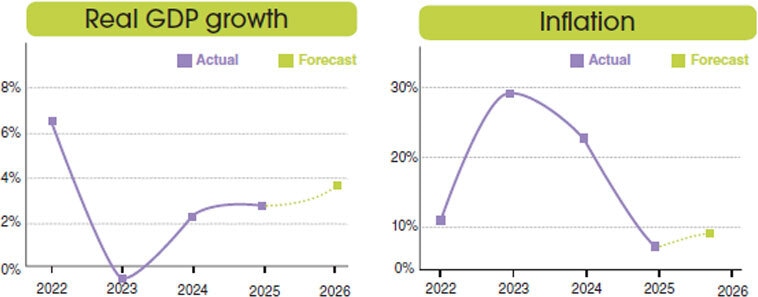
The economy also saw a significant improvement in global perception, reflected in successive upgrades by major international rating agencies, including Fitch, S&P, and Moody’s. These upgrades noted strengthened macroeconomic stability, an improved external position, and steadier foreign exchange reserves. The primary balance, showing that the government’s revenues exceed its non-interest expenditures, rose to a historic high of 2.4 per cent of GDP. Equally notable was the sharp decline in headline inflation, which fell below 5pc, its lowest level in seven years.

The launch of a new, outward-looking trade policy, signalling a decisive break from decades of protectionism, is one of the most consequential reforms. The five-year policy aims to make Pakistan one of the most open economies in the region by eliminating para-tariffs, streamlining exemptions, simplifying the tax structure, capping the maximum rate at 15pc, and reducing tariffs on nearly half of all tariff lines, with almost half going to zero. If fully implemented, it would rank Pakistan among the world’s most ambitious tariff reformers over the past two decades, according to the World Bank, sending a strong signal of commitment to competitiveness, global integration, and export-led growth.

Another highlight of the year was the financial closure of the Reko Diq copper-and-gold project in Balochistan, achieved nearly 15 years after completion of the feasibility study — including the six years lost to litigation. The $7 billion project is backed by a strong consortium of sponsors, including the International Finance Corporation, the Asian Development Bank, and financial institutions from the US, Canada, Japan, and Saudi Arabia.

Though much has yet to be achieved on the social front, the year offered a boost not only to homegrown economics but also to Pakistan’s international stature

Construction activity is expected to gather pace in early 2026 as well, with commercial production projected to begin in 2028, potentially generating around $2.5bn annually in export earnings.

After a hiatus of nearly two decades, Pakistan has revived its long-stalled privatisation agenda, starting with the sale of the debt-ridden Pakistan International Airlines (PIA) to a private consortium.

 Source: IMF
Source: IMF

For years, PIA stood as a symbol of chronic mismanagement, political interference, and persistent fiscal hemorrhaging, with accumulated losses estimated at more than $2.5bn, imposing a heavy and recurrent burden on the national exchequer. The transaction represents a notable policy inflection, signalling the government’s readiness to take politically difficult decisions to curb losses, restore efficiency, and progressively reduce the state’s footprint in commercial activity.

Moreover, Pakistan’s stock market continued a stunning surge in 2025, with the KSE-100 Index beating all previous records to an all-time high of over 170,000 points and earning a place among the world’s top-performing markets. Bloomberg ranked Pakistan “among the best-performing markets globally,” noting that its returns outpaced nearly every major index. Barron’s went a step further, hailing the turnaround as a rare “mini miracle,” fuelled by reforms, macroeconomic stabilisation, and a decisive return of investor confidence.

Yet, the year was not without setbacks. Agricultural growth suffered a sharp downturn, falling from 6.4pc in FY24 to just 1.5pc in FY25. Major crops were severely affected, including cotton declining by over 30pc, maize by 15pc, and wheat by 9pc. This contraction slowed the anticipated reduction in poverty rates and underscored the continued vulnerability of the agricultural sector.

 Source: IMF
Source: IMF

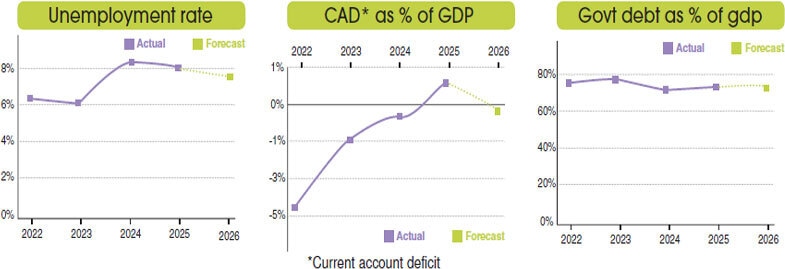
Another low point was Pakistan’s unemployment rate, which rose to 7.1pc in FY25, the highest level in 21 years, underscoring the economy’s failure to generate productive jobs. Compared to 64pc males, only 18pc females are employed as per the Labor Force Survey. Six in 10 Master’s-degree-holder women are not currently employed. The combination of high unemployment and widespread unpaid work highlights the urgency of growth strategies that can create decent, paid jobs, especially for women and youth, and convert hidden labour into productive economic participation.

Perhaps the lowest point for Pakistan is its fall to the very bottom of the World Economic Forum’s Gender Gap Index 2025, ranking 148 out of 148 countries. This stark outcome signals a clear deterioration in women’s economic participation, widening wage inequality, and an alarmingly weak presence of women in decision-making.

Pakistan’s poor performance is the result of structural constraints such as persistent barriers to women’s entry into the economy and governance, weak implementation of gender-inclusive policies, and entrenched sociocultural norms.

The writer is a member of the Steering Committee for the implementation of the National Tariff Policy 2025-30. He has previously served as Pakistan’s ambassador to the WTO and FAO’s representative to the United Nations

Published in Dawn, The Business and Finance Weekly, December 29th, 2025


from Dawn - Home https://ift.tt/SYycGwE

Several terrorists killed in KP, Balochistan operations

• ISPR says four terrorists eliminated in Karak
• Another eight killed in Lakki police action
• Peace committee member injured in attack
• Officials told to be on their guard amid threats from banned groups

LAKKI MARWAT: At least 12 terrorists were killed and several others injured in two separate intelligence-based operations (IBOs) carried out by security forces in Balochistan and Khyber Pakhtunkhwa on Sunday.

The military’s media wing said that security forces conducted an intelligence-based operation in Balo­chistan’s Kalat district, killing four terrorists.

According to Inter-Services Public Relations (ISPR), the operation was carried out the previous day following intelligence repo­rts about the presence of terrorists affiliated with Fitna al Hindustan — the term the state uses for Balochistan-based separatist groups.

During the operation, security forces effectively engaged the terrorists’ location, and after an intense fire exchange, four Indian sponsored terrorists were killed, the ISPR said in the statement.

It added that weapons and ammunition were seized from the dead terrorists, who had been actively involved in terrorist activity in the area.

“Sanitisation operations are being conducted to eliminate any other Indian sponsored terrorist found in the area. [The] relentless counter-terrorism campaign under [the] vision “Azm-i-Istehkam” (as approved by [the] Federal Apex Committee on National Action Plan) by security forces and law enforcement agencies of Pakistan will continue at full pace to wipe out [the] menace of foreign sponsored and supported terrorism from the country,” the ISPR stated.

The operation came a day after the ISPR reported that four terrorists from the Fitna al Khawarij — a term used to describe the Tehreek-i-Taliban Pakistan (TTP) — had been killed in an IBO in Balochistan’s Panjgur district.

Karak operation

Separately, Karak police spokesman Shaukat Khan told Dawn that eight terrorists were killed and several of their accomplices injured during an IBO in Karak district. He said police moved to the area after receiving credible intelligence about the presence of terrorists in the mountainous terrain of Banda Daud Shah tehsil.

“During the operation, led by Karak District Police Officer Saud Khan, the law enforcement personnel eliminated eight terrorists in an intense exchange of fire and destroyed their hideouts in the difficult mountainous terrain,” he said, adding that Counter-Terrorism Department (CTD) commandos, backed by intelligence operatives, assisted police in effectively engaging the terrorists.

The official added that the terrorists attempted to take away the bodies of their slain accomplices, but the police effectively engaged them, resulting in an exchange of fire that lasted several hours.

Peace body member injured

Separately, in Lakki Mar­wat, a member of a peace committee was injured when terrorists attacked his house in the Abbasa Khattak area late Saturday night.

District police spokesman Qudratullah confirmed the attack, saying a group of terrorists fired rockets launchers at the house of Hamayun, a key member of the local peace body.

As a result of the attack, Hamayun sustained injuries, while other residents of the house remained unhurt. Local police, with the help of armed residents and volunteers of the peace body, returned fire and forced the assailants to flee.

The terrorists also fired at the Abbasa police post before fleeing towards the mountainous border area with Karak district. Despite his injuries, Hamayun, along with other peace committee volunteers, is expected to assist police in operations against terrorists in the area.

The attack followed a successful operation in the Takhti Khel area of Lakki Marwat district, where police claimed to have killed six terrorists, including a com­­mander identified as Nusratullah Wazir.

Security advisory

Police also issued a security advisory for police personnel, government officials, and the public in light of intelligence reports suggesting a possible subversive activity in the district.

According to the advisory issued by the District Police Officer Lakki Marwat, the TTP Teepu Gul Group, with support from the Hafiz Gul Bahadar group of North Waziristan, was planning a large-scale terrorist attack in the district. It warned that terrorists might use explosive-laden vehicles to target schools, sports activities, large public gatherings, and bazaars.

“The planned attack may be similar to the terrorist incident that took place in the Shah Hassan Khel area of Lakki Marwat district on Jan 1, 2010”, the advisory said.

It further stated that terrorists had begun preparing an explosive-laden vehicle and that a suicide bomber, an Afghan national, was reportedly undergoing training in Paktia province, Afghanistan.

The advisory warned that terrorists might kidnap or target police personnel and civilians, directing SDPOs and SHOs to place all police units on high alert and ensure strict checking of suspected vehicles, particularly vans, trucks, and pick-ups.

Our staff correspondent in Quetta also contributed to this report

Published in Dawn, December 29th, 2025


from Dawn - Home https://ift.tt/GT9lif0

Sirajuddin Haqqani thanks JUI-F’s Fazl, other Pakistani ulema for ‘extending goodwill’ towards Afghanistan

The interim Afghan Taliban regime’s interior minister, Sirajuddin Haqqani, on Sunday extended his gratitude to all organisations and actors extending goodwill and good intentions to Afghanistan, including the Jamiat Ulema-i-Islam Fazl (JUI-F).

The comments, delivered during an event in Kabul, come after JUI-F chief Maulana Fazlur Rehman, on December 23, criticised Islamabad for striking terrorist targets in Afghanistan and Iran and for deporting Afghan refugees.

“There comes a point when refugees become a problem, but you come together to resolve it; you don’t expel people who have been living in your country for 40 years,” he said, calling on Pakistan and Afghanistan to maintain friendly relations.

A declaration from Dec 23 stated that tension “is not in the interest of either country and will only benefit anti-Islamic forces”, urging Kabul and Islamabad to resolve their issues through dialogue.

Haqqani referred to the conference on Dec 23, noting that Fazl and religious scholar Mufti Taqi Usmani “expressed their goodwill towards Afghanistan, for which we are deeply grateful to all these personalities”.

He added that “positive and goodwill statements” were also delivered by Deputy Prime Minister and Foreign Minister Ishaq Dar regarding Afghanistan.

“If goodwill, good interaction and positive relations are established between countries, and nations are brought closer to each other, then we welcome it,” Haqqani was quoted as saying.

The interior minister clarified that Afghanistan was committed to peace, stability and security in the region and assured all parties that the Afghan people did not intend any harm or ill will against any country or nation.

Haqqani concluded his statement by saying: “We have made a firm decision to build and develop our homeland; now others should also stand by us in this process. No one should have any concerns about us.

“Afghanistan has now entered the reconstruction phase and we want other countries to be our partners on this path, and to abandon wrong attitudes and negative intentions about Afghanistan.”

Meanwhile, Afghan Foreign Minister Amir Khan Muttaqi had expressed similar views while addressing a ceremony yesterday, stating: “Recently, scholars from famous madrasas and universities and religious movements and parties from across Pakistan gathered in Karachi and gave the best advice to their government.

“They made the best decisions. We respect them. We always expect that just as scholars have tried to reform systems and personalities throughout history. They tried for peace and goodness. They played a role in brotherhood and closeness; they should play a similar role in the future as well.”

Pak-Afghan tensions

Pakistan’s bilateral relations with Afghanistan have come under strain in recent times as the banned Tehreek-i-Taliban Pakistan (TTP) remains the main point of contention between the two countries.

Pakistan has demanded that the rulers in Kabul take action to stop cross-border terrorism.

After border clashes on October 11, a temporary ceasefire was called on Oct 15, after the two sides came together to engage in dialogue in Doha.

Following the Doha talks, a temporary ceasefire continued to prevent border hostilities while the two sides committed to reconvene in Istanbul to work on mechanisms for lasting peace and stability between the two countries.

On Oct 25, the second round of talks between the two sides began in the Turkish capital. But, Information Minister Attaullah Tarar announced in a post on X on Oct 29 that the talks “failed to bring about any workable solution”.

However, mediators Turkiye and Qatar intervened and managed to salvage the dialogue process with an Oct 31 joint statement released by Turkiye stating that “further modalities of the implementation will be discussed and decided” during a principal-level meeting in Istanbul on November 6.

But on November 7, after the third round of talks, Defence Minister Khawaja said that talks addressing cross-border terrorism were “over” and “entered an indefinite phase” as negotiators failed to bridge deep differences between the two sides.

Following the failure of the talks, the Afghan Taliban suspended trade ties with Pakistan. Pakistan had already closed its border for trade soon after the clashes.


from Dawn - Home https://ift.tt/JnsRPpo

Man in Suriname stabs nine to death, including five children

Saturday, 27 December 2025

PMD forecasts rain, snowfall from tomorrow

RAWALPINDI: The Pakistan Meteorological Department (PMD) has forecast rain and thunderstorms, with snowfall over the hills, in most parts of the country during the coming week.

It said fog is likely to subside in central and southern Punjab and upper Sindh during the wet spell, while daytime temperatures are expected to drop further, particularly after the system passes.

The PMD said a westerly wave is likely to approach western parts of the country from the night of Dec 29 and strengthen from Dec 30. The system is expected to affect most upper and central parts on Dec 31 and persist in upper areas until the morning of Jan 2.

In Punjab and Islamabad, rain, wind and thunderstorms, with snowfall, are likely in Murree and the Galiyat from the evening/night of Dec 30 to the morning of Jan 2, with occasional gaps.

Isolated rain, wind and thunderstorms are expected in Islamabad/Rawalpindi, the Potohar region, Sargodha, Faisalabad, Mandi Bahauddin, Sialkot, Narowal, Lahore, Sheikhupura and Gujrat from Dec 31 to Jan 1.

Further isolated rain, wind and thunderstorms are expected in Mianwali, Bhakkar, Khushab, Noorpur Thal, Layyah, Dera Ghazi Khan, Multan, Bahawalpur, Rahim Yar Khan, Bahawalnagar, Muzaffargarh, Jhang and Sahiwal on Dec 31.

In Sindh, isolated light rain or drizzle is expected in Karachi, Hyderabad, Dadu, Jacobabad, Kashmore, Larkana, Thatta, Badin and adjoining areas on Dec 30.

In Balochistan, rain, wind and thunderstorms, with snowfall over the hills, are expected in Quetta, Ziarat, Chaman, Pishin, Qila Abdullah, Qila Saifullah, Nushki, Harnai, Zhob, Kalat, Barkhan, Sibi, Loralai, Musakhel, Turbat, Gwadar, Jiwani, Lasbela, Kech, Awaran, Chagai, Panjgur, Khuzdar, Washuk and Kharan from the night of Dec 29 to 31, with occasional gaps.

In Khyber Pakhtunkhwa, rain, wind and thunderstorms, with moderate to heavy snowfall at a few places in upper areas, are expected in Chitral, Dir, Swat, Shangla, Kohistan, Battagram, Mansehra, Abbottabad, Haripur, Buner, Bajaur, Mohmand, Khyber, Orakzai, Kurram, Waziristan, Peshawar, Charsadda, Nowshera, Swabi, Bannu, Karak, Dera Ismail Khan, Tank and Kohat from Dec 30 to Jan 1, with occasional breaks.

In Gilgit-Baltistan and Azad Jammu and Kashmir, rain, wind and thunderstorms, with moderate snowfall, are expected in Diamer, Astore, Ghizer, Skardu, Hunza, Gilgit, Ghanche and Shigar in Gilgit-Baltistan, and Neelum Valley, Muzaffarabad, Poonch, Hattian, Bagh, Haveli, Sudhanoti, Kotli, Bhimber and Mirpur in Kashmir from the evening or night of Dec 30 to the morning of Jan 2, with occasional breaks.

The PMD warned that snowfall may cause road closures and slippery conditions in Naran, Kaghan, Dir, Swat, Kohistan, Mansehra, Abbottabad, Shangla, Astore, Hunza, Skardu, Murree, the Galiyat, Neelum Valley, Bagh, Poonch and Haveli from the night of Dec 30 to the morning of Jan 2.

It also warned of the possibility of landslides and avalanches in hilly areas of upper Khyber Pakhtunkhwa, Gilgit-Baltistan and Kashmir during the period and advised tourists to remain cautious and avoid unnecessary travel.

Published in Dawn, December 28th, 2025


from Dawn - Home https://ift.tt/fqkFzCO

Russian drones, missiles pound Ukraine ahead of Zelenskiy-Trump meeting

Russia attacked Kyiv and other parts of Ukraine with hundreds of missiles and drones on Saturday, ahead of what President Volodymyr Zelenskiy said would be a crucial meeting with US President Donald Trump to work out a plan to end nearly four years of war.

Zelenskiy cast the vast overnight attack, which he said involved about 500 drones and 40 missiles and which knocked out power and heat in parts of the capital, as Russia’s response to the ongoing peace efforts brokered by Washington.

The Ukrainian leader has said Sunday’s talks in Florida would focus on security guarantees and territorial control once fighting ends in Europe’s deadliest conflict since World War Two, started by Russia’s 2022 invasion of its smaller neighbour.

The attack continued throughout the morning, with a nearly 10-hour air raid alert for the capital. Authorities said two people were killed in Kyiv and the surrounding region, while at least 46 people were wounded, including two children.

“Today, Russia demonstrated how it responds to peaceful negotiations between Ukraine and the United States to end Russia’s war against Ukraine,” Zelenskiy told reporters.

In Russia, air defence forces shot down eight drones headed for Moscow, the city’s mayor Sergei Sobyanin said on Saturday.

Explosions echoed across Kyiv from the early hours on Saturday as Ukraine’s air defence units went into action. The air force said Russian drones were targeting the capital and regions in the northeast and south.
State grid operator Ukrenergo said energy facilities across Ukraine were struck, and emergency power cuts had been implemented across the capital.

DTEK, Ukraine’s largest private energy company, said the attack had left more than a million households in and around Kyiv without power, 750,000 of which remained disconnected by the afternoon.

Deputy Prime Minister Oleksiy Kuleba said over 40% of residential buildings in Kyiv were left without heat as temperatures hovered around 0 degrees Celsius on Saturday.

Territorial control: A diplomatic stumbling block

On the way to meeting Trump in Florida, Zelenskiy stopped in Canada’s Halifax to meet Prime Minister Mark Carney, after which they planned to hold a call with European leaders.

In a brief statement with Zelenskiy by his side, Carney noted that peace “requires a willing Russia.”

“The barbarism that we saw overnight the attack on Kyiv shows just how important it is that we stand with Ukraine in this difficult time,” he said, announcing 2.5 billion Canadian dollars ($1.83 billion) in additional economic aid to Ukraine.

Territory and the future of the Russian-occupied Zaporizhzhia nuclear plant remain the main diplomatic stumbling blocks, though Zelenskiy told journalists in Kyiv on Friday that a 20-point draft document - the cornerstone of a US push to clinch a peace deal - is 90% complete.

He said the shape of US security guarantees was crucial, and these would depend on Trump, and “what he is ready to give, when he is ready to give it, and for how long.”

Zelenskiy told Axios earlier this week that the US had offered a 15-year deal on security guarantees, subject to renewal, but Kyiv wanted a longer agreement with legally binding provisions to guard against further Russian aggression.

Trump said the United States was the driving force behind the process.
“He doesn’t have anything until I approve it,” Trump told Politico. “So we’ll see what he’s got.” Trump said he believed Sunday’s meeting would go well. He also said he expected to speak with Putin “soon, as much as I want.”

Fate of Donetsk is key

Moscow is demanding that Ukraine withdraw from a large, densely-urbanised chunk of the eastern region of Donetsk that Russian troops have failed to occupy in nearly four years of war. Kyiv wants the fighting halted at the current lines.

Russia has been grinding slowly forwards throughout 2025 at the cost of significant casualties on the drone-infested battlefield.

On Saturday, both sides issued conflicting claims about two frontline towns: Myrnohrad in the east and Huliaipole in the south. Moscow claimed to have captured both, while Kyiv said it had beaten back Russian assaults there.

Under a US compromise, a free economic zone would be set up if Ukrainian troops pull back from parts of the Donetsk region, though details have yet to be worked out.

Axios quoted Zelenskiy as saying that if he is not able to push the US to back Ukraine’s position on the land issue, he was willing to put the 20-point plan to a referendum - as long as Russia agrees to a 60-day ceasefire allowing Ukraine to prepare for and hold the vote.

On Saturday, Zelenskiy said it was not possible to have such a referendum while Russia was bombarding Ukrainian cities.

He also suggested that he would be ready for “dialogue” with the people of Ukraine if they disagreed with points of the plan.

Russian Deputy Foreign Minister Sergei Ryabkov said Kyiv’s version of the 20-point plan differed from what Russia had been discussing with the US, according to the Interfax-Russia news agency.

But he expressed optimism that matters had reached a “turning point” in the search for a settlement.


from Dawn - Home https://ift.tt/ELDlHne

Friday, 26 December 2025

Former Malaysian PM Najib Razak convicted in 1MDB graft trial

• Court dismisses ‘Saudi donation’ defence as implausible; convicts Najib Razak on 25 counts of abuse of power, money laundering
• Prosecutors say funds were used to buy yachts, real estate, films; judgement strains PM Anwar’s coalition

PUTRAJAYA: Jailed former Malaysian prime minister Najib Razak was convicted on Friday on all charges of abuse of power and money laundering, in the biggest trial yet tied to the multibillion-dollar 1MDB scandal, a ruling with political repercussions for both him and the current government.

Judge Collin Lawrence Sequerah found Najib, 72, guilty on all four counts of abuse of power and 21 charges of money laundering.

The verdict addresses the al­­leged embezzlement of massive sums from 1Malaysia Deve­lopment Berhad (1MDB) while Najib served as prime minister, with the court ruling that the evidence overwhelmingly pointed to his culpability.

“The contention by the accused that the charges against him were a witch hunt and politically motivated were debunked by the cold, hard and incontrovertible evidence against him,” Sequerah said in his verdict.

“It pointed towards the ac­­cused having abused his own powerful position in 1MDB, coupled with the extensive powers conferred upon him.”

Najib could face maximum jail terms of between 15 and 20 years on each charge, alongside fines up to five times the value of the misappropriated funds. He has been imprisoned since August 2022 after Malaysia’s top court upheld a conviction in a separate corruption case involving a 1MDB subsidiary.

Prosecutors successfully argued that Najib illegally received billions traceable to the fund. During the proceedings, the defence maintained Najib was misled by fugitive financier Low Taek Jho, better known as Jho Low, into believing the funds were donations from the Saudi royal family.

Judge Sequerah dismissed this defence as “implausible.” He characterised letters allegedly proving the Arab donations as probable forgeries not corroborated by evidence, calling the narrative a “tale that surpassed even those from the Arabian Nights.”

“The irresistible conclusion is that the Arab donation narrative is not meritorious,” Judge Sequerah said. “The evidence pointed unmistakably to the fact that the monies were, in fact derived from 1MDB funds.”

The judge added that testimony revealed Najib had an “unmistakable bond and connection” with Low, rejecting the claim that the former premier was a victim of rogue subordinates. Instead, the court found Low acted as Najib’s proxy in running the fund’s affairs.

Origin, plunder of 1MDB

The saga began with the cr­­eation of 1Malaysia Devel­op­ment Berhad (1MDB) in 2009, a sovereign fund designed to bolster economic development, co-founded by Najib soon after assuming office.

He chaired its advisory board until 2016. However, US and Malaysian investigators allege the fund became a vehicle for industrial-scale theft.

Between 2009 and 2013, 1MDB raised billions of dollars in bonds ostensibly for inv­estment projects. In what the US Department of Justice des­cribed as its largest-ever kleptocracy investigation, auth­­orities say at least $4.5 billion was diverted to offshore bank accounts and shell companies.

Investigators say the siphoned funds were used to purchase high-end real estate, a private jet, a superyacht, jewellery and to finance the 2013 Hollywood film The Wolf of Wall Street.

At least six countries, including the US, Singapore and Switzerland, launched financial probes implicating high-ranking officials and global financial institutions. In 2020, Goldman Sachs agreed to pay $3.9bn to settle investigations into its role in underwriting bond sales for the fund.

A tangled legal web

This conviction is the latest in a series of legal battles for Najib. In July 2020, he was sentenced to 12 years in prison for criminal breach of trust and money laundering involving roughly $10 million from SRC International, a former 1MDB unit. A pardons board halved that sentence to six years in 2024.

Separately, Najib was acqu­itted in March 2023 of tampering with a 1MDB audit report.

In November 2024, a court granted him a discharge not amounting to an acquittal re­­garding the alleged misappropriation of funds meant for Abu Dhabi’s International Pet­roleum Investment Company, though prosecutors may recharge him later.

The ruling adds strain to Prime Minister Anwar Ibra­h­im’s governing alliance, which relies on the United Malays Na­­­­­­tional Organisation (UMNO), Najib’s party. Tensions have ris­en recently after a court denied Najib’s bid to serve his remaining sentence under house arrest.

Published in Dawn, December 27th, 2025


from Dawn - Home https://ift.tt/aeAOmtZ

Nigeria signals more strikes likely in ‘joint’ US operations

Nigeria on Friday signaled that more strikes against terrorist groups were expected after a Christmas Day bombardment by US forces against militants in the north of the country, which it said was a joint operation with its military.

The west African country faces multiple interlinked security crises, with terrorists waging an insurgency in the northeast since 2009 and armed “bandit” gangs raiding villages and staging kidnappings in the northwest.

The strikes came after Abuja and Washington were locked in a diplomatic dispute over what US President Donald Trump has characterised as the mass killing of Christians amid Nigeria’s myriad armed conflicts.

A Pentagon official told AFP that “the Department of War worked with the government of Nigeria to carry out these strikes” and that they “were approved by the government of Nigeria”, without saying whether Nigeria’s military had been involved.

US defence officials later posted a video of what appeared to be a nighttime missile launch from the deck of a battleship flying the US flag.

Meanwhile, Nigeria’s military said in a statement that its forces, “in conjunction with the United States”, had conducted “precision strike operations”.

Both countries said the strikes targeted militants linked to the Islamic State group, without providing details.

Washington’s framing of the violence in Nigeria as amounting to Christian “persecution” is rejected by the Nigerian government and independent analysts, but has nonetheless resulted in increased security coordination.

“It’s Nigeria that provided the intelligence,” the country’s foreign minister, Yusuf Tuggar, told broadcaster Channels TV, saying he was on the phone with US State Secretary Marco Rubio ahead of the bombardment.

Asked if there would be more strikes, Tuggar said: “It is an ongoing thing, and we are working with the US. We are working with other countries as well.”

Targets unclear

The Department of War’s US Africa Command said “multiple ISIS terrorists” were killed in an attack in the northwestern state of Sokoto.

Residents in the far-flung villages of that state told AFP they were shocked by the blasts. The strikes hit multiple locations, including a town that residents said was not a militant stronghold.

Which of Nigeria’s myriad, and well-documented, armed groups were targeted remains unclear.

Nigeria’s terrorist groups are mostly concentrated in the northeast, but have made inroads into the northwest.

Researchers have recently linked some members of an armed group known as Lakurawa — the main terrorist group located in Sokoto State — to Islamic State Sahel Province (ISSP), which is mostly active in neighbouring Niger and Mali.

Other analysts have disputed those links, and research on Lakurawa is complicated as the term has been used to describe various armed fighters in the northwest.

“We initially thought it was (an) attack by Lakurawa,” said Haruna Kallah, a resident of Jabo town.

That the explosions were in fact the result of a US strike “surprised us because this area has never been a Lakurawa enclave, and we have never had any attacks in the last two years.” Tukur Shehu, a resident of Tangaza, a neighbouring district, said two strikes targeted Warriya and Alkassim villages — known to house Lakurawa camps, from where they launch attacks and keep hostages.

Public opinion divided

Public opinion on the surprise strikes was split.

“America has made its way by force in our country, to kill our people,” said Sulaiman Ibrahim, an imam in Lagos.

Emmanuel Udoh, a member of the clergy at Living Faith Church, told AFP: “We are grateful with what the US has done. We are grateful with what the Nigerian government is trying to do.”

While the Nigerian government has welcomed the strikes, “I think Trump would not have accepted a ‘No,’” said Malik Samuel, an Abuja-based researcher for Good Governance Africa, an NGO.

Security analyst Brant Philip called the timing, on Christmas Day, “a symbolic start to official US operations in Nigeria”, adding: “The operational results of the strikes are not significant, but much is expected soon.” Tuggar said that Nigerian President Bola Tinubu “gave the go-ahead” for the strikes.

The foreign minister added: “It must be made clear that it is a joint operation, and it is not targeting any religion nor simply in the name of one religion or the other.“


from Dawn - Home https://ift.tt/B1PvLZx

Thursday, 25 December 2025

11 terrorists killed in KP, Balochistan operations

• High-value target with Rs4m bounty eliminated
• Nine kids injured after drone hits Tank seminary
• Three security men, 20 civilians injured in North Waziristan clashes

DERA ISMAIL KHAN / LAKKI MARWAT / QUETTA: Security forces and police neutralised 11 terrorists, including a high-value target, in separate intelligence-based operations in Khyber Pakhtunkhwa’s Dera Ismail Khan and Lakki Marwat districts and Balochistan’s Kalat district.

On Wednesday, two “khawarij” were killed in an operation in Dera Ismail Khan’s Kulachi area, the Inter-Services Public Rela­tions (ISPR) said in Thursday’s statement, using the state’s term for members of the Tehreek-i-Taliban Pakistan (TTP).

During the operation, troops effectively engaged the terrorists’ location, killing two of them, incl­uding their “ringleader Dilawar”, it said.

According to ISPR, Dilawar was wanted by law enforcement agencies due to his involvement in terrorist activity and the government had put an Rs4 million bounty on him.

The statement added that weapons and ammunition were recovered from the slain terrorists, who remained actively involved in terrorist activities against the security forces and civilians.

Meanwhile, in Lakki Marwat, a terrorist commander was killed in an exchange of fire with police and the Counter-Terrorism Depar­t­­­ment’s (CTD) Special Weapons and Tactics (SWAT) team in Wanda Amir area on Thursday.

A police official said law enforcement personnel, with the support of volunteers from local peace committees, carried out an operation in the rural locality after receiving intelligence about the presence of TTP terrorists.

According to the official, a group of terrorists opened fire on the law enforcers using light and heavy weapons. Police and CTD personnel returned fire, and the exchange continued for some time.

After the firing stopped, police launched a search operation and recovered the body of a terrorist along with arms and ammunition.

The slain terrorist was identified as Barkatullah, also known as Barkati and Abuzar. His accomplices managed to escape, taking advantage of the difficult terrain, the official said.

Kalat operation

In a separate statement, ISPR said security forces conducted an operation in Kalat on Wednesday on the reported presence of terrorists belonging to “Indian proxy Fitna al Hindustan”, the state’s term for Balochistan-based separatist groups.

It said that during the operation, security forces effectively engaged the terrorists’ location and, after an intense exchange of fire, eight terrorists were killed.

“Weapons, ammunition and explosives were also recovered from the terrorists, who remained actively involved in numerous terrorist activities in the area,” ISPR said.

Nine children injured

Separately, in KP’s Tank district, at least nine children were injured on Wednesday after a drone strike hit a seminary in Shadi Khel village, within the jurisdiction of Tank Saddar police station, local sources said.

Rescue and hospital officials said Rescue 1122 shifted the injured children to the District Headquarters (DHQ) Hospital, Tank, for treatment. Hospital sources confirmed that the injured included six boys and three girls.

Doctors said all the children were out of danger and in stable condition. Local sources said the strike occurred while the children were attending classes at the seminary.

Three security men, 11 civilians hurt

Meanwhile, the security situation turned tense in the Mir Ali subdivision of North Waziristan on Thursday after an hour-long exchange of heavy fire between security forces and militants, leaving three security personnel and at least 20 civilians injured.

Local sources said the clashes erupted around noon in areas adjoining Mir Ali. During the exchange, three security personnel sustained injuries, while mortar shells landed on residential houses in different localities, injuring at least 20 civilians, including women and children.

Security forces cordoned off Mir Ali Bazaar and the surrounding areas, and intermittent aerial firing was reported, triggering panic among residents.

All commercial activities were suspended as people remained confined to their homes amid fear and uncertainty.

A loud explosion was also heard near the Muski area along the Mir Ali-Khaisoor Road, while a security checkpost at Hasokhel Bridge came under heavy weapons fire.

Intense gunfire was reported in the Muski area, where three security personnel were injured and shifted to a nearby hospital for treatment.

Mortar shells also landed on houses in the Hasokhel, Muski and Ippi areas, causing injuries to civilians, including women and children.

Reacting to the incident, Awami National Party North Waziristan president Malik Nisar Ali expressed grave concern, saying a mortar shell had landed on his house and injured three members of his family.

He said targeting civilians, particularly women and children, was “deeply tragic and unacceptable”, and urged the authorities to ensure the protection of the civilian population and take concrete steps to restore lasting peace.

Pazeer Gul in North Waziristan also contributed to this report

Published in Dawn, December 26th, 2025


from Dawn - Home https://ift.tt/QeGanZc

Heavy rain, flash floods hit southern California

Torrential rains unleashed flash floods and warnings of debris flow across southern California, particularly in fire-scarred areas, with further downpours forecast for Thursday as authorities declared a state of emergency in several counties.

Driven by an atmospheric river known as “the Pineapple Express,” which moves heavy moisture from the tropical climes of Hawaii to the United States’ west coast, the storm was expected to deliver months’ worth of rain over a few days.

Early on Thursday, the National Weather Service (NWS) warned about the risk of excessive rainfall over parts of southern California, including in Los Angeles, the second-most populous city in the US.

The NWS warned of a “broad plume of moisture” producing heavy rain in California on Christmas Day, adding there was a “moderate risk” of excessive rainfall over the southern parts of the state.

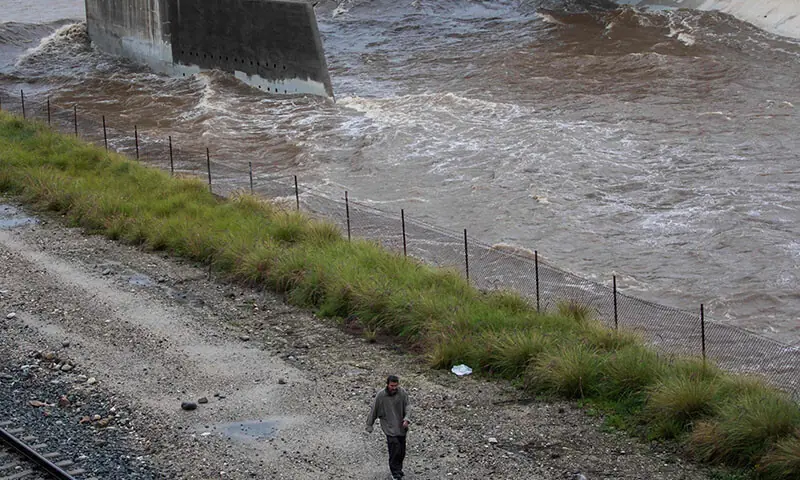
A man walks along the Los Angeles river during heavy rainfall in Los angeles, California, the US on December 24. — AFP

“Numerous flash flooding events are possible. In addition, many streams may flood, potentially affecting larger rivers. The flooding may include debris flows in or near recently burned areas,” the bulletin added, referring to areas affected by wildfires.

The rain was forecast to continue on Friday, the service said.

State authorities declared a state of emergency in several counties, including Los Angeles.

Rescue work

Heavy rain lashed southern California on Wednesday, spawning floods and debris flows. Some communities had already received 25.4 centimetres of rain in the first storm, forecasters said.

The Los Angeles Times reported that at least three people had died in storm-related incidents, including a San Diego man who was killed by a falling tree.

On Wednesday, the Los Angeles County Department of Public Works warned Angelenos to stay well away from waterways such as flood control channels, rivers, and streams — even after the rain stopped.

“Water from upstream communities can move quickly through channels with little warning. What may look shallow or calm can suddenly become fast-moving and dangerous,” the agency warned in a post on X.

In San Bernardino County, adjacent to Los Angeles, authorities told AFP they were working to divert the flow of floodwater on Thursday.

Muddy water streamed through the town of Wrightwood a day earlier, trapping people in their homes, said Christopher Prater, spokesperson for the county fire department.

“Fire department personnel were out there rescuing people, assisting them from their houses, getting them to safety, also while effecting rescues from people that were stranded in their vehicles,” he said, with work going on into the night.

Fire-affected communities

Fire-burn scar zones, which are less able to absorb water due to vegetation being stripped from them, were under special alert – including the coastal areas of Pacific Palisades and Malibu, both still recovering from devastating wildfires in January.

In northern California, a dangerous storm was tracked developing early Thursday morning in the San Francisco Bay Area, with an emergency alert for flash flooding issued in the area, the San Francisco Chronicle reported.

The National Weather Service was also predicting that a winter storm could bring heavy snowfall to the Sierra Madre Mountains.

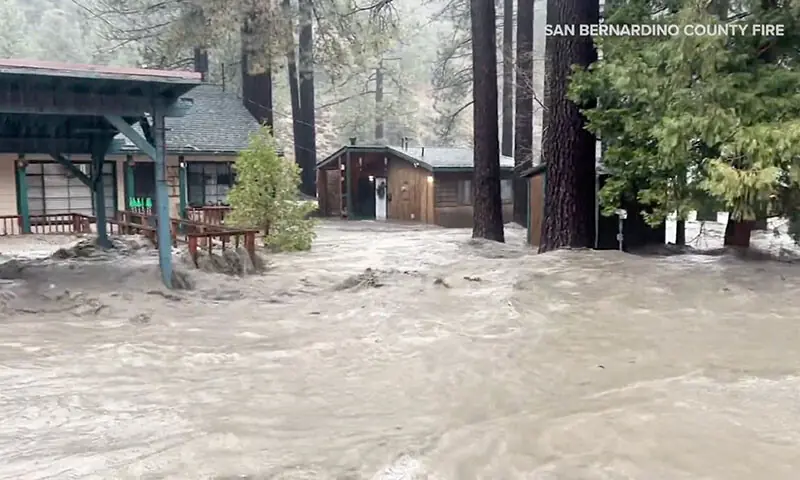
Flood waters flow as houses and trees remain partially submerged after torrential rains in San Bernardino County, California, the US on December 24. — Reuters

Ariel Cohen, an NWS meteorologist, had warned that from Wednesday afternoon through Friday, “many areas will likely experience significant flooding, along with rockslides and mudslides, especially in the higher elevations”.

“If you were planning to travel on the roads during Christmas, please reconsider your plans,” he added.


from Dawn - Home https://ift.tt/PH6w5mA

Wednesday, 24 December 2025

De-escalation urged as US-Venezuela tensions simmer

• Current trajectory serves no one’s interest, Pakistan tells Security Council
• China, Russia slam US ‘bullying’ and ‘cowboy-like’ conduct
• Caracas warns of self-defence against ‘oil grab’
• Islamabad seeks diplomatic approach to resolve Iran nuclear issue

UNITED NATIONS: Pakistan has called on all sides to exercise maximum restraint and de-escalate tensions, as the United States continued to interdict vessels off the coast of Venezuela, a situation that drew sharp condemnation from China and Russia at the UN Security Council.

Pakistan’s deputy permanent representative to the UN Ambassador Usman Jadoon addressed the council during a meeting requested by Venezuela. He emphasised that the “current trajectory serves no one’s interest”.

“In a world marred by polarisation with conflicts affecting the lives and livelihoods of millions around the globe, it is all but imperative to once again underscore the centrality and inviolability of the UN Charter and its core principles,” Mr Jadoon said.

He specifically highlighted the prohibition on the threat or use of force against the territorial integrity or political independence of any state.

“We firmly believe that the principles of sovereignty, territorial integrity, and political independence of states, as enshrined in the UN Charter, are sacrosanct,” Mr Jadoon said.

Reaffirming Pakistan’s position, he noted that while measures to counter transnational organised crime or narcotics trafficking are necessary, they must be cooperative and conform to international law. He urged engaged diplomacy to ensure the region remains a “Zone of Peace”.

The sitting laid bare deep divisions between world powers. US Ambassador Mike Waltz asserted that sanctions would be enforced to the maximum extent to deprive Venezuelan President Nicolas Maduro of resources used to fund drug cartels.

“The United States will do everything in our considerable power to protect our hemisphere, our borders and the American people,” Waltz said, claiming oil sales enable Maduro’s “narco-terrorist activities.”

However, China and Russia slammed the US actions. Chinese envoy Sun Lei opposed “unilateralism and bullying”, demanding Washington heed the international community and uphold navigation safety.

Venezuelan Ambassador Samuel Moncada rejected the US narrative, stating the threat is not drugs or security, but a desire for Venezuela’s oil and land.

“The world knows that, if the scale of armed attacks continues, we will exercise, with all determination, our inalienable right to self-defence,” Moncada said.

UN’s Assistant Secretary-General Mohamed Khaled Khiari noted that Secretary-General Antonio Guterres stands ready to support diplomatic engagement, if requested by both parties.

Council split on Iran

Meanwhile, at another UN debate, Islamabad called for diplomatic engagement to resolve the Iran nuclear issue.

“It is deeply regrettable that in recent months, divisions in the council and beyond have widened, taking us further away from the resolution of the issue,” Ambassador Jadoon told the 15-member council during a discussion on nuclear non-proliferation.

He noted the situation has been complicated by unilateral actions and differing interpretations of the “snapback” mechanism.

The council remains split over the legitimacy of holding meetings regarding the 2015 Joint Comprehensive Plan of Action (JCPOA), an agreement from which the US withdrew in 2018.

Mr Jadoon cautioned that coercive measures would not bridge the gap and often hurt ordinary citizens.

“We strongly believe that diplomacy and dialogue should be the guiding principles for the resolution of all outstanding issues concerning Iran’s nuclear program,” he said.

He emphasised that the JCPOA framework could still prove useful if parties move forward with compromise. Mr Jadoon urged the restoration of trust in diplomatic engagement and stressed the critical role of the International Atomic Energy Agency in verifying compliance.

The session marked the first meeting since France, Germany and the United Kingdom triggered the snapback mechanism to reimpose sanctions, citing Iran’s non-performance.

Jay Dharmadhikari, France’s deputy permanent representative, warned that Iran’s lack of implementation constitutes a “grave threat”. He added that if brought to military enrichment levels, Iran’s stockpile would be sufficient “to produce 10 nuclear explosive devices”.

Published in Dawn, December 25th, 2025


from Dawn - Home https://ift.tt/h8INPJs

Fake visa notices target Pakistani applicants in US; missions warn against unauthorised applications

WASHINGTON: The Pakistani Consulate in Los Angeles issued a stern warning against a message circulating online and on messaging platforms that claims to be an “important notice” regarding Pakistan visas.

Officials have confirmed that the message is false and is part of a pattern of phishing scams designed to collect sensitive personal and financial information from unsuspecting applicants.

Upon accessing the consulate’s website, the following notice was prominently displayed.

 A screenshot of a notice from the Pakistani Consulate in Los Angeles warning about unauthorised visa applications. — Screengrab
A screenshot of a notice from the Pakistani Consulate in Los Angeles warning about unauthorised visa applications. — Screengrab

A statement issued by the Pakistan Embassy in Washington stated: “The Consulate General disassociates itself from all such unauthorised individuals, agents, or entities and shall not be responsible for any loss, delay, misrepresentation, or other adverse consequences arising from engagement with them.”

The fraudulent message falsely purports to come from the consulate and directs visa applicants to submit information through links that are not authorised by the government of Pakistan.

Such scams are designed to harvest passport details, social security numbers, bank account information, and credit card data, which can later be used for identity theft, unauthorised transactions, financial fraud and other criminal activities.

The consulate strongly reiterated that Pakistani visa applications must be submitted only through the official government online portal: https://visa.nadra.gov.pk.

Visa applicants were urged to avoid intermediaries, agents, or unauthorised websites, regardless of claims of faster processing or special access.

They were also advised to be cautious when sharing personal or financial information online, with the consulate adding that requests for social security numbers, bank details, or other identity-related data in relation to visa applications should be treated as red flags.

The public was urged by the consulate to verify all information directly through official channels and to report any suspicious messages or websites to the relevant authorities.

“This advisory is being issued in the public interest to protect applicants from scams that can have devastating financial and personal consequences,” officials said.

Applicants looking for updated guidance and official visa information were instructed to visit the consulate’s website at https://pakconsulatela.org/visa-services.

The warning comes amid a sharp rise in online fraud globally. According to the US Federal Trade Commission, consumers in the United States reported losing more than $12.5 billion to fraud in 2024, a sharp increase over previous years, as scammers increasingly exploit phishing, identity theft, and impersonation tactics online.

Data also show a significant rise in credit card fraud and identity theft, with hundreds of thousands of cases reported in 2025 alone, highlighting how criminals misuse personal and financial information once it is obtained.

Cybersecurity researchers have documented an 18 per cent increase in phishing attacks in Pakistan during 2024, as criminals increasingly target individuals with deceptive links and spoofed communication.

Courts in the United States and other countries have sentenced individuals involved in multi-million-dollar phishing and fraud schemes, where victims — often targeted through impersonation and phishing — were defrauded of large sums.

Officials noted that victims of similar scams have, in some cases, lost their entire life savings, as stolen data is used to gain access to bank accounts, obtain fraudulent loans, or conduct unauthorised transfers.


from Dawn - Home https://ift.tt/xiaCOjf

LA stadium workers threaten strike ahead of FIFA World Cup

Workers at SoFi Stadium in Los Angeles have overwhelmingly voted to authorise a potential strike during the World Cup , just days before foo...