Sports News Onli brings the latest sports news, live match updates, scores, and highlights from cricket, football, hockey, and other international sports.
THE management control of PIA has finally been transferred to a consortium comprising private investors and the Fauji Foundation. The development marks a new chapter in the history of the airline whose fortunes declined over the past two decades.
According to an official statement, the transfer follows the completion of all local and international regulatory approvals, including permissions from global lenders and specialised tax concessions. The privatisation authorities believe the takeover will breathe new life into the airline. The consortium has paid the government Rs10bn upfront and committed to injecting another Rs125bn as fresh equity to fund restructuring, fleet renewal, route expansion and service improvement. PIA has long suffered massive financial losses, political interference and years of managerial drift. The promised capital injection could provide it with the resources it has lacked.
The new PIA chairman’s emphasis on heritage, trust and restoring PIA’s image is standard messaging. Passengers will judge the airline by performance. The real test will be improvements in safety, punctuality, customer satisfaction and financial performance. Privatisation removes the state’s ownership label. It does not automatically remove the structural constraints that have weighed down the airline for years. An ageing and shrunken fleet, inconsistent service standards, stiff competition from Gulf carriers, etc, remain the consortium’s real inheritance and challenges.
The biggest advantage of privatisation is that PIA now has owners with a direct financial stake in making the airline commercially viable. Even so, ownership alone guarantees nothing. The financial structure of the transaction deserves close attention. The consortium has pledged substantial fresh equity, but the airline’s long-term recovery will depend on how effectively that capital is deployed. Fleet expansion without better route planning, stronger cost controls and improved operational discipline will do little to restore profitability. Likewise, service improvements must be backed by stronger corporate governance and greater managerial accountability.
Rebuilding confidence will take time. Years of decline have damaged PIA’s reputation. Public trust cannot be restored through rebranding campaigns. It will require consistent operational improvements delivered over years. Any early setback will attract intense scrutiny because, despite privatisation, PIA remains a national symbol. Nor can the government completely step aside.
Regulators still have a duty to ensure effective safety oversight and fair competition. The next 12 months will be decisive. Progress should be measured through fleet expansion, operational efficiency and customer satisfaction rather than promises. The second financial closing will provide the first meaningful indication of whether the consortium intends to follow through on its pledges or whether the call option is more optional than its name suggests. If this transaction truly signifies the beginning of a ‘new era’ will soon be known.
Erling Haaland scored a late winner as Norway set up a last-16 showdown with Brazil at the World Cup after taming the Ivory Coast 2-1 in Texas on Tuesday.
The Manchester City striker prodded in from close range, the ball dribbling in on 86 minutes for his fifth goal of the tournament.
It was the first time that Norway had won a knockout game in the history of the competition.
After an even first half that was slow to get going, Antonio Nusa fired Norway into the lead six minutes before the break with one of the goals of the tournament.
Manchester United’s Amad Diallo was sent on for the Ivory Coast after an hour and was immediately in the thick of it, stopping a certain second Norway goal and then grabbing a terrific equaliser on 74 minutes.
With extra time looming, predator supreme Haaland got on the end of a cross by Patrick Berg to make some Norwegian history.
They face five-time champions Brazil on Sunday in New Jersey with the quarter-finals at stake.
A match between two physical teams was tepid to begin with at the impressive air-conditioned home of the Dallas Cowboys.
Ivory Coast had a sight of goal after 20 minutes, defender Ghislain Konan bursting into the Norway box from the left but finding the side netting.
The Ivory Coast players and fans were irate just before the drinks break when the livewire Yan Diomande was brought down on the break just inside his own half.
The 19-year-old winger Diomande was growing into the game. The African side were on top and particularly threatening down Diomande’s left-hand side of the pitch.
Haaland had little to feed on but might have done better with a tame header that bounced into the hands of goalkeeper Yahia Fofana.
Then came a moment of genuine class as Nusa, fed by captain Martin Odegaard, cut inside and bent the ball wonderfully into the top corner.
Odegaard put his hands on his head in disbelief at the strike by the 21-year-old, Diomande’s Leipzig team-mate.
Stale Solbakken’s Norway finished the first half on the hunt for a second and Haaland was denied by a last-gasp block by Ibrahim Sangare, who celebrated as if scoring a goal.
The Ivory Coast, into the knockout rounds for the first time, won their 10th corner to start the second half. Norway were inches away from a second when Diallo blocked the ball on the goal line following a corner.
The Norway fans, sensing the next round was close, began their now-famous rowing in the stands. Almost as soon as they stopped, Diallo danced into the box past two challenges for a spectacular leveller.
Then up popped Haaland to break Ivorian hearts, with goalkeeper Nyland pulling off a flying stop from Diallo’s well-struck free kick at the death to send Norway through.
Tens of millions of Americans sweltered under furnace-like temperatures Tuesday as central and eastern cities hunkered down for a heat wave set to last through the July 4 holiday weekend.
Dozens of local temperature records could be broken, the National Weather Service (NWS) warned, with temperatures in many places to surpass 38 degrees Celsius and high humidity pushing the heat index as high as 115 degrees.
It comes as America prepares to celebrate its 250th anniversary of independence, and as the United States along with Canada and Mexico co-host the World Cup soccer tournament amid the extreme heat.
Chicago, the nation’s third-largest city, announced it was opening cooling centers and sending city employees to carry out wellness checks on vulnerable populations.
In New York, Mayor Zohran Mamdani’s office said it was launching an “unprecedented, historic” plan to deal with the heat that includes vans to provide residents with hydration, as well as “pop-up” cooling stations with misting fans and cooling towels.
People cool off at Coney Island beach on June 29, 2026 in the Brooklyn borough of New York City. — AFP
Washington, the capital, meanwhile was forecast to see 38C temperatures from Thursday through Saturday, when it will host a fireworks display on the National Mall that organizers said would be the biggest in history.
More than 60 million people are currently under heat alerts, the NWS said.
Health agencies are urging citizens to watch for signs of heat-related illness, ranging from cramps and exhaustion to life-threatening heat stroke.
Child hot-car deaths are another concern, with nine such deaths reported so far this year in the United States, against an average of 37 annually, according to the National Safety Council.
Pets are also at risk, with authorities recommending dogs remain indoors except for bathroom breaks, and warning owners to watch for hot asphalt that can burn paws.
In World Cup news, numerous knockout-stage matches will be played under oppressive heat, including France v Sweden at New York New Jersey Stadium and Norway v Cote d’Ivoire in Dallas on Tuesday.
The weather has already had an impact: France was forced to sit through a two-hour storm delay during its group-phase match against Iraq.
Two group-stage matches were played in temperatures exceeding the threshold at which the global players’ union recommends games be postponed or delayed, while dozens of fans have been treated for heat illness in Houston and Miami.
THE message from Islamabad to Kabul seems to be clear: any act of terrorism inside Pakistan found to be linked to Afghanistan will invite a kinetic cross-border response. After the attack on a Rangers facility in Karachi on Saturday, the state said it had launched strikes at targets both inside Afghanistan and along the border, eliminating at least 29 terrorists, including a militant ‘commander’.
The Karachi attack, in which three security men were martyred, has been linked to the Jamaatul Ahrar group, a banned outfit with ties to the proscribed TTP. This is the first major terrorist attack in Karachi this year, and marks a return to ‘action’ of the hitherto silent JuA. A detained suspect involved in the assault said he came from Jalalabad and prepared for the attack in South Waziristan. The government has reissued an order for the arrest of Afghans without valid visas from July 10, while the Foreign Office has issued a demarche to the Afghan chargé d’affaires over the Rangers attack.
The acts of terrorism, and the state’s response, illustrate the difficult nature of the Afghan conundrum, specifically the Afghan Taliban regime’s reluctance to act firmly against terrorist groups on their soil. Faced with never-ending attacks, Pakistan has no choice but to fight back and hit the terrorists in their lairs. The only way to end this cycle of conflict is for the Afghan Taliban to act maturely and prevent attacks on neighbouring states. Pakistan’s strong responses have brought down the frequency of terrorist attacks, but perpetual conflict is not a long-term solution.
Moreover, the state needs to boost its intelligence-based operations. While earlier attacks were taking place mostly in the tribal and remote parts of KP and Balochistan, the Karachi incident may point to the return of terrorism in urban centres. The state must prepare for this contingency, and prevent violent actors from carrying out their malevolent plans.
There can be no disagreement about the need to unearth foreign terrorist sleeper cells and militant networks active in Pakistan. This argument is strengthened with the reported links of Afghan nationals to recent acts of terrorism. But the approach to ordinary Afghan refugees must remain humane, and there should be no forceful repatriation. These individuals should be sent back to their homeland with dignity, as per mutually acceptable frameworks. They should not be punished due to the mistakes of their rulers.
Ultimately, the Afghan Taliban must make a choice: either they can decide to address Pakistan’s legitimate concerns and rein in their terrorist friends. Or they can continue on the current path, remain isolated, and be prepared to face the consequences for their support to terrorist groups hell-bent on harming Pakistan.
Substitute Gabriel Martinelli scored deep in injury time as Brazil beat a stubborn Japan 2-1 on Monday to roll into the World Cup last 16.
Arsenal winger Martinelli struck in the 95th minute in Houston to break Japanese hearts in the most dramatic fashion.
The five-time champions will face either the Ivory Coast or Norway in New Jersey on Sunday after edging a captivating knockout encounter.
Japan midfielder Kaishu Sano scored a classy solo goal after 29 minutes following a Brazil mistake to stun the huge numbers of fans decked out in yellow.
Carlo Ancelotti’s men hit back 11 minutes after half-time with a header from veteran Casemiro as Brazil dominated the second period.
Then up popped Martinelli right at the death to settle it and send the Brazil fans wild.
History was against Japan: they had never won a knockout game at the World Cup while Brazil were record five-time champions.
But this is not a vintage Brazil side, even with Ancelotti at the helm, while Japan have been talked of as dark horses.
With the Brazil fans’ drums providing a constant rhythmic backdrop, Ancelotti’s side were on top early on in front of a crowd of 68,777.
Images of Neymar on the bench popped up on the big screens, the noise from the Brazil fans going up another notch.
Defensive midfielder Sano was booked for crunching in on Vinicius Junior, then Brazilian attacker Matheus Cunha forced goalkeeper Zion Suzuki to turn the ball wide.
Japan, who beat Brazil 3-2 in October in a home friendly for their first victory over the South Americans, then enjoyed a spell in the ascendancy.
Just before the half-hour mark Hajime Moriyasu’s team took the lead, and it stemmed from an error by Danilo as he gave the ball away with a sloppy pass.
Sano, one of four changes from Japan’s 1-1 draw with Sweden at the end of the group phase, picked the ball up in the centre circle and got away from the 34-year-old Casemiro – who was on a booking – with ease.
Sano, who plays for Mainz in Germany, drove upfield before sweeping the ball past goalkeeper Alisson. It was his first goal for his country. Now the Brazil supporters were edgy, groaning when a move broke down or a pass went backwards.
Brazil, whose last World Cup triumph was in 2002, looked unconvincing at the back and ineffective in attack.
Ancelotti was forced into a change at the break, an emotional Lucas Paqueta limping off in distress with the attacking midfielder replaced by 19-year-old striker Endrick.
Japan, who thrashed Tunisia and held the Netherlands and Sweden to reach the last 32, had Brazil where they wanted them.
Brazil ramped up the pressure to start the second half and Japan defender Takehiro Tomiyasu twice kept the ball off the line, not that he knew much about it.
Brazil were soon level, Arsenal defender Gabriel sending in an inviting cross for midfielder Casemiro to head in unmarked at the back post.
The danger man Vinicius, well stifled up until then, turned the Japan defence inside out and stabbed the ball towards Suzuki, who directed it onto the post.
It was all Brazil as they pushed for a late winner, with Vinicius – who scored four times in the group stage – increasingly in the thick of it. Then came Martinelli’s late intervention.
ISLAMABAD: Jamaat-i-Islami Pakistan (JI) Emir Hafiz Naeemur Rehman on Monday said that meaningful negotiations were the only solution to the ongoing situation in Azad Jammu and Kashmir (AJK), urging the government to avoid the use of force and immediately engage with the proscribed Joint Awami Action Committee (JAAC).
On June 5, the JAAC was declared a proscribed organisation by the regional government and placed under the First Schedule of the region’s anti-terrorism act (ATA).
Addressing a press conference in Islamabad, Rehman said JI had accepted the responsibility of mediation and was playing its role in restoring trust between the government and the committee to prevent “bloodshed and unrest”.
JI AJK Emir Dr Mushtaq Khan, former AJK emir Dr Khalid Mahmood, JI Deputy Secretary General Syed Farasat Shah and Islamabad Emir Nasrullah Randhawa were also present on the occasion.
“JAAC has expressed complete confidence in Jamaat-i-Islami and postponed its long march, sending a positive message,” he said.
He urged the government to also act with seriousness and begin negotiations to resolve the legitimate demands of the people.
“The AJK situation should not be allowed to reach a point where India could exploit it for propaganda against Pakistan and the Kashmir cause,” the JI emir said.
“Jamaat-i-Islami’s mediation with the JAAC is within the constitutional and national framework of Pakistan and the Kashmir issue. As long as this framework remains intact, every possible effort will be made to resolve the matter,” he added.
Rejecting the impression that the situation had reached a “point of no return,” Rehman said the door for negotiations was still open.
“We do not agree with the government’s position that the situation has gone beyond control. Dialogue is still possible, and Jamaat-e-Islami is ready to play its role.”
He said JI had been trying from the very beginning to ensure a peaceful resolution of the AJK issue. Following the acceptance of its mediation offer, the party leadership decided to accelerate reconciliation efforts.
He added that JI leaders in AJK had remained in contact with different stakeholders.
“Dr Mahmood held several meetings with JAAC representatives, during which the committee expressed confidence in Jamaat-i-Islami’s efforts and also shared details of its demands,” he said.
Rehman said violence, bloodshed and the use of state force could not be supported under any circumstances. “No message should go out from AJK that benefits Pakistan’s enemies,” he said.
He said India was already committing serious human rights violations in occupied Kashmir through killings, use of pellet guns and imprisonment of the Kashmiri leadership.
“Pakistan should not make any mistake on the internal front that gives the enemy a diplomatic advantage,” JI leader added.
Clarifying JI’s position, Rehman said the party was not engaged in political point-scoring. “Our priority is Pakistan, Kashmir and the Kashmir cause.”
The JI chief said public confidence in AJK’s political leadership had weakened due to repeated changes in political loyalties, power politics and vested interests, which had harmed the democratic process and contributed to public protests.
He cautioned against elements trying to exploit the situation and appealed to AJK youth not to become part of any anti-Pakistan narrative. “Pakistan is the country of Kashmiris, and its educational institutions, offices and resources are open to them. They should avoid falling into the hands of the enemy,” he said.
The JI emir also urged the federal government, relevant institutions and authorities to avoid any steps that could create hatred, unrest or instability. He also demanded that the Punjab and federal governments ensure an uninterrupted supply of essential goods to AJK, saying restrictions would only increase difficulties for ordinary citizens.
Regarding his expected meeting with Prime Minister Shehbaz Sharif, Rehman said he wanted to meet the premier and, if contacted by the government, JI would not seek anything for itself.
“Instead, it will present national issues, including a peaceful solution to the Kashmir situation, resolution of public grievances, reduction in petroleum levy, lower electricity and gas prices, action against IPPs, employment and education opportunities for youth, and relief from IMF-related pressures.”
On AJK elections, he said they should be held on time. However, if negotiations succeeded and normalcy returned, the elections would take place in a more peaceful and acceptable environment; otherwise, questions could be raised over their outcome.
He said the AJK government must also play its role in the negotiation process. Although public confidence in it had been affected, it remained the constitutional government, and any final agreement would involve it along with the federal government.
Responding to questions about strong statements by some JAAC leaders, Rehman said JI had made it clear that any anti-Pakistan or unacceptable narrative would not be tolerated.
He added that Dr Mahmood had conveyed the same message to the JAAC leadership, and a positive change had been witnessed in their tone and position.
The JI emir also criticised the Kashmir Committee, saying it had failed in the past and present to play an effective role in accordance with the requirements of the Kashmir issue. However, he welcomed any effort by the committee to consult JI.
Calling for broader democratic reforms, he stressed the need for “proportional representation, an independent election commission and a modern electoral system in both Pakistan and AJK to restore public trust in democracy”.
The Ministry of Interior on Sunday issued a directive to immediately arrest any Afghan national “found residing in Pakistan without a valid visa” from July 10, 2026.
In a notification addressing the chief secretaries of all provinces, as well as those of Gilgit-Baltistan and Azad Jammu and Kashmir, and the chief commissioner of Islamabad Capital Territory, the ministry said that the directive referred to the decisions taken during a review meeting on the Illegal Foreigners’ Repatriation Plan (IFRP) on June 1, 2026.
It said that during the meeting, “all provincial governments, special area governments and the ICT Administration were directed to expedite the repatriation/deportation of Afghan nationals, including visa overstay cases, and to ensure strict implementation of the IFRP”.
“With effect from July 10, 2026, any Afghan national found residing in Pakistan without a valid visa shall be arrested immediately,” the notification said.
It added that the necessary directions might, therefore, be issued to all deputy commissioners, district administrations, police and other law enforcement agencies concerned to ensure “uniform and effective implementation” of these directions.
The directive also requested that a report detailing the “number of Afghan nationals found without valid visas, the action taken against them, and their present status, may kindly be furnished to this ministry on a daily basis, commencing July 11, 2026”.
“The matter may be accorded top priority and compliance ensured in letter and spirit,” the notification said.
“It has been laid?” he questioned when PTI’s Rana Aftab Ahmad Khan clarified that the standing committee had given its nod to the legislation.
The bill proposes a regime in which the executive can freeze a person’s bank account, seize their property, remove their online presence, confiscate their phone, and place them under electronic surveillance, all on the basis of an intelligence committee’s assessment of their conduct.
MPA Rana initiated the conversation on the legislation in the House, which had met to discuss the province’s supplementary budget. He said the bill was against human rights and warned that if enacted, it would affect the coming generations.
The ruling PML-N could also become a victim of it as it could not remain in power for forever, he said.
For his part, the speaker said he was not aware that the bill had been introduced in the House, expressing annoyance with the assembly secretariat and warning of strict action.
The bill was introduced in the House on June 8.
Dawn reached out to the speaker for further clarity on how the bill was introduced in the House without his knowledge, but there was no immediate response.
During the PA session, the speaker also said, “It’s not possible to introduce a law reminiscent of the colonial era … There could be some misunderstanding on this. Let me see.”
He further remarked, “Will the DC (deputy commissioner) and DPO (district police officer) be empowered to take action against an individual (under the proposed law)?”
The speaker noted that even under the Goonda Act, the court had the authority to sentence a person if intelligence agencies reported their involvement in hooliganism.
During the session, opposition members expressed concern that the proposed law would be passed by the House as the treasury members had an overwhelming majority.
PTI MPA Ahmer Bhatti noted that according to the bill, “officers will report against an individual and then act against that person on their own without taking recourse to any judicial forum. He expressed fear that the proposed law could be used for political victimisation.
The bill
The draft of the proposed law states that it aims to systematically tackle “public nuisance”, financial and social exploitation and systemic criminal activities.
Under this newly drafted framework, the government will establish a specialised hierarchy of intelligence committees – at provincial, divisional, and district levels – to enhance public safety, protect minorities, evaluate threats to foreigners, and closely monitor the misuse of social media platforms.
The bill outlines an extensive list of activities categorised as anti-social behaviour. These include operating gambling or drinking dens, engaging in the illicit manufacturing of liquor, managing brothels, making fraudulent charity collections, using hate speech or disseminating disinformation online, and impersonating public servants. It also targets individuals who engage in aerial firing, exhibit weapons on social media, practice online blackmailing, or disrupt traffic by erecting illegal barriers.
To address these behaviours, the bill proposes to empower District Intelligence Committees to initiate inquiries, demand surety bonds for up to six months and recommend severe administrative penalties. These penalties range from blocking national identity cards and passports to freezing bank accounts, removing cyberspace presence, and confiscating electronic gadgets for prosecution purposes.
For individuals formally declared as habitual offenders – specifically those with repeated arrests for crimes such as motor vehicle theft, extortion, robbery, dacoity, or narcotics offences – the law introduces stringent tracking protocols. Upon a police application routed through public prosecutors, a magistrate will be authorised to order the attachment of an electronic monitoring device to the offender for a minimum duration of three months. The proposed law states an habitual offender will face up to three years in prison if they fail to comply with requirements pertaining to the tracking.
Those who intentionally tamper with or destroy the tracking device will face a mandatory imprisonment for at least a year, a fine of Rs1 million and a liability to compensate for the damaged technology.
Law enforcement agencies will maintain biometric data, fingerprints, and even DNA records of these offenders within a newly established, centralised Punjab Habitual Offenders Registry.
The proposed law establishes a strict zero-tolerance policy for defying these new public safety measures. Any individual who violates an order passed by an intelligence committee will face an initial imprisonment of up to four years and a fine of up to Rs1.5m, with penalties increasing to a minimum of three years for a second offence, and a fixed four-year term with a Rs2m fine for a third violation.
Public servants found abetting violators will also face criminal prosecution — up to two years of imprisonment alongside internal departmental disciplinary actions.
All offences under the proposed law are legally categorised as cognisable and non-bailable, and they will be tried directly by a section-30 magistrate.
To protect individual rights and prevent administrative abuse, the bill outlines a clear appeals process. Aggrieved individuals can file representations to higher divisional and provincial intelligence committees, progress to an executive appellate committee, and ultimately take their case to a dedicated independent tribunal led by a retired district and sessions judge.
The draft bill states that once enacted, this legislation will officially repeal colonial-era laws, including the Restriction of Habitual Offenders (Punjab) Act of 1918 and the Punjab Control of Goondas Ordinance of 1959, modernising Punjab’s legal toolkit to combat contemporary organised crime and digital threats.
India were knocked out of the Women’s T20 World Cup after Australia’s Ellyse Perry and Ashleigh Gardner struck half-centuries to secure a six-wicket win at Lord’s on Sunday.
Australia maintained their flawless record in the group stage, winning all five matches to finish top and advance to the semi-finals, chasing down India’s target of 171 with an over to spare.
India had entered the match needing a victory to progress after South Africa boosted their own qualification chances with a four-wicket win over Bangladesh in a low-scoring game.
Australia suffered an early setback when opener Georgia Voll fell to the second ball of the chase, but Perry and Gardner steadied the innings with a 100-run partnership for the fourth wicket.
Perry made 56 off 38 deliveries before being dismissed by Shree Charani, while Gardner remained unbeaten on 53 from 29 balls to guide the chase home.
“We obviously got to see how India bat and knew it was a good wicket and just needed a good partnership,” Perry, who was named the player of the match, said.
“Hopefully, two more big games to go. But focus will be on the semi-finals first.”
No maiden T20 World Cup title for India
The result ended India’s hopes of securing their maiden Women’s T20 World Cup title and completing a double after their triumph in the One-Day International World Cup last year.
India had posted 170 for four, powered by captain Harmanpreet Kaurs blistering 56 off 27 balls, including three sixes and six fours. Openers Smriti Mandhana and Shafali Verma provided a solid platform with a 66-run stand, but the middle order struggled to maintain momentum.
Jemimah Rodrigues scored 34 off 28 balls before being retired out in the closing stages, and Harmanpreet accelerated to lift India to their highest total against Australia in a Women’s T20 World Cup match, though it proved insufficient.
The defeat marked the second successive edition in which India had failed to reach the semi-finals, following their group-stage exit in 2024.
Defending champions New Zealand were eliminated on Saturday after suffering a nine-wicket defeat by England.
Australia will face the West Indies in the semi-finals on Tuesday.
QUETTA / ISLAMABAD: A 5.9- magnitude earthquake originating in Afghanistan’s Hindu Kush region sent light to moderate tremors across Pakistan on Saturday, while a series of quakes in Balochistan damaged homes and injured several people over two days.
The Hindu Kush earthquake struck at 6:35pm, shaking Abbottabad, Haripur, Mansehra, Shangla, Swat in Khyber Pakhtunkhwa, Rawalpindi, Chakwal and the Pothohar region in Punjab as well as Islamabad and Azad Jammu and Kashmir.
“It was very huge here in Swat and it lasted for quite a long time,” Daniyal Ahmad, a resident of Swat district, said. “People came out of their houses and women and children were seen crying in panic.”
The National Disaster Management Authority (NDMA) reported no immediate casualties or major infrastructure damage.
The NDMA said the earthquake originated at a considerable depth of 178 kilometres, allowing tremors to spread over a wide area while limiting the intensity of ground shaking at the surface. Experts said the event was caused by the continued northward movement of the Indian Plate beneath the Eurasian Plate.
In Afghanistan, the country’s authorities said checks for casualties and damage were ongoing.
Meanwhile, the Provincial Disaster Management Authority in Balochistan reported that the two earthquakes had struck Tehsil Kingri in Musakhail district on Friday and Saturday.
According to the district administration, the first tremor on Friday affected the village of Chaap, partially damaging 80 to 90 houses and leaving six people with minor injuries. On Saturday, another earthquake hit Tehsil Kingri, damaging 25 to 35 houses and injuring 10 to 13 individuals.
Preliminary joint assessments indicate around 110 to 125 houses were partially damaged, while 18 to 19 people suffered minor injuries over the two days.
No fatalities have been reported till Saturday evening.
Prime Minister Shehbaz Sharif expressed deep grief Saturday over the losses in Musakhail, extending his heartfelt sympathies to the affected families.
PM Shehbaz directed the NDMA and the Balochistan provincial government to accelerate rescue and relief operations immediately. He ordered authorities to provide immediate assistance to residents of damaged houses and ensure the best medical care for the injured.
PAKISTAN’S commitment to the SDGs is routinely reaffirmed, but the gap between promises and progress continues to widen. A meeting between First Lady Aseefa Bhutto-Zardari and the UN country team highlighted priorities such as public health, nutrition, education, climate resilience and women’s empowerment — areas where progress is urgently needed.
Yet, with fewer than four years remaining until the 2030 deadline, Pakistan is off-track on many of the goals it pledged to achieve. Cooperation with the UN is valuable, but Pakistan cannot rely on international partners to compensate for weak governance and inconsistent implementation at home. The SDGs are benchmarks for improving lives, not just global commitments.
Polio is the clearest example. Despite decades of vaccination campaigns, billions of rupees in spending and sustained foreign aid, we remain one of only two countries where the disease is still endemic. The UN has warned that the coming year will be decisive, but technology alone will not suffice. AI may improve outreach, but it cannot replace routine immunisation, effective local administration, community trust or political resolve.
Similar shortcomings persist elsewhere. Around 41pc of Pakistani children suffer from stunting, maternal anaemia remains widespread, adolescent pregnancies continue to endanger mothers and infants, and millions still lack access to quality education and healthcare.
These failures reflect a broader inability to translate policy into results. Climate change is placing pressure on strained public services, while poverty, gender inequality and poor sanitation continue to undermine development. Pakistan should therefore treat the SDGs as the foundation of national policymaking rather than as commitments revisited during high-level meetings. Federal and provincial governments must coordinate more effectively, strengthen local institutions and ensure that development spending produces measurable outcomes instead of political dividends. Reliable data, monitoring and sustained investment in health, education and nutrition are essential.
International agencies can provide expertise and support, but they cannot substitute for domestic leadership. Missing the SDG targets would mean condemning another generation of Pakistanis to preventable disease, chronic malnutrition and persistent inequality. Can the state deliver the essentials? Pakistan still has time to answer that question in the affirmative, but only if urgency replaces complacency.
OpenAI on Friday launched a US-only preview of its latest powerful AI model series to a limited group of partners at the request of the United States government, the company said.
The release comes two weeks after the US government took Silicon Valley by surprise in ordering OpenAI’s rival Anthropic to ban all foreign nationals from accessing its Fable 5 and Mythos 5 models, citing national security concerns.
The release marks the debut of OpenAI’s GPT-5.6 series, which comprises three new models: Sol, OpenAI’s new flagship; Terra, a mid-range model for everyday work; and Luna, a fast, low-cost option.
The company said Terra would be priced at half the cost of its predecessor GPT-5.5, as it seeks to lock in customers amid fierce competition from Anthropic and Google.
OpenAI said it briefed the US government on its new models’ capabilities ahead of the launch and, at the government’s request, is beginning with a limited preview for a select group of trusted partners whose identities have been shared with authorities.
The partners are US-based, but OpenAI said overseas employees at those companies or entities would also have access to the new models.
Both Anthropic’s Mythos models and OpenAI’s GPT-5.6 have drawn major concerns over their reportedly unprecedented ability to identify software vulnerabilities — weaknesses in code that hackers can exploit.
The intervention against Anthropic was striking for a White House that has otherwise pushed to loosen AI oversight — even moving to block states from writing their own rules.
Under pressure over the novel capabilities of Mythos, Trump earlier month signed an executive order setting up a voluntary federal review of national security risks in advanced AI models before their release.
ISLAMABAD: On the eve of International Day Against Drug Abuse and Illicit Trafficking, President Asif Ali Zardari and Prime Minister Shehbaz Sharif reaffirmed Pakistan’s unwavering commitment to combating drug abuse and illicit trafficking, stressing that protecting the country’s youth from the menace of narcotics remains a national priority.
In his message on the occasion, President Zardari said Pakistan stood with the international community in renewing its collective resolve to address the grave social challenge posed by drug abuse and trafficking.
Referring to this year’s theme, World Drug Problem: Persisting Issues, New Challenges, Innovative Responses, the president said it highlighted the evolving and complex nature of the global drug problem and underscored the need for coordinated and innovative action.
He said Pakistan remained steadfast in addressing all threats associated with narcotic drugs, including the emergence of new substances, expanding illicit trafficking networks, and the growing accessibility of drugs, particularly among young people.
On eve of International Day Against Drug Abuse, PM calls for united action to build drug-free generation
Meanwhile, PM Shehbaz urged a comprehensive national response to combat the growing threat of drug abuse and illicit trafficking, stressing the need for prevention, awareness, rehabilitation and collective action to protect the youth from narcotics-related challenges.
Alongside traditional narcotics, a new range of highly dangerous synthetic and illicit drugs had emerged in recent years. He warned that criminal networks were increasingly exploiting modern communication technologies and digital platforms to expand their operations, connect buyers and sellers, and evade law enforcement agencies.
The prime minister also expressed concern over the growing use of cryptocurrencies and other digital payment channels to finance illicit drug activities beyond conventional financial systems.
Highlighting the influence of social media and mobile applications, he said harmful substances were often portrayed as fashionable, harmless or linked with success and social acceptance. Such narratives, he added, were deliberately designed to target young people during a critical stage of their personal and social development.
The prime minister observed that the consequences of drug abuse extended far beyond individuals, affecting families, communities and society at large.
Apple said on Thursday that it was raising prices for its MacBook computers, iPad tablets and other products, citing spiralling memory and storage costs sparked by the rise of artificial intelligence.
The price hikes — the first concrete change stemming from outgoing CEO Tim Cook’s repeated warnings about rising costs — sent Apple shares plummeting more than 4.7 per cent in morning trade.
On its US website, price increases ranged from $30 to $300. The 14-inch MacBook Pro, which once sold for $1,700, now retails for $2,000, while the iPad Air increased from $600 to $750.
The Apple TV streaming device rose from $130 to $200.
For now, the price of the iPhone — the company’s main source of revenue — remained unchanged.
“The rapid expansion of AI data centres has created an extraordinary surge in demand for memory and storage,” an Apple spokesperson said in a statement sent to multiple media outlets.
“We have never seen a component price increase this much, this quickly.”
Apple did not immediately respond to AFP requests for comment.
The Cupertino, California-based tech giant — which notched an all-time revenue record of $416 billion in the last fiscal year — insisted it had “shielded our customers from these increases so far” but could no longer do so.
Last week, Cook set the stage when he told The Wall Street Journal that price increases were “unavoidable”.
“There’s less supply at a time when consumers want devices and the memory guys are passing along huge price increases,” Cook said, deeming the spike in prices a “hundred-year flood”.
The rapid buildout of AI data centres has sent the cost of memory chips and RAM skyrocketing — as the components are found in nearly all electronic devices — with the chips undergoing quarterly price increases of at least 50pc since late 2025.
It will fall to John Ternus to handle the fallout at Apple — he will succeed Cook as CEO on September 1, just days before the new generation of iPhones is unveiled.
ISLAMABAD: A recently released report by the Auditor General of Pakistan (AGP) has identified irregularities worth Rs3.41 billion in various ancillary departments of the Ministry of National Health Services (NHS), it emerged on Thursday.
The report, available with Dawn, found fraud, embezzlement and misappropriation amounting to Rs28.41 million, procurement-related irregularities worth Rs1.779bn, and irregularities in the management of accounts maintained with commercial banks involving about Rs1.484bn. However, Rs127.27m was recovered following the intervention of the audit department.
Pakistan Nursing Council
According to the report, the Pakistan Nursing and Midwifery Council (PNMC) refused to have its accounts audited, in violation of orders issued by the Supreme Court of Pakistan (SC) in its July 8, 2013 judgment.
In response to the audit intimations, the PNMC, referring to letters dated March 31, 2023, May 15, 2024, and May 21, 2025, stated that it was an autonomous body that generated its own revenue through various activities and services and did not receive financial grants from the government.
The matter was reported to the secretary of the Ministry of NHS, who directed the PNMC to provide all auditable records. However, according to the report, the records were not provided by the management
The audit took the view that “the stance taken by the management is in violation of the orders of the Supreme Court of Pakistan and attracts Section 14(3) of the AGP Ordinance, 2001”. It added that, as the PNMC was established and controlled by the federal government, it fell within the audit jurisdiction of the AGP.
The audit recommended that disciplinary action be taken against the officers involved in obstructing the AGP’s audit functions and defying the SC’s order, and that the auditable record be provided.
Federal Directorate of Immunisation
The audit also identified the procurement of vaccines at higher rates due to non-compliance with the federal cabinet’s decision, which had an impact of Rs1.109bn.
Under Section 21 of the PPRA Ordinance, 2002, the Public Procurement Regulatory Authority (PPRA) granted an exemption for the procurement of EPI vaccines from the applicability of the Public Procurement Rules, 2004, in line with a federal cabinet decision dated November 23, 2016, according to the report.
“Rule 38 B(2) of the Public Procurement Rules, 2004, states that the procuring agency shall make a decision with due diligence and in compliance with general principles of procurement such as economy, efficiency and value for money,” the audit said.
It noted that the management of Islamabad’s Federal Directorate of Immunisation (FDI) purchased Pentavalent and Tetanus Diphtheria (TD) vaccines through open competition and incurred expenditure of Rs3.233m during the financial years 2022-23 and 2023-24.
Human Organ Transplant Authority
The audit further revealed that Islamabad’s Human Organ Transplant Authority (HOTA) had kept Rs38.782m in public funds in a current bank account after the close of the financial year.
The report cited Clause 37 (1) of the Public Financial Management Act, 2019, stating that the “revenues collected by an autonomous entity, which arise from any Act or statutory instruments of the Federal Government, shall be deposited in the treasury single account (TSA)”.
It also highlighted Clause 4(3) of the Cash Management and Treasury Single Account (TSA) Rules, 2024 as saying that bank accounts opened before the rules took effect were to be jointly reviewed by the finance division and division concerned, with accounts found non-essential for functioning to be closed. The balance in those accounts was to be transferred to the Federal Consolidated Fund or the Public Account as prescribed in the Federal Treasury Rules, it stated.
The audit observed that the HOTA retained an amount of money in a current account at the National Bank of Pakistan as of June 30, 2024.
“The account has not been reviewed or closed in accordance with Clause 4(3) of the Cash Management and TSA Rules, 2024, nor has the balance been surrendered to the Federal Consolidated Fund,” it pointed out.
It stated that the unauthorised retention of public funds outside the TSA “undermines the principles of centralised cash management and fiscal transparency … and violates statutory requirements, and increases the risk of mismanagement or misuse of public money”.
According to the report, HOTA replied that the account had been maintained with the approval of the Finance Division since 2013. The audit, however, termed the reply “not tenable”, stating that with the promulgation of the Public Financial Management Act and the Cash Management and TSA Rules, earlier administrative practices had been superseded.
The audit recommended that HOTA immediately initiate a joint review of the current account with the Finance Division in line with the TSA Rules, and take prompt action to transfer the retained balance to the Federal Consolidated Fund or the Public Account.
Polyclinic Hospital
Irregularities worth Rs508.4m were also found in the procurement of drugs and medicines by Polyclinic Hospital.
“Para 11 of GFR, Vol-I states that each head of a department is responsible for enforcing financial order and strict economy at every step. He is responsible for observance of all the relevant financial rules and regulations both by his own office and by subordinate disbursing officers,” it stated.
The management of Polyclinic Hospital incurred expenditure on the procurement of drugs and medicines (including tablets, syrups, injections and surgical consumable items) on a “local purchase” basis from an Islamabad pharmacy during FY24–25. The audit observed that there was no government-approved policy for the procurement of drugs, medicines and surgical items on a local purchase basis.
The report said that records of requisition and demand slips from different hospital wards for the procurement of these items were not maintained by the FGPC, and that patient-wise records of receipt and issuance of drugs, medicines and surgical consumables procured on a local purchase basis were not available with the hospital management.
Other irregularities
The report also identified irregularities worth Rs15.174m and the unauthorised procurement of MRI software worth $0.35m at the National Institute of Rehabilitation Medicines.
At Lahore’s Sheikh Zayed Medical Complex, it identified “fraudulent” payment of the consultant’s share amounting to Rs28.41m and the irregular transfer of Rs1.445bn from the assignment account to commercial bank accounts.
Health Ministry spokesperson Sajid Shah, while talking to Dawn, said that it was routine for a number of objections to be raised during every audit.
“However, the ministry responds to them and most of the paras are settled. The ministry and its ancillary departments will submit replies at appropriate forums,” he said.
The biggest casualty of the US-Iran deal may not be Israel’s Iran strategy, but the political brand Prime Minister Benjamin Netanyahu spent decades constructing as the Israeli leader who could uniquely bend Washington to his will on Iran, analysts, former US officials and diplomats say.
Netanyahu built his political identity on an audacious assertion: that he alone could keep the US and Israel in strategic lockstep on Iran.
Cultivating Republican support, he cast himself as the only Israeli leader capable of influencing successive US presidents and insisted that only sustained military pressure could contain Tehran.
At the height of his power, he was described by diplomats as the “American whisperer”, the Israeli leader who could pick up the phone and ensure Washington’s strategic calculus aligned with that of Israel.
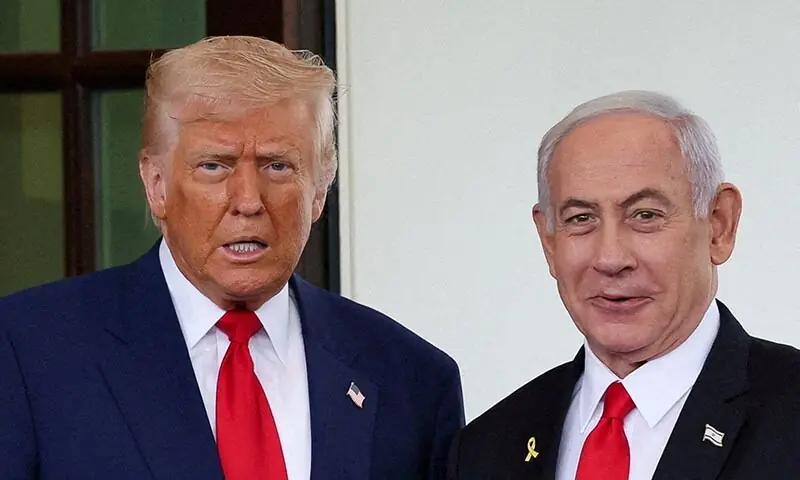
US President Donald Trump welcomes Israeli Prime Minister Benjamin Netanyahu at the entrance of the White House in Washington, DC, the US on April 7, 2025. — Reuters/File
No other Israeli prime minister, they note, addressed Congress as often or built such enduring political capital across the American political system.
But analysts say Washington and Tehran’s interim pact to end the war that the US and Israel launched in February shows how that narrative has been reversed. Rather than shaping Washington’s Iran policy, Netanyahu is now forced to accept it, as US President Donald Trump pursues a settlement that increasingly treats Israeli objections as constraints.
At home, the reckoning is equally stark, said former US official Dennis Ross.
“Netanyahu is increasingly boxed in between a US president intent on ending the conflict and a domestic base resistant to concessions, particularly in Lebanon,” he said.
Withdrawal risks political backlash, while escalation risks confrontation with Washington.
The war Netanyahu hoped would cement his legacy as the leader who confronted Iran may instead be remembered as the conflict that dismantled a central source of his power.
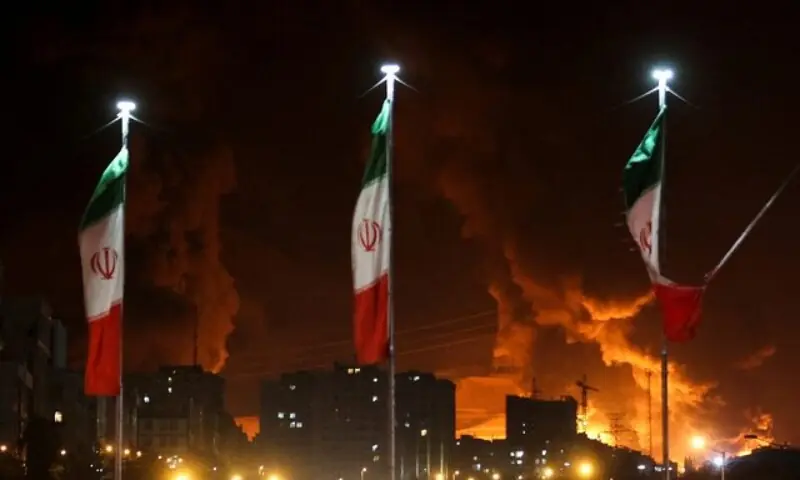
Iranian flags fly as fire and smoke from an Israeli attack on Sharan Oil depot rise, following Israeli strikes on Iran, in Tehran, Iran, June 15, 2025. — Reuters/File
Isolated abroad, constrained by his closest ally and vulnerable ahead of an autumn election, he now finds the political asset on which he built his career has become his greatest liability.
At the outset of the war with Iran, Netanyahu promised ultimate victory. He delivered neither the collapse of Iran’s ruling system, nor the defeat of Lebanon’s Hezbollah, nor a safe return for residents of northern Israel.
“The US-Iran deal is a decisive blow to Netanyahu,” said Aviv Bushinsky, a former Netanyahu adviser. “Not only did he lose the war with Iran, he has also lost Trump as a friend.
“He is now isolated not only internationally, but locked in a major dispute with Trump,” he added.
Netanyahu’s office did not respond to a request for comment.
In a press conference this month, the Israeli premier described his relationship with Trump as one between partners who “agree many times and sometimes disagree”.
There had been a systematic campaign to diminish Israel’s “huge achievements” against Iran, he said.
A White House official said Trump and Netanyahu had a strong relationship and that Israel’s military forces had been “incredible partners” in a war that had “decimated the Iranian regime’s military capabilities”.
Public rebukes
The disagreement between the US and Israeli leaders, analysts say, extends beyond personal ties to a growing divergence in goals: Trump seeks to disengage from another Middle East war, while Netanyahu views continued pressure on Iran and its ally Hezbollah as essential to Israel’s security.
Washington has negotiated directly with Tehran, folded Lebanon’s conflict between Israel and Hezbollah into a broader framework, and created mechanisms to manage ceasefire disputes, moves that, according to three regional diplomatic sources, have increasingly sidelined Israel from key decisions.
The country that once viewed Netanyahu as an indispensable interlocutor is now, the regional sources say, treating him as an obstacle to an agreement it is determined to protect.
Trump has publicly rebuked Israel’s military conduct in Lebanon, while US Vice President JD Vance has underscored the conditional nature of the relationship, warning Israeli critics of the deal against attacking the only powerful ally they have left in the world.
Two Israeli officials familiar with Netanyahu’s thinking said he was not concerned that public remarks by Trump and Vance would translate into meaningful shifts in US policy toward Israel, such as delays in arms deliveries, even if Israel continues military operations in Lebanon.
Trump has signalled that he is prepared to override Israeli priorities in pursuit of US interests. In a TV interview this month, he said that if he tells Netanyahu to do something, “he does it”.
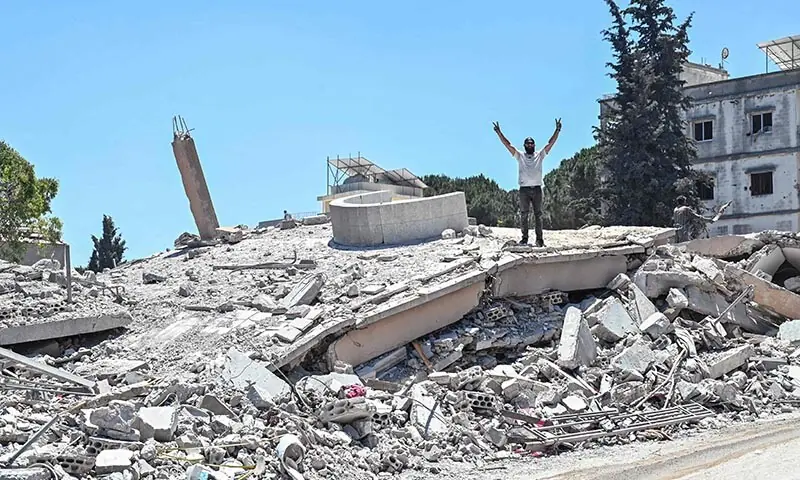
A resident flashes the V-sign for Victory as he stands on the roof of a collapsed home, destroyed in Israeli military strikes, in the southern Lebanese village of Srifa on June 24, 2026. — AFP
Loss of Republican safety net
Iran will seek to widen the emerging gap between the US and Israel by portraying any Israeli military action in Lebanon as an attempt to sabotage Trump’s diplomacy, forcing the White House to choose between backing its ally or preserving the deal, said Ali Vaez of the International Crisis Group.
What makes Netanyahu’s position so precarious, US analysts say, is the loss of his safety net.
For years, he cultivated Republican backing, using it as a counterweight to offset tensions with Democratic administrations, and openly denouncing former President Barack Obama’s 2015 Iran nuclear deal from a congressional podium.
But Republicans will not break with Trump for Netanyahu, they said.
Against this backdrop, the implications of the US-Iran deal also extend to Netanyahu’s core strategic bets. He staked his political future on two objectives: weakening, if not toppling, Iran’s leadership and securing normalised relations with Saudi Arabia by expanding the Abraham Accords.
Neither has materialised.
Iranian leaders have emerged from the conflict entrenched, while the Saudi handshake remains out of reach.
Across the region, a recalibration is already visible. Countries Netanyahu once hoped to draw closer, with Saudi Arabia as the crown jewel, are now hedging, cautiously reopening channels with Tehran.
According to Gulf sources, the logic that underpinned the Abraham Accords has been eroded by the Gaza war, the unresolved question of West Bank annexation, and a growing perception that Netanyahu’s Israel may be more of a liability than an asset in any emerging regional order.
An Iranian official said Netanyahu’s push to expand the Abraham Accords has been blunted, with several countries now seeking a place in an emerging Iran-aligned framework.
“This is not just a victory for Iran. It’s a failure for Netanyahu,” the official said. “The Islamic Republic has not just survived, it has emerged as a more influential regional player.”
Pakistan used a high-level diplomatic gathering at the United Nations on Wednesday to build international support for stronger global action against viral hepatitis, while new World Health Organisation (WHO) data underscored the scale of the challenge facing the country.
The Permanent Mission of Pakistan to the UN and the Secretariat of the UN Group of Friends to Eliminate Hepatitis co-hosted a strategic briefing on the sidelines of the UN High-Level Meeting on HIV/AIDS under the theme, “Advancing Hepatitis Elimination: Building Momentum toward High-Level Political Action”.
The meeting brought together health ministry officials, diplomats and global health experts to discuss viral hepatitis, a disease that claims approximately 1.3 million lives annually worldwide. Participants also explored pathways toward securing a standalone UN High-Level Meeting on Viral Hepatitis by 2028.
Opening the event, Pakistan’s Deputy Permanent Representative to the UN Ambassador Usman Jadoon highlighted Islamabad’s commitment to tackling one of the country’s most serious public health challenges.
“The government has launched the Prime Minister’s Programme for the Elimination of Hepatitis C, allocating $250 million in collaboration with the World Health Organisation to eliminate Hepatitis C as a public health threat by 2030,” Ambassador Jadoon said.
He stressed that the initiative provides “entirely free screening, diagnosis, and treatment” to patients across the country.
“To ensure effective oversight and accountability, the prime minister himself is leading the National Task Force, which oversees the program’s progress and provides strategic direction,” the ambassador added.
Ambassador Jadoon noted that the task force included “a distinguished group of international and national experts, including leading public health experts, clinicians, researchers, and government officials”, reflecting the government’s determination to pursue a science-based approach to hepatitis elimination.
The briefing included a presentation by Dr John Ward, director of the Coalition for Global Hepatitis Elimination, who reviewed the global burden of viral hepatitis, recent political developments and opportunities for strengthening international cooperation.
The discussions followed the recent release of the WHO Global Hepatitis Report 2026, which identifies Pakistan as the largest contributor to the global population living with hepatitis C virus (HCV) infection and one of the world’s ten countries with the highest numbers of HCV-related deaths.
According to the report, Pakistan had an estimated 9m people living with hepatitis C as of 2024.
The country was also among 10 nations that together accounted for 58 per cent of all hepatitis C infections worldwide, alongside China, India, Bangladesh, Indonesia, Nigeria, the Russian Federation, South Africa, the United States and Vietnam.
The WHO report further noted that Pakistan carries a disproportionate share of the hepatitis burden in the WHO Eastern Mediterranean Region. The region is estimated to have 12m people living with hepatitis C — about one quarter of the global total — and remains the only WHO region where more than 1pc of the general population is chronically infected.
Within Pakistan, hepatitis C prevalence remains particularly high in the provinces targeted under the national elimination plan. Punjab has the highest prevalence rate at 8.9pc, followed by Khyber Pakhtunkhwa at 6.5pc, Sindh at 6.2pc and Balochistan at 5.2pc.
The WHO report also highlighted Pakistan’s ambitious national response. In July 2024, the government launched a prime ministerial plan aimed at treating 50pc of people living with hepatitis C by 2027 and achieving WHO elimination targets by 2030, with the federal government financing half of the programme’s costs.
Participants at the UN meeting reviewed both the WHO report and the Ministerial Statement on Hepatitis Elimination adopted at the 79th World Health Assembly. While effective tools for prevention, diagnosis, treatment and cure are widely available, speakers noted that viral hepatitis continues to receive insufficient political attention and funding relative to its health and economic impact.
Delegates exchanged views on how to elevate hepatitis within the broader UN agenda and discussed the procedural, political and financial considerations involved in convening a future UN High-Level Meeting dedicated to the disease.
The consultation concluded with broad support for continued coalition-building, wider geographic representation and stronger international engagement to accelerate progress toward the 2030 hepatitis elimination goals.
Representatives from Pakistan, France, the Czech Republic, Mexico, Peru, Türkiye, Mongolia, China, Brazil, Malaysia, Spain and the Philippines attended the meeting.
The gathering built on momentum generated at the 79th World Health Assembly, where ministers and senior government representatives endorsed a cross-regional Ministerial Statement calling for stronger leadership, increased financing and enhanced international cooperation to eliminate viral hepatitis as a public health threat.
The National Assembly on Wednesday approved a supplementary budget of Rs593.64 billion for the fiscal year 2024-2025 (FY24-25) and a sum of Rs475.05bn for the outgoing fiscal year (FY25-26).
Finance Minister Muhammad Aurangzeb moved a series of papers for approval during Wednesday’s session.
Under the Constitution, the government must secure parliamentary approval for the federal budget before any spending. This approval allows the government to spend specified funds for different heads. However, the government often seeks retrospective approval for additional amounts already spent, leaving the parliament with no choice but to regularise these expenditures.
The NA’s X account said Aurangzeb laid the Supplementary Authorised Expenditure 2024-2025 and 2025- 2026, along with other papers, before the house under Article 83 of the Constitution.
Dawn provides a breakdown of the additional amounts approved for spending during FY24-25 and FY25-26, which will conclude on June 30.
FY2024-25
The following supplementary grants were approved for FY24-25 (July 2024- June 2025):
Rs430.10bn for Power Division
Rs37.89bn for miscellaneous expenditure
Rs22.84bn for defence services
Rs22.15bn capital outlay on civil works
Rs5.79bn for both civil and armed forces
Rs5.61bn for Commerce Division
Rs5.60bn for development expenditure of Finance Division
Rs3.82bn for National Health Services
Rs2.69bn for Federal Board of Revenue (FBR)
Rs1.80bn for Information and Broadcasting Division
Rs1.43bn for educational institutions under the federal government, cantonments and garrisons
Rs1.26bn for other development expenditure
Rs1.25bn for Defence Division
Rs1.10bn for development expenditure of Interior Division
Rs750m for the development expenditure of Power Division
Rs300m for Cabinet Division
Rs250m was approved for the federal education and professional training division
Rs238.42m for National Food Security and Research Division
Rs207.97m capital outlay on Petroleum Division
Rs160.46m for Pakistan Agricultural Research Council
Rs90.27m in respect of foreign missions
Rs64.82m for Airports Security Force
Rs50m for Parliamentary Affairs Division
Rs49.65m for the Law and Justice Division
Rs14m supplementary funds were approved for the Kashmir and Gilgit-Baltistan affairs division
The following grants were approved in “excess authorised expenditure” during FY24-25
Rs19.03bn for the combined civil armed forces
Rs15.63bn in development expenditure of Water Resources Division
Rs1.19bn for Law and Justice Division
Rs646.64m for the federal education and professional training division
Rs508.77m for foreign missions
Rs483.92m for superannuation allowances and pensions
Rs17.46m for the Communications Division
Rs2.57m for the Petroleum Division
Rs1.28m for district judiciary, ICT
These amounted to a total of Rs593.64bn in supplementary grants and excess expenditure for FY24-25.
Charged expenditure for FY24-25
Staff household and allowances president: Rs208.00m
Repayment of short-term foreign credits: Rs40.34bn
Audit: Rs63.00m
Repayment of domestic debt: Rs2,603.86bn
These totalled to Rs2,644.48bn.
Excess expenditures for FY24-25
Repayment of domestic debt: Rs1,915.92bn
Servicing of domestic debt: Rs169.32bn
Foreign loans repayment: Rs1.54bn
Superannuation allowances and pensions: Rs662.85m
Federal Tax Ombudsman: Rs81.52m
Repayment of short-term foreign credits: Rs32.81m
Federal Ombudsman Secretariat for Protection against Harassment of Women at workplace: Rs48,668
These totalled to Rs2,087.57bn.
FY2025-26
For FY25-26 (July 2025-June 2026), the following supplementary grants were approved:
Rs127.41bn for grants, subsidies and miscellaneous expenditure
Rs105.50bn for Power Division
Rs57.18bn federal education and professional training division
Rs33.96bn for defence services
Rs29.66bn for National Health Services
Rs22.35bn for poverty alleviation and social safety
Rs19.72bn other expenditure of interior and narcotics control
Rs13.82bn miscellaneous expenditure of Information and Broadcasting Division
Rs13.10bn for Petroleum Division
Rs10.00bn development expenditure of Revenue Division
Rs7.88bn capital outlay on civil works
Rs7.50bn for Commerce Division
Rs6.61bn capital outlay on Railways Division
Rs6.35bn development expenditure of Power Division
Rs5.00bn for Housing and Works Division
Rs4.25bn for Defence Division
Rs4.18bn development expenditure of the federal education and professional training division
Rs4.00bn for National Disaster Management Authority (NDMA)
Rs3.70bn for development expenditure of IT & Telecom Division
Rs2.37bn for federal miscellaneous investments and other loans
Rs2.08bn for Information Technology and Telecommunication Division
Rs1.57bn for the development expenditure of the National Vocational and Technical Training Commission
Rs1.47bn for Information and Broadcasting Division
Rs1.38bn combined civil armed forces
Rs967.50m for Cabinet Division
Rs960.27m for Interior and Narcotics Control Division
Rs536.07m other development expenditure
Rs344.73m development expenditure of Interior and Narcotics Control Division
Rs250.00m for National Security Division
Rs170.40m for Inter-Provincial Coordination division
Rs150.00m for Climate Change and Environmental Coordination Division
Rs112.11m for other expenditure of Finance Division
Rs76.23m for Special Investment Facilitation Council (SIFC) Division
Rs40.00m for the development expenditure of Defence Division
Rs27.42m for National Food Security and Research Division
These amounted to a total of Rs475.05bn in supplementary grants for FY25-26.
Karachi Traffic Police (KTP) have provided alternative routes for commuters to use as some roads will remain closed for the 8th, 9th and 10th Muharram processions.
In a statement issued on X, the KTP said on Tuesday, “Special arrangements have been made to ensure the traffic flow and facilitate the citizens during the 8th, 9th, and 10th Muharram processions.”
According to a press release issued by the Karachi deputy inspector general’s (DIG) office, attached to the post, “On 8/9/10 Muharram (June 24/25/26, 2026), the central procession will depart from Nishtar Park and conclude at Imambargah Hussainia Iranian via its traditional routes.
“Due to security reasons, M.A. Jinnah Road will be closed to traffic from Gurumandir to Tower,” it added.
The press release also shared the alternative routes for the commuters to reach their destinations.
District Central:
Commuters coming from Nazimabad can reach their destination from Lasbela Chowk via Nishtar Road heading to Garden.
Commuters coming from Liaquatabad can turn left from Teen Hatti to Lasbela Chowk and then right towards Central Jail (Martin Road).
Commuters heading from Hassan Square to PIB Colony can travel via Kashmir Road to Society Light Signal (Shahrah-i-Quaideen), and from Jail Chowrangi Flyover towards Nishtar Road (Lasbela Chowk).
On Muharram 9, Gurumandir will be closed to traffic from 8:30am to 9:30am.
District East
Commuters going towards Numaish from Sharea Faisal via Shahrah-i-Quaideen can turn right from the Society Light Signal onto Kashmir Road to reach their destination.
Commuters going from Central Jail Gate (Jamshed Road) towards M.A. Jinnah Road can go from Gurumandir towards Bahadur Yar Jang Road and Soldier Bazaar.
On Muharram 9, the road from Jamshed Road to Gurumandir and Bahadur Yar Jang Road will be closed from 10:30am to 1:30pm, the KPT said.
District South
Commuters going from Garden Zoo to M.A. Jinnah Road can turn right from Anklesaria towards Gul Plaza and left towards Coast Guard and Holy Family.
The press release further said that entry for all types of vehicles is prohibited on M.A. Jinnah Road, except for those participating in the procession that display a specific windscreen sticker.
These authorised vehicles should enter via Shahrah-i-Quaideen and the Society Light Signal.
Routes for procession participants
Participants coming from Nazimabad will head to Numaish via Lasbela and Gurumandir.
Those coming from Liaquatabad will pass via Teen Hatti, Jahangir Road and Gurumandir to reach Numaish.
Another route is from Society Light Signal till Numaish.
Those heading from Gulistan-i-Jauhar and Gulshan-i-Iqbal will take University Road, pass through Old Sabzi Mandi, Kashmir Road and Society Light Signal, to arrive at Numaish.
Vehicles distributing Sabeel or Niaz will be part of the procession. Their entry points are: Saddar Dawakhana and Capri Light Signal. No vehicle is permitted to park anywhere along the procession route.
The National Accountability Bureau (NAB) has established an artificial intelligence-based investigation system, National Centre of Artificial Intelligence (NCAI) Chairman Dr Yasar Ayaz said in a statement on Tuesday.
“It is a landmark advancement towards digital transformation and institutional modernisation,” he said, terming it as Pakistan’s first sovereign generative AI-powered investigation system.
He described the system as a state-of-the-art platform designed to support the investigation of white-collar crime through advanced artificial intelligence.
He highlighted that the initiative reflected Pakistan’s growing capability to develop indigenous AI solutions tailored to national requirements while maintaining data sovereignty and institutional ownership.
The NCAI chairman said NAB’s AI-powered investigation system sets a national benchmark for the responsible adoption of artificial intelligence in public-sector institutions.
The platform was expected to improve the speed, accuracy, and effectiveness of investigations involving financial crimes, corruption, and other complex white-collar offences.
Ayaz contended that by assisting investigators in managing information and generating meaningful insights, the system would support evidence-based decision-making and strengthen institutional accountability.
The initiative represents a transformative step in NAB’s ongoing reform agenda and demonstrates the bureau’s commitment to leveraging modern technologies to enhance transparency, efficiency, and public trust.
The official said the project aligns with broader national efforts to promote innovation, digital governance, and the use of emerging technologies for public service delivery.
In this regard, a meeting was held under the supervision of NAB Islamabad/Rawalpindi Director General Waqar Ahmed Chauhan.
The meeting was attended by experts from the NCAI, including Ayaz, along with members of the AI development team.
During the session, the NCAI team presented a comprehensive demonstration of the AI-powered investigation platform and provided a detailed briefing on the progress achieved so far.
Participants reviewed the system’s capabilities across key investigative functions, including complaint verification, inquiry management, investigation support, financial analysis, evidence management, and decision-making assistance.
The members expressed satisfaction with the progress achieved thus far and reaffirmed their commitment to the timely completion and deployment of the platform.
Once operational, the system is expected to emerge as a flagship indigenous AI initiative and a pioneering model for the application of sovereign generative AI in Pakistan’s public sector, paving the way for technology-enabled governance and modern law enforcement practices across the country.
The meeting concluded with a shared commitment from NAB and NCAI to continue their collaboration in advancing AI innovation and establishing Pakistan as a leader in the development of sovereign AI solutions for the public sector.
Two years ago, Gen-Z protests marked a new era for Kenyan politics, but led to dozens of deaths, and devastated families are unimpressed with government promises of compensation.
Memorial protests are planned on Thursday to mark two years since the country’s biggest show of dissent, when Kenyans stormed parliament to protest new taxes amid wider anger over corruption.
It was seen as a watershed moment, as young Kenyans joined together to demand accountability without regard for traditional ethnic dividing lines.
People attend a demonstration against Kenya’s proposed finance bill in Nairobi, Kenya on June 25, 2024. — Reuters
But it came at a price: 62 people died during weeks of protests in June and July 2024, and another 65 died during anniversary protests in the same period the following year, according to the Independent Police Oversight Authority (IPOA).
Rights groups put the toll higher, and say the overwhelming majority were shot dead by police and security forces.
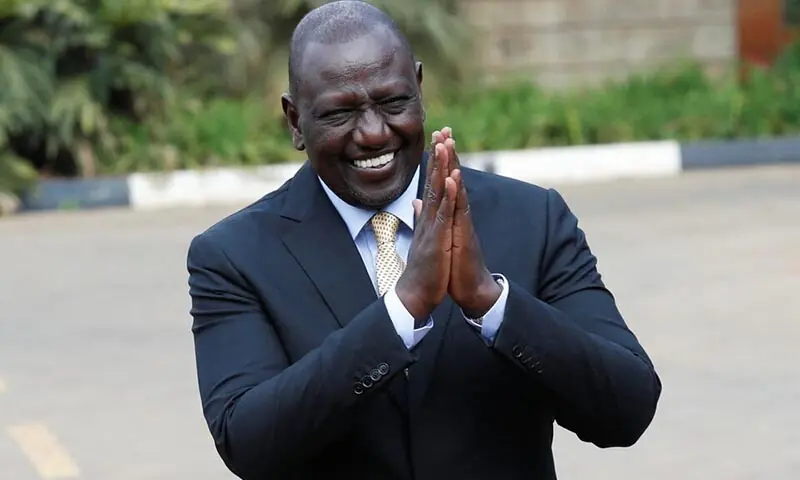
After showing little remorse for the killings, President William Ruto last week announced 2 billion shillings ($15.5 million) to compensate 1,100 people affected by violent protests between 2017 and 2025. He said it was an “acknowledgement that harm occurred” but stopped short of an apology.
A photo of Kenyan President William Ruto from September 5, 2022. — Reuters/File
A government-appointed panel for compensation said it had started the first 348 payouts on Tuesday, including 115 fatalities whose families received 3 million shillings (around $28,000) each.
“He’s covering up the wrongs that he did. He just wants us to shut up because of the cash that he’s giving us — the peanuts,” said Gillian Munyao, whose son, Rex Masai, 29, was among the first to die in the June 2024 protests.
“I’m not seeing justice anywhere … why pay us without giving the culprit?” Munyao told AFP at a Nairobi court last week, where the case is ongoing.
Only three cases from the 2024 protest deaths, and one from 2025, have come to court, according to the IPOA. No officer has been convicted.
Dozens of government critics were also abducted in 2024 and 2025, many never seen again, according to rights groups like Amnesty International and Human Rights Watch.
In May 2025, Ruto vowed to stop the abductions and said there was an “accountability mechanism” to bring those responsible to justice.
But many, including his own former attorney general, say he was directly responsible for the kidnappings, and there has been no sign of any investigation.
‘Smokescreen’
Lawyer Nick Karanja, who represents several victims ignored by the compensation panel, described the process as a “smokescreen”. One of his clients, Fenancia Njeri, 49, has not been offered anything for the death of her son, Issa Mburu, killed on July 7, 2025.
“It’s been a whole year … very, very hard,” she told AFP, adding that she sometimes sees the policeman who killed her son near the informal settlement outside Nairobi where she lives.
Ruto warned at the time that violent protesters should be “shot in the legs”. That’s what happened to Mark Clinton Deya, 26, who insists he was protesting peacefully when he was shot by police that day.
He shows AFP a tattered photo of his right thigh ripped apart by a bullet that embedded itself in his other leg.
“I was a chef … but now I can’t do that work. This leg can’t stand for long. It starts shaking,” he said.
He filed a case with the IPOA but was never called back.
Kenyan police continue to kill people during bouts of unrest with apparent impunity, with the government usually dismissing victims as rioters.
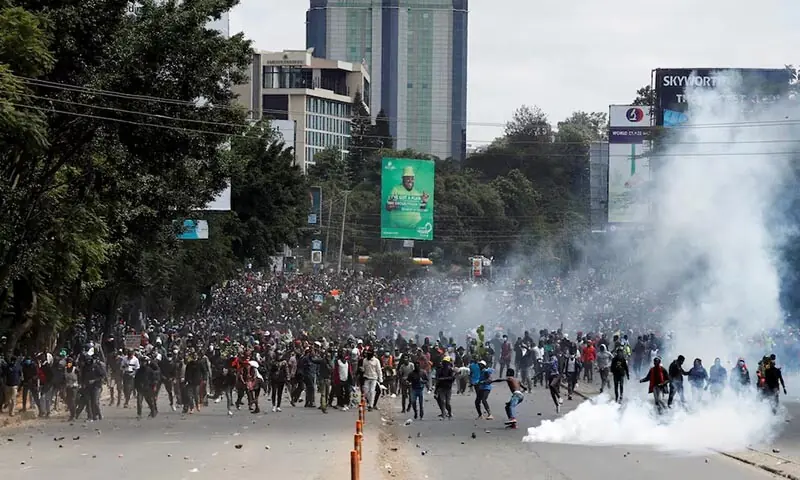
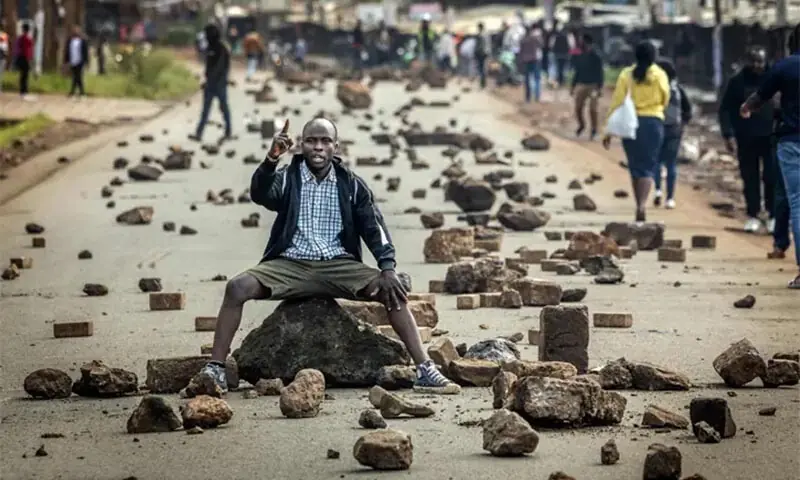
A protester chants anti-government slogans on a road blocked with stones to prevent traffic from passing during a transport strike in Nairobi, Kenya. — AFP/File
At least four were killed during fuel protests in May, and three more during protests against a proposed Ebola quarantine centre for US citizens this month.
“Those are the things we are trying to change,” said Rex Masai’s father, Chrispine Odawa.
“Without justice, they will not bring any change. Protests are still coming,” he told AFP.
• Adiala superintendent claims counsel deliberately avoided collecting signed ‘power of attorney’ document, accuses them of ‘misleading’ court • Daughter seeks action against jail staff for ‘mistreating’ Bushra Bibi
ISLAMABAD: As political tensions deescalate in parliament, PTI interim chairman Barrister Gohar Ali Khan and Secretary General Salman Akram were among lawyers whose names had been shared with the Adiala jail administration for a meeting with former prime minister Imran Khan, who has been in jail on multiple charges since 2023.
The list submitted by Awais Younas Chaudhry Advocate included the names of Barrister Gohar, Salman Akram Raja, Ali Zaman, Haider Majeed, Imran Khan Orakzai and Shamsa Kiyani. The jail administration was requested to allow them to meet the incarcerated party chief on Tuesday in line with the court orders.
The list containing the names of Barrister Gohar and Salman Raja came after the PTI interim chairman said in parliament that he hoped that the recent handshake between opposition leader Mehmood Khan Achakzai and Prime Minister Shehbaz Sharif would improve the relationship between the treasury and the opposition benches, and hopefully pave the way for a meeting with Imran Khan.
On the other hand, Aleema Khan and other sisters of Imran Khan were also expected to visit Adiala for their meeting, as the Islamabad High Court in its earlier order had allowed family and lawyers to meet Imran every Tuesday.
Aleema announced a 10,000-strong protest outside the prison last Tuesday, but the demonstration did not materialise because barely 1,000 supporters turned up. The PTI leaders blamed NA Opposition Leader Mehmood Khan Achakzai, who heads the Tehreek-i-Tahaffuz-i-Ayeen-i-Pakistan alliance, for the failure — an allegation rejected by the alliance spokesperson.
‘Court misled’
The Adiala superintendent informed the Islamabad High Court that the counsel for the PTI founder and his wife Bushra Bibi attempted to mislead the court regarding the signing of the power of attorney in the Al Qadir Trust corruption case.
In a response submitted to the IHC, the superintendent stated that the power of attorney was ready after being signed on June 16, and Barrister Salman Safdar was informed through a text message on the same day. A screenshot of the message has also been attached to the court submission.
“The lawyers of the founder and Bushra Bibi deliberately did not obtain the power of attorney before the hearing on June 18,” the response said.
It may be noted that the court has been repeatedly informed by the defence counsel that the power of attorney could not be obtained due to procedural delays. Barrister Safdar had sought adjournments on multiple occasions, citing his inability to meet his clients at the jail.
The IHC bench, comprising Chief Justice Sardar Muhammad Sarfraz Dogar and Justice Muhammad Asif, had earlier warned the defence counsel that if arguments were not presented at the next hearing, the court would proceed with the case based on available records.
Meanwhile, Bushra Bibi’s daughter, Mubashra Khawar Maneka, has lodged a formal complaint with the Punjab home department, alleging criminal negligence and inhuman treatment by jail staff toward her mother at the Adiala jail.
In a letter addressed to the provincial home secretary, Maneka said her mother, Bushra Bibi, had been suffering from a retinal disease that required surgery, but the jail staff ignored her complaints for weeks. According to the complaint, it was only in mid-April that the matter was communicated to the relevant jail authorities, leading to a medical examination and immediate surgery at Al Shifa Eye Hospital in Rawalpindi.
The letter blamed a particular jail employee for negligence and also accused her of “consistently abusive, rude and disrespectful behaviour during routine jail interactions”. Maneka requested strict disciplinary action against the staff member and her removal from the present assignment involving control over her mother.