Sports and 🌎 News: May 2026

Sunday, 31 May 2026

The social weight on the new budget

The government must stop shifting the cost of weak revenue mobilisation onto households and the corporate sector and instead offer targeted tax relief to offset the burden imposed in recent years, including a reduction in the petroleum levy. While support for the most vulnerable remains necessary given high poverty levels, sustained job-creating growth is vital.

It is unreasonable to tax a monthly income of Rs50,000, which falls below the amount required for a family’s subsistence. To make the tax regime more logical and equitable, the income tax threshold should be raised to Rs1.5 million per annum (Rs125,000 per month) from the current Rs600,000. The tax slabs and rates should then be recalibrated accordingly to preserve progressivity while providing meaningful relief to low-income earners.

At the same time, there is little justification for imposing a super tax on the already compliant corporate sector while large segments of the economy — including many services, retail and wholesale trade, real estate, and farm landowners — continue to remain undertaxed or effectively enjoy a tax holiday.

With inflation once again edging upward, the persistently high petroleum levy is adding to the cost pressures across the economy. The levy needs to be rationalised and gradually reduced to levels comparable with regional averages to provide much-needed relief to consumers and businesses alike.

‘Attempting to extract more taxes from an already stressed private sector is likely to generate frustration and resentment rather than meaningful additional revenues’

Measures to broaden the tax base by effectively bringing big property owners and traders into the federal tax net, while ensuring that provinces adequately tax agricultural income and other undertaxed service providers, could not only offset the revenue loss from providing relief to overburdened taxpayers but also generate substantial additional revenues.

“A wider and more equitable tax base would improve compliance, reduce distortions, and strengthen fiscal sustainability without placing further pressure on already heavily taxed segments of society,” said a retired Federal Board of Revenue officer.

Meanwhile, revenue targets should be set realistically, considering the near-stagnant state of the economy, where economic growth is barely keeping pace with population growth. Under these circumstances, greater emphasis should be placed on reducing wasteful administrative spending and rationalising the costs of an oversized and inefficient state apparatus.

“Sizeable increase in tax revenues is rarely achieved in a low-growth environment,” observed a tax expert who requested anonymity. “Attempting to extract more taxes from an already stressed private sector is likely to generate frustration and resentment rather than meaningful additional revenues. It could further undermine business confidence, discourage investment, and deepen the economic slowdown at a time when the country can least afford it.”

The government will need to use the budget to convince the public that it is not only cognisant of the mounting economic pressures on households and businesses but is also committed to addressing rising poverty and inequality, while facilitating the private sector for accelerating GDP growth.

More importantly, it must demonstrate a credible strategy to lift growth to the levels capable of generating sufficient productive employment for the country’s expanding workforce and improving living standards on a sustained basis.

The spending patterns witnessed during Eid, where a small segment of society reportedly spent millions on sacrificial animals, in a country where half the population remain below or near the poverty line, underscored the widening gap between the affluent and the struggling majority.

Growing frustration among the youth over limited economic opportunities, coupled with widening income and wealth disparities, is increasingly viewed as a source of political and social risk not only for the government of the day but also for the country’s fragile democratic order and broader institutional framework.

Some observers caution that unless the upcoming budget sends a clear signal that the government is committed to expanding opportunities, reducing barriers to upward social mobility, and addressing economic exclusion, public discontent could intensify. Failure to tackle these underlying grievances may further erode trust in institutions and increase the risk of social unrest.

“We dread a Bangladesh-like situation if mounting economic grievances remain unaddressed. Our platforms are not merely advocating the interests of businesses; we are also urging the government to safeguard the economic rights of citizens and provide tax relief to the middle class,” remarked a leading Karachi-based business leader while explaining the budget proposals submitted to the government.

The reference was to the 2024 turmoil in Bangladesh, widely referred to as the “July Uprising”, a massive, student-led movement that toppled Prime Minister Sheikh Hasina’s government. Many analysts view it as a reminder of how economic pressures, perceptions of nepotism and inequality, and limited opportunities can amplify public discontent and trigger wider political instability.

Official estimates place Pakistan’s poverty rate at 28.9 per cent of the population. However, a recently released report by the Social Policy and Development Centre paints a bleak picture, suggesting poverty incidence at 43.5pc in 2024-25, with urban poverty rising at a faster rate.

The report also points to a widening income gap. According to its findings, inequality increased by 12pc between 2018-19 and 2024-25, with deterioration more pronounced in urban centres.

Members of Prime Minister Shehbaz Sharif’s economic team were approached for their views on the concerns raised in this report. While some chose not to comment ahead of the budget, the responses of others had not been received by the filing deadline.

Published in Dawn, The Business and Finance Weekly, June 1st, 2026


from Dawn - Home https://ift.tt/2faJFH7

Pakistan's 'resolute response' in May 2025 conflict debunked notion of space for war in South Asia: military official

A military official from Pakistan has said that the country’s “resolute response” to India during the May 2025 conflict had effectively debunked the notion of space for war in South Asia.

Commander I Corps Lieutenant General Nauman Zakria made these remarks during a special session at the Shangri-La Dialogue in Singapore on Saturday.

In May 2025, a four-day conflict between Pakistan and India was sparked by an attack on tourists in occupied Kashmir, which New Delhi, without evidence, linked with Pakistan. Islamabad strongly denied responsibility while calling for a neutral investigation.

After New Delhi launched deadly air strikes in Punjab and Azad Kashmir on May 7, Pakistan said it downed five Indian planes in air-to-air combat, later raising the tally to eight. After tit-for-tat strikes on each other’s airbases, it took American intervention on May 10 for both sides to finally reach a ceasefire.

Speaking at the Shangri-La conference, Lieutenant General Zakria said strategic stability in South Asia remained shaped by nuclear deterrence, conventional asymmetry, enduring political tensions, and unresolved territorial and ideological disputes between India and Pakistan.

And despite the complexities of great power contestation, China constituted a constructive and stabilising factor, contributing to strategic balance, regional connectivity and economic cooperation, he added.

Lt Gen Zakria said the May 2025 conflict demonstrated Pakistan’s effective multi-domain operations, which were enabled by tri-service synergy, integrated use of cyber, electronic warfare, intelligence, surveillance and reconnaissance, space-based capabilities and synergetic information manoeuvre, generating cross-domain effects.

“Pakistan’s resolute response has effectively debunked the notion of space for war in South Asia,” he said.

“Postconlict dynamics have further constrained the prospects for conventional war. However, continued Indian militarisation coupled with persistent adversarial rhetoric and absence of robust crisis management mechanisms continue to undermine regional stability,” he added.

In this evolving environment, he said, South Asia’s strategic equilibrium was increasingly contingent upon escalation control and effective crisis communication frameworks.

“Navigating the complex challenges of a fast-transforming geopolitical environment warrants a shift from competition-only postures to cooperative risk management across multiple domains, while remaining committed to upholding international norms,” he stressed.

Firstly, he said, states must prioritise responsible governance of emerging technologies. “Technological innovation cannot be divorced from ethical responsibility and strategic accountability.”

States should work towards internationally accepted norms regarding the military use of artificial intelligence, autonomous systems, cyber operations and space technologies. Human oversight must remain central in decisions involving the use of force, especially in systems with strategic implications, he said.

Lt Gen Zakria added that confidence-building measures, transparency mechanisms and technical dialogues among states were essential to reduce misunderstanding and prevent destabilising arms races.

Secondly, he said, institutionalised crisis management mechanisms and strategic communication channels needed to be strengthened, he said.

“Even during periods of geopolitical rivalry, dialogue must never collapse. History repeatedly demonstrates that strategic stability is preserved not only through deterrence but through communication as well.”

Thirdly, he said, nations needed to collaborate in codifying norms regarding space testing, prohibitions on attacks on civilian infrastructure, and human oversight requirements for autonomous weapon systems.

“Norms do not discourage competitiveness, but they do set boundaries that make deterrence more calculable.

“International law and multilateral institutions must be adaptive to emerging realities. Technological transformation is outpacing our existing institutional and legal frameworks,” he said.

Lt Gen Zakria said that strengthening global cooperation on cyber governance, responsible AI development, space security, digital ethics and information integrity was imperative to maintaining the geostrategic equilibrium.

“No country, regardless of its size or technological sophistication, can manage the emerging multifaceted risks alone. The challenges we face are transnational by nature and therefore require collaborative responses,” he asserted.

Moreover, strategic stability was not only about military capability but also about societal endurance, he pointed out.

“Countries must strengthen cyber resilience, protect critical infrastructure, improve digital and technical literacy and build institutional credibility.

“Public trust is a strategic asset. Resilient societies are far less vulnerable to external manipulation and internal destabilisation through misinformation, polarisation, and technological disruption,” he said.

At its core, strategic stability was ultimately about responsible statecraft, he added.

“Technology itself is not inherently destabilising. But the real challenge lies in how technologies are governed, integrated, and employed. Human judgement, political wisdom, and international cooperation for the greater good remain indispensable.

“We must resist the temptation for the greater good. We must resist the temptation to view every technological breakthrough solely through the lens of competition and militarisation, rather as a function of balance between innovation and responsibility, national security and global stability, strategic competition and collective survival,” he said.

Lt Gen Zakria added, “Let us remember that peace and stability have never been involuntary outcomes of technological progression. They have always depended on political responsibility, strategic restraint and sustained international engagement.”

Earlier in his address, he said the operationalisation of the emerging domains alongside the legacy domains had significantly complicated the strategic stability landscape.

“Rapid advances in AI, autonomous systems, cyber capabilities, quantum technologies, and multi-domain operations are transforming military decision making, command and control structures, and strategic competition, while simultaneously introducing new vulnerabilities, risks of miscalculations, attribution challenges, and unintended escalation,” he said.

As states, societies, and critical infrastructures become increasingly dependent on interconnected technological ecosystems, the erosion of predictability and compression of decision-making timelines were fundamentally reshaping the nature of inter-state conflict and strategic deterrence, he added.

Lt Gen Zakria said the information was becoming increasingly fragmented, as digital platforms, AI-generated content, and disinformation campaigns eroded trust, distorted narratives and compressed decision-making timelines.

“In this evolving landscape, the control of information and data integrity has emerged as a critical determinant of strategic stability, alongside conventional military balance,” he stressed.


from Dawn - Home https://ift.tt/KXRpxiG

Saturday, 30 May 2026

Jaffar Express resumes service from Quetta

QUETTA: Pakistan Rai­lways resumed train operations from Balochistan on Saturday, restoring services after a three-day suspension, railway officials said.

According to the officials, train operations from the province have been fully restored, with the Jaffar Express departing from Quetta for Peshawar. They said that the return service of the Jaffar Express will also depart from Peshawar for Quetta as per the timetable, restoring connectivity between the province and other parts of the country.

The Jaffar Express, the only train service from Quetta to Peshawar, was suspended last Sunday following a vehicle-borne suicide bombing that targeted a shuttle train near the Chaman railway crossing.

The Jaffar Express, which was ready to depart for its destination, was immediately stopped and later cancelled. Passengers were asked to collect refunds. However, after two days, the train service was restored, but on Wednesday it was again suspended. Railway authorities have not mentioned the reason for the suspension of the Jaffar Express from both sides.

On Saturday, however, the Jaffar Express depa­rted for its destination on schedule following the restoration of rail traffic.

Published in Dawn, May 31st, 2026


from Dawn - Home https://ift.tt/bKe9vGZ

PSG edge Arsenal on penalties to retain Champions League title

Paris Saint-Germain claimed back-to-back Champions League triumphs with a 4-3 shootout win over Arsenal following a 1-1 draw after extra time in Budapest, with Eberechi Eze and Gabriel missing from the spot.

Mikel Arteta’s Premier League champions showed great resilience to take the game beyond 120 minutes, but fell to a second final defeat, 20 years after their first in Paris against Barcelona.

Luis Enrique’s side became only the second besides Real Madrid to win the competition in consecutive years in the Champions League era.

PSG’s first triumph was 55 years in the making, 14 of those under Qatari ownership, the second could start what they hope is an era of dominance and dynasty-building.

Luis Enrique rebuilt the team swiftly and efficiently, removing the club’s superstars and building a cohesive and committed attacking side, capable of shredding opposition with terrifying pace.

It was the Spaniard’s third Champions League triumph, making him one of only five coaches to complete a hat-trick – the first coming with Barcelona in 2015.

For a while it looked unlikely as Kai Havertz powered Arsenal ahead after six minutes but Ousmane Dembele’s penalty midway through the second half took a tight game to extra time and ultimately penalties.

Arsenal’s Jurrien Timber was fit after a groin injury but his rust from over two months out led Arteta to deploy Cristhian Mosquera out of position at right-back.

The coach also opted for Havertz in attack over Viktor Gyokeres, and for an hour it seemed like his calls would pay off.

Luis Enrique selected 10 of the side which demolished Inter Milan 5-0 in last year’s final as PSG finally lifted the trophy they so badly craved.

In Arsenal’s only prior final German goalkeeper Jens Lehmann was sent off in the opening stages as they were defeated by Barcelona in Paris in 2006.

They got off to a far better start at the Puskas Arena, with Lehmann’s compatriot Havertz firing the Gunners ahead after just six minutes.

Havertz, who scored the winning goal in Chelsea’s 2021 Champions League final victory, could not believe his luck after Marquinhos’ attempted clearance hit Leandro Trossard and bounced into his path.

The forward galloped into open space behind PSG’s defence and towards Matvey Safonov’s goal. Havertz had a tight angle to overcome but rifled a strike into the roof of the net.

It was the worst possible start for PSG against a miserly Arsenal side who had conceded just six goals on the run to the final.

Their disciplined defending kept the Parisians at bay with consummate ease, as Luis Enrique’s side controlled the ball but could not break through Arsenal’s defensive bastion.

Gabriel Magalhaes made an excellent last-ditch challenge to pick Khvicha Kvaratskhelia’s pocket. The dynamic Georgian has been the tournament’s best player but in the first half was not allowed room to breathe.

The French champions appealed for a penalty when Bukayo Saka bungled an attempted clearance and the ball hit both his arms, but referee Daniel Siebert was unmoved.

Fighting back

PSG were reduced to frustrated pot-shots from distance and after the break moved the ball quicker to try to destabilise Arsenal’s rearguard.

Arsenal goalkeeper David Raya saved from Achraf Hakimi’s bouncing free kick before Kvaratskhelia finally had his say. After the winger’s slick one-two with Dembele, Mosquera bundled him down in the box with a clumsy foul.

Dembele sent Raya the wrong way with a low penalty to level, with PSG fans igniting several flares in celebration. It was their 45th goal of the competition, matching the all-time record.

PSG almost set a new one when Kvaratskhelia hurtled down the left but teenager Myles Lewis-Skelly deflected his shot against the post.

Substitute Bradley Barcola fired a fine chance wide on the break before extra time, as the French side threatened frequently, a tiring Arsenal suddenly giving them too much space.

The Gunners pleaded for a penalty of their own when substitute Noni Madueke went down under pressure from Nuno Mendes, but it would have been harsh on the PSG defender whom the winger was pulling.

To a shootout it went, with PSG confident after already claiming three trophies on penalties this season, and winning their last five. They also took the first spot kick, and at the end in front of their own supporters.

Arsenal blinked first, with Ebereche Eze firing wide but Raya then saved from PSG’s Mendes. Declan Rice drilled home to level at 2-2.

After Lucas Beraldo put the Ligue 1 winners 4-3 up, Arsenal defender Gabriel was left with the fifth kick for his side and lashed it high over the crossbar to hand PSG the trophy.


from Dawn - Home https://ift.tt/dmXAktw

Pakistan outspins Australia in milestone ODI as Minhas makes history

Pakistan out-spun Australia by five wickets in the first one-day international in Rawalpindi with spinner Arafat Minhas becoming the first home bowler to take five wickets on ODI debut on Saturday.

Minhas finished with 5-32 as an under-strength Australia were bowled out for 200 in 44.1 overs before Pakistan chased down the target in 42.3 overs for a memorable win in their 1,000th ODI.

Babar Azam notched a 94-ball 69 while Ghazi Ghori hit an impressive 92-ball 65 as Australia’s inexperienced spinners failed to match Pakistan’s slow bowlers on a dry spin-assisting Pindi Stadium pitch.

Azam and Ghori added 127 runs for the third wicket after Sahibzada Farhan (28) and Maaz Sadaqat (eight) fell with the score at 49.

Azam hit four boundaries and a six while Ghori’s knock had eight hits to the rope before both falling to pacer Nathan Ellis, but with just 16 to win that did not hurt Pakistan.

Minhas smashed a six to complete the victory.

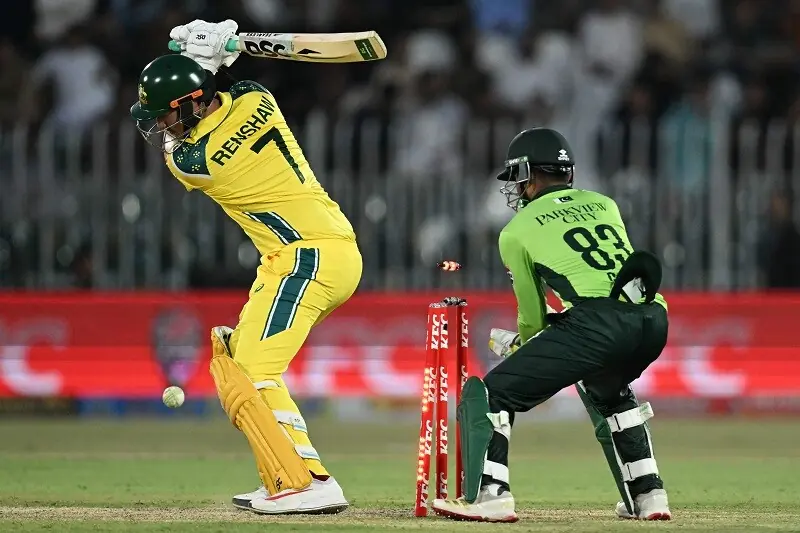
Australia’s Matt Renshaw (L) is clean bowled during the first one-day international (ODI) cricket match between Pakistan and Australia at the Rawalpindi Cricket Stadium in Rawalpindi on May 30, 2026. — AFP

Australia are missing a host of key players, including regular skipper Pat Cummins, Mitchell Starc and Josh Hazlewood alongside opener Travis Head.

Australia, sent in to bat, saw Matthew Renshaw hitting a career best 63-ball 61 and opener Matthew Short scoring a 76-ball 55 amidst a spin assault with eight wickets going to slow bowlers.

It was Abrar (2-44) who broke the opening stand of 34 with the wicket of Alex Carey for 19, before Minhas destroyed the batting with guile and accuracy.

Minhas had stand-in skipper Josh Inglis (13) and Marnus Labuschagne (nought) in his fourth over before getting Cameron Green for a third-ball duck in his next.

At 68-4, Australia were in a spot of bother, but Short and Renshaw fought hard through a fifth-wicket stand of 55 before Minhas broke the stand, getting Short stumped.

Abrar returned for his second spell to dismiss Renshaw while Arafat completed his five-wicket haul by Nathan Ellis for eight.

Short hit six boundaries in his fourth ODI half-century, while Renshaw’s knock had five boundaries and a six.

The remaining two matches are in Lahore on Tuesday and Thursday.


from Dawn - Home https://ift.tt/cbMNJ42

Friday, 29 May 2026

UK will use AI to screen migrants ‘posing as minors’

AN artificial intelligence age estimation tool that aims to detect adult migrants posing as children will be deployed at the UK’s borders from next year, BBC News reported.

A software company has been awarded a contract to develop and test the technology, which would estimate a person’s age by analysing photographs of them taken at the border.

The report cited the UK Home Office as saying the technology would make it easier to identify adult migrants “attempting to game the system”, after initial testing indicated “promising performance and accuracy”.

However, the Human Rights Watch urged the government to scrap the scheme, describing it as “unproven technology” that would undermine the protections vulnerable children were entitled to.

New technology to be deployed from next year for strengthening asylum checks

Unaccompanied child migrants receive support from local councils and are housed in the care system rather than more traditional asylum accommodation such as hotels.

They are entitled to legal protections which can simplify the asylum application system and make it easier to stay in the country for longer.

According to the BBC, the decision to use the software comes after years of heightened levels of people crossing the English Channel in small boats and claiming asylum at the border.

Rising numbers

A total of 111,084 people claimed asylum in the UK in the year ending June 2025, 14 per cent more than in the previous year.

In the year ending March 2026, more than 6,400 migrants claiming to be children were age-assessed at the border, with 43pc found to be adults, according to Home Office data.

A report carried out by the UK government’s independent immigration inspector last year found cases where adult migrants had been classified as children — and cases where child migrants had been wrongly classified as adults.

The report said in the absence of a “foolproof” test, it was “inevitable that some age assessments will be wrong, which is clearly a cause for concern, especially where a child is denied the rights and protections to which they are entitled”.

According to BBC, the government announced plans to use AI facial estimation technology to combat this problem last year.

Published in Dawn, May 30th, 2026


from Dawn - Home https://ift.tt/tPqjYEG

Israel plan to seize more of Gaza means 'more children will suffer': UN

The United Nations warned on Friday that an Israeli plan to take control of 70 per cent of Gaza will increase suffering among children already hit by the impacts of severe overcrowding.

Israeli Prime Minister Benjamin Netanyahu has ordered the military to take control of more territory in the Gaza Strip, flouting the terms of a fragile ceasefire that took effect in October.

He said the military had controlled 50pc of the Palestinian territory under the terms of the ceasefire, then advanced to take over 60pc.

“My directive is to move to… 70pc,” he said.

The United Nations children’s agency Unicef warned that this would deepen the health crisis among children in the territory, suffering from acute lack of food, water and hygiene.

Israel controls the flow of aid into the territory along with all entry points into Gaza, which has been under an Israeli blockade since 2007.

Even before Israel’s assault in Gaza that began in 2023, the territory was already very densely populated.

Now “people have been crammed into around 40pc of the space”, Unicef spokesman Salim Oweis told reporters in Geneva, speaking from Gaza.

People there were left “sheltering among broken buildings, rubble and mounting solid waste”, he said, adding “there is no accessible space left to clear” the waste.

“The effects of this are now widely apparent: children with respiratory infections, acute watery diarrhoea, and more than half of all households reporting skin diseases.”

Rats biting children

“Fleas, lice and scabies are commonplace,” Oweis said, also pointing to numerous cases of rats biting young children and even babies.

Oweis said a woman named Hind “hasn’t slept since her four-year-old daughter, Masa, was bitten by a rat during the night”.

“Like many families, they sheltered wherever they could, in their case, the second floor of a building block where sewage water leaks through the ceilings, and rodents crawl through the cracks in the building and climb the exposed pipes,” he said.

Rats are not the only menace.

Oweis said he had spoken with another woman named Amani whose seven-year-old daughter had “developed deep lesions and sores on her head, back and legs due to a bacterial infection”.

He warned that “increasing numbers of children are requiring hospitalisation, all without a single fully functioning hospital across Gaza”.

The situation was “dire”, Oweis said, noting the overcrowding was already “creating more spread of diseases, straining the systems and of course cutting … services”.

If Israel takes control of even more land, he warned, that “means that we will lose access to some of the service points, but also [to] some hard to reach places [where children and families are living”.

“This will just mean that more children will suffer,” he said.

The Palestinian foreign ministry slammed Netanyahu’s announcement as “a serious violation of the foundations of the ceasefire”.

Since then, Gaza has been gripped by daily violence, with Israel killing more than 900 people there, according to Gaza’s health ministry in the territory, whose figures are considered reliable by the United Nations.

They are among the over 72,800 people killed in Gaza since the start of the assault, according to the health ministry.

The October 7, 2023 attack that sparked the genocide, meanwhile, resulted in the deaths of 1,221 people on the Israeli side, according to an AFP tally based on official Israeli figures.


from Dawn - Home https://ift.tt/Lrp2GVw

Thursday, 28 May 2026

Plot to kill Cuba

THERE was more than a hint of trepidation when Donald Trump declared last week that he would not attend his firstborn son’s wedding because he was too caught up in matters of state, including the paused assault against Iran.

It wouldn’t be out of character, claimed an American wit, for Trump to invade Cuba as an excuse for avoiding the matrimonial festivities.

There was also speculation that the latest Gulf war might resume — which indeed partially occurred on Monday, albeit with no Iranian response until the time of writing, and despite the flurry of diplomatic activity. Nothing new happened on the Cuban front either, but Cuba’s status as the next target for trumped-up imperialism remains intact.

Last week’s revelation of a facetious indictment against Raúl Castro over Cuba’s defensive action against the invasion of its airspace by a CIA-sponsored entity suggested that the Trump regime might be planning to re-establish its hegemony over the island by kidnapping its former president in an operation akin to the abduction of Venezuelan leader Nicolás Maduro.

It’s more than likely that Fidel Castro would have been the primary target, had he not died 10 years ago. His birth centenary will be celebrated in August. Raúl turns 95 next week. It wouldn’t be surprising if he has no intention of being captured alive by the North American monster Cuba has been confronted with since long before its transformative 1959 revolution.

In the early years of the revolution, Raúl and his comrade-in-arms Ernesto Guevara came across as more inclined towards communism than Fidel, whose youthful past lay in the student wing of a bourgeois-democratic party. The latter was briefly seen as someone the US could do business with. Once the revolutionary government shut down US-owned casinos and bordellos, and nationalised properties belonging to US MNCs, the mood changed.

By the time the likes of Nikita Khrushchev, Jawaharlal Nehru and Malcolm X were embracing Fidel at his Harlem hotel in New York in September 1960, US agencies were already planning his murder. Fidel’s 4.5-hour speech at the UN — still a record — did not endear him to either the official or the criminal stalwarts of the host nation. The mafia that had lost its lucrative operations in Havana was involved. None of the 600-plus assassination plots succeeded.

Cuba’s status as the next target remains intact.

Fidel gave the reins of government to his younger brother in 2006. Raúl was seen as less orthodox. He introduced himself to Barack Obama at Nelson Mandela’s funeral in 2013, and three years later Obama became the first sitting US president to visit Cuba.

Fidel, by then the maximum leader emeritus, was less than enthusiastic. It’s hard to fault his foresight, given the thaw didn’t last. It was back to square one with the advent of Trump, whose short-lived national security aide wrote up a plan for overrunning Venezuela, Cuba and Nicaragua, the three thorns in America’s rear flank.

Nicaragua’s 1979 Sandinista revolution overthrew the US-backed Somoza dictatorship. Washington responded with the brutal Contra rebels, whom Ronald Reagan compared to his nation’s founding fathers. The Sandinistas were overthrown via electoral means, but by the time Daniel Ortega returned to power in 2007, he had evolved from a revolutionary into a reactionary.

Unlike Venezuela’s Hugo Chávez, who survived a US-backed coup attempt in 2002 but eventually succumbed to cancer. He made the mistake of ordaining Maduro as his successor. Despite the errors of the latter’s ways, evidence of his predecessor’s influence can still be found in the favelas of Caracas and beyond. Who can say how Delcy Rod­ríguez or her sponsors will choose to crush it.

The Trump reg­ime’s rampage thr­ough Latin America incl­u­des plots against Mex­ico and Colombia, which are still ruled by left-leaning parties. Unsur­pr­is­ingly, the Honduras-gate leaks implicate Israel in the plot to obliterate progressive tendencies across Latin America. Time will tell, but so far there is no guarantee that the ‘hege-moron’s’ mischief in America’s ‘backyard’ and beyond will cease in 2028, given that the Democratic alternative has been equally repulsive.

Over the decades, the Cuban revolution has had its ups and downs. Its health and education initiatives remain unmatched. Its eagerness to share its achievements with the rest of the world, not least through deploying doctors where they are most needed, is unique. As a Cuban surgeon recently commented while acknowledging his nation’s shortcomings, “Cuba is not a failed state waiting to be rescued. Cuba is a people — brilliant, stubborn, generous and vibrant — who have refused for 65 years to become someone else’s market.”

More than 65 years of US sanctions may yet succeed in strangling the remains of the revolution, but there remains a small chance the revolution will survive Marco Rubio’s worst intentions.

mahir.dawn@gmail.com

Published in Dawn, May 27th, 2026


from Dawn - Home https://ift.tt/PjLXyxV

Cotton crisis

PAKISTAN’S declining cotton economy is rapidly turning into a case study in policy contradiction.

Amid endless official rhetoric of an agricultural revival for export-led growth, the country is witnessing a surge in cotton imports even before the start of the new harvest. It is not simply the result of temporary domestic supply shortages; it is also the failure of cotton policy over many years.

The import order of 206,000 bales from the US — nearly the entire quantity of US cotton sold during the week — highlights the severity of the domestic supply crisis. Imports from Brazil are also rising sharply. Such large-scale imports before the arrival of the local crop are extraordinary and signal that our cotton supply chain is now structurally dependent on foreign supplies.

The consequences go beyond the farm sector or the downstream textile industry. Cotton imports could cost Pakistan billions of dollars.

For an economy struggling with chronic dollar shortages, weak reserves and recurring balance-of-payments crises, this is alarming.

That Pakistan is increasingly importing what it once produced competitively in quantities sufficient to feed its textile industry, sustain rural incomes and reduce pressure on foreign exchange reserves speaks volumes about the extent of the policy rot. We now have a cycle of shrinking output leading to increased imports.

Higher imports drain foreign exchange, and the ensuing external pressures either lead back to demand compression and reduction in textile exports or to another balance-of-payments crisis. The demand for tax relief, lower energy tariffs and reduced levies underline the financial stress across the value chain.

However, such incentives alone will not reverse the decline. We need a coherent long-term cotton strategy focused on research, seed development, water conservation, crop incentives and protection of agricultural institutions from political and commercial encroachment — or else, Pakistan might lose a key pillar of its export economy.

Published in Dawn, May 27th, 2026


from Dawn - Home https://ift.tt/Gtsf6Qn

India's Gen-Z Cockroach Janta Party channels youth anger but faces offline hurdles

The largest online expression of dissent against Indian Prime Minister Narendra Modi’s 12-year rule began with a satirical riposte to a jibe about young people, triggering death threats to its founder and pushback from ruling party politicians.

The rapid fame of 30-year-old Abhijeet Dipke and his Cockroach Janta Party, which says it represents “the lazy, the unemployed, and the chronically correct”, is driven by the concerns of the young in a country where those below 30 are estimated to number more than half a population of 1.42 billion.

Political analysts say the group’s enormous popularity has begun to dent Modi’s image, despite his party’s recent victories in key state elections, even as wider frustration grows over rising fuel prices and gas shortages brought by the Iran war.

“If all was well with the country and the economy, 20 million young people would not rally around something like this,” said political activist Yogendra Yadav, who was a top leader of a national movement against corruption in 2011.

“This is a critical moment that tells us something about the state of our polity: underlying all the claims of total dominance, there is a latent but widespread disquiet.”

The 75-year-old Modi has so dominated Indian politics since coming to power in 2014 on the back of massive street protests against government corruption that few analysts expect him to cede ground easily to any dissenter.

But the new movement, fuelled by persistently high youth unemployment and recurring leaks of examination papers that threaten to derail the careers of millions of students, hints at cracks in a carefully cultivated image of stability and control.

“This is their moment, but they need to walk carefully,” said prominent lawyer Prashant Bhushan, a founding figure of the anti-graft movement.

“If they want to take it forward they will have to organise and then come on the streets protesting on the issues which they have been raising online.”

Without such a presence, the movement risks fizzling out, analysts and supporters said, adding that Modi’s Bharatiya Janata Party, which draws much of its support from India’s Hindu majority, has steadily weakened the opposition.

Critics say its tactics include wielding investigative agencies against senior opposition politicians, but the government has responded by saying authorities had been given a free hand to tackle corruption.

Senior cabinet minister Kiren Rijiju has said Dipke’s group was undermining the worlds biggest democracy by choosing the name of an insect, while accusing it of seeking social media followers from Pakistan and the “anti-India gang”.

Sleepness nights creating content

In interactions with Reuters from the US, where he has lived for the past two years, Dipke described sleepless nights creating social media content and doing media interviews.

“The Indian government has declared me a national security threat,” he said by telephone from Chicago.

“They are trying to defame me. But democratically, within our constitutional rights, we will do what needs to be done.”

He said he has worked to free his X account from a government block, regain control of his CJP Instagram page from unknown hackers, and ensure the safety of family members in both countries after receiving threats of physical harm on WhatsApp.

Police in the western state of Maharashtra, from which he hails, have assured him they will ensure his family’s safety, he said.

Dipke has publicly shared data showing about 95 per cent of the nearly 23m followers of the Instagram account are based in India, followed by countries such as the US, home to large groups of overseas Indians.

More than two-thirds of these followers are Gen-Z, born between 1997 and 2007, said Dipke, a public relations strategist, who graduated from Boston University and was a social media intern with India’s opposition Aam Aadmi Party.

“They know I started this as a joke, as satire,” Dipke said. “But the country’s Gen-Z wants me to actually do something. They don’t want this to be just another meme.”

He has challenged the block of the X account in a Delhi court.

X and India’s home and infotech ministries, as well as Modi’s office, did not respond to requests for comment.

“The rise of web blocking in India shows how dissent and satire are being treated not as democratic expression, but as administrative threats,” said Apar Gupta, a lawyer and director of the Internet Freedom Foundation in New Delhi.

Dipke said his followers want him to go beyond memes and he is discussing ways to turn the campaign into a credible movement, but no decision has been made on becoming a political party.

‘What if all cockroaches come together?’

The furore was set off by Dipke’s X post on May 16 that quickly went viral, asking, “What if all cockroaches come together?”

He said the post was a response to comments by Indias top judge, Chief Justice Surya Kant of the Supreme Court, that compared some unemployed youth to cockroaches.

Kant later said he did not mean to criticise young people but was referring to those with “fake and bogus degrees” whom he likened to “parasites”.

CJP adopted a manifesto and took as its mascot the image of a cockroach on a mobile phone.

With its message amplified by Indian social media influencers and content creators, it amassed a massive following on Instagram within days, far outpacing the 9.3m followers Modis BJP has built over more than a decade.

Unemployment in 2025 stood at 3.1pc among those aged 15 and above, government data shows, but in the bracket from 15 to 29 it was much higher, at 9.9pc, and higher in urban areas, at 13.6pc, than the 8.3pc figure in rural regions.

Dipke says this disenchanted group has flocked to his page.

“I have an MBA degree, and I am overqualified for my job and also underpaid,” said Shurin Dixit, a 23-year-old who works in entry-level operations for a tech company in the northern city of Lucknow. “If the group calls for any protest, I am ready to join them.”

CJPs burgeoning popularity has drawn comparisons to deadly Gen-Z-led uprisings in neighbouring Bangladesh and Nepal that toppled governments, but Dipke cautioned against such parallels.

He said 70pc of CJP’s followers were younger than 28 and apolitical people who do not align with any party. “They are frustrated with the government over unemployment and the quality of life in India,” he said. “But equally, they are frustrated with the opposition parties too, because the opposition has not done anything substantial to hold the government accountable.”

Taking on entrenched parties with their financial might will not be easy, analysts said.

“Physical presence, collecting funds, finding volunteers these are all major resource-based challenges, said Sanjay Kumar of the Centre for the Study of Developing Societies.

Moreover, taking to the streets brings its own risks, as authorities under Modi in the past have clamped down heavily on large demonstrations, with deadly consequences for protesters.

But many well wishers are optimistic.

“I hope they put forth some sort of organisational plan soon, because Gen-Z has a tendency to get over trends as quickly as it gets on them,” said content creator Madri Kakoti, popularly known online for reels questioning the government.


from Dawn - Home https://ift.tt/2JQfNL1

Wednesday, 27 May 2026

Viral fame spares ‘Donald Trump’ buffalo from Eid sacrifice in Bangladesh

A rare albino buffalo in Bangladesh — nicknamed “Donald Trump” for its distinctive blond tuft — has been ​spared from Eidul Azha sacrifice after a ‌last-minute government intervention, a Home Ministry official said on Wednesday.

The nearly 700-kg animal had already been sold for ritual ​slaughter when authorities stepped in, citing security ​concerns after a surge of public interest ahead ⁠of Thursday’s festival.

Home Minister Salahuddin Ahmed ordered the ​buffalo be spared, the buyer refunded, and the animal ​moved to the national zoo in Dhaka.

“At the last moment, the decision was taken to spare the buffalo from sacrifice due ​to security concerns and the unusual level of ​public interest,” a ministry official said.

What began as a routine ‌Eid ⁠purchase quickly turned into a nationwide curiosity after videos went viral. Crowds gathered at the farm, with visitors travelling from far afield to see its blond ​fringe and calm ​demeanour.

Farm owner ⁠Ziauddin Mridha said the name came from his younger brother, who spotted the resemblance.

Mridha ​added that the animal is unusually gentle and ​needs ⁠careful upkeep, including frequent feeding and regular baths.

Albino buffaloes are rare in Bangladesh, where most cattle are dark, ⁠making ​it a standout during the ​peak Eid livestock season — though it was the nickname that likely saved ​its life.


from Dawn - Home https://ift.tt/PAuRJUC

Zelensky asked Trump for air defence munitions: AFP

Ukrainian President Volodymyr Zelensky has urged the United States to provide more ammunition for its Patriot air defence systems to counter Russian ballistic missiles, according to a document reviewed by AFP on Wednesday.

The appeal underscores Ukraine’s almost total reliance on its Western allies to down Russian missile barrages, despite having pioneered a system for intercepting long-range drones that is the envy of some of the world’s most advanced militaries.

The request comes just days after one of the worst combined missile and drone attacks launched against Kyiv since the Russia-Ukraine war more than four years ago, which wrought devastation across the capital.

In a letter dated May 26 and addressed to US President Donald Trump, Zelensky asked Washington to “help us secure this vital tool of protection against Russian terror — Patriot missiles PAC-3 and additional systems — to stop Russian ballistic missiles and other Russian missile attacks.”

Zelensky conceded in the five-page document, which was also addressed to Congress, that: “When it comes to defending against ballistic missiles, we rely almost exclusively on the United States.”

“And it is in Ukrainian hands that Patriot systems have proven something extremely important: The majority of Russian missiles can be stopped,” the Ukrainian leader added.

Zelensky’s appeal comes at a turbulent moment in ties between Ukraine and the United States.

Trump re-entered the White House last year vowing to bring about a speedy end to Russia’s invasion — now grinding through its fifth year.

‘Hard to find missiles’

But US-led efforts to bring Kyiv and Moscow back to the negotiating table have been derailed by the US and Israeli war with Iran, as well as a failure to make progress on key sticking points towards any peace deal, in particular who would control swathes of eastern Ukraine.

Both sides have stepped up their long-range drone and missile attacks since a series of bilateral talks mediated by the US earlier this year appeared to stall.

In separate comments to AFP, a senior official within the Ukrainian presidency conceded that finding ammunition for advanced air defence systems supplied by Kyiv’s Western allies was “complicated.”

“It’s just hard to find missiles right now when there are so many other orders in the Gulf and other places like that,” the source said.

“And the supplies through PURL have slowed down as well,” the source added, referring to a procurement system whereby Ukraine’s European allies can purchase weapons from the United States on behalf of Kyiv.

The war in the Middle East, which saw US allies expend huge quantities of air defence ammunition protecting sites in the Gulf, has exacerbated a shortage Ukraine has faced since the start of the war.

Meanwhile, Ukraine’s success in drone warfare has attracted the attention of rich Gulf states that have been targeted with the same types of Iranian-designed drones that Ukraine is now well versed in countering.


from Dawn - Home https://ift.tt/liTQMOr

Tuesday, 26 May 2026

Situationer: Continuation of ‘Urumqi process’ raises hopes for Pak-Afghan patch-up

• Beijing’s envoy already laying groundwork to continue Islamabad-Kabul mediation efforts
• Pakistani circles ‘fed up’ by failure of bilateral efforts, pin their hopes on Chinese shepherding the process

CHINA’S diplomatic mediation between Pak­istan and Taliban-ruled Afghanistan is keeping hopes alive for a possible rapprochement.

After hosting their first meeting in Urumqi, Xinjiang, in April — aimed at bringing an end to the Islamabad-Kabul animosity — Beijing now intends to hold a second meeting to keep the process on track, according to people familiar with discussions.

For the better part of the year, conflict between the two neighbours has badly affected trade, transit, cross-border movement of common people, and those living in the border regions.

Both sides seem to be inflexible on core issues, such as opening bilateral government channels, trade and movement of people.

While the signals from Kabul regarding the ‘Urumqi process’ have been somewhat positive, Pakistani circles have remained tight-lipped until recently – in expectation of some positive impact on the security situation in the country, especially the militancy-hit Khyber Pakhtunkhwa and Balochistan.

Pakistan officially broke its silence on the issue in the Joint Statement issued on Tuesday, as Prime Minister Shehbaz Sharif wrapped up his three-day visit to China.

“The Pakistani side spoke positively of the successful holding of the informal talks among China, Afghanistan and Pakistan in Urumqi, Xinjiang, China in April 2026, and welcomed the Chinese side to provide a dialogue platform for communication between Pakistan and Afghanistan,” the statement said.

Laying groundwork

China’s Special Envoy for Afghan Affairs Yue Xiaoyong has already been laying the groundwork for the second meeting, something he discussed during a visit to Kabul earlier this month.

“Both sides give positive assessment of the Urumqi process ready (sic) working together for peace, security and common [development],” Ambassador Yue wrote on X on May 13 following his meeting with Afghan Foreign Minister Amir Khan Muttaqi and other officials.

Muttaqi has, on a number of occasions, spoken about “progress” in the process. According to a statement issued after a meeting with the Chinese special envoy on May 11, he “emphasised that the success of the negotiation process (in Urumqi) depends on concrete measures, strengthening the atmosphere of trust, and keeping the level of tension low, and the Islamic Emirate has taken significant steps in these areas”.

The Afghan functionary did not specify what “significant steps” his government had taken to address Pakistan’s security concerns. However, it is believed that he may have been referring to reports that Afghan authorities had detained members of Pakistan-facing terrorist groups in areas – including Khost, Paktia, Paktika and Kunar – and shifted them away from the border regions.

However, these reports could not be independently verified, and Afghan government spokesperson Zabihullah Mujahid did not respond to a query about the reported action.

Guns have fallen relatively silent over the past couple of months in the restive border region, and some progress has come on the back of deals struck at the local level – facilitated by tribal elders in Bajaur-Mohmand-Kunar and Chitral-Nuristan – that have managed to expel militant elements from their areas.

These local arrangements highlight the key role tribal elders can play in bringing relations back on track.

Mansoor Ahmad Khan, Pakistan’s former ambassador in Kabul, says that both countries continue to look at their relations exclusively through the prism of security and geopolitics, while ignoring the most important dimensions – leveraging civilisational interaction and regional connectivity to gain the desired results.

Stated positions

Action against terrorists who use Afghan soil to attack Pakistan has been one of Islamabad’s main and long-standing demands, and Pakistani officials have been seeking their arrest during bilateral negotiations, as well as in the presence of mediators, according to those who have been part of the talks.

Speaking on condition of anonymity, a Pakistani official told Dawn the Afghan Taliban had privately shared some information, but it remains to be seen what they do with those who have reportedly been detained.

When asked what Pakistan wants the Afghan Taliban to do, the official summed it up thus: kill, arrest, disarm, hand-over or take Pakistani militants away from the border regions.

On their part, the Afghan Taliban have suggested that Pakistan negotiate with the armed groups, calling it an “internal matter” for Pakistan.

According to an Afghan Taliban official, the regime in Kabul does not want to open up a new front against Pakistan-facing militant groups, as they cannot afford a fresh conflict on their soil.

Although Pakistan has been seeking of a written commitment that the Afghans will not allow the outlawed Tehreek-i-Taliban Pakistan (TTP) or any other group to use their soil to stage attacks, such an assurance has yet to materialise.

“The Afghan Taliban had agreed in Urumqi to mention the TTP in a possible agreement, but refused to use the word ‘terrorists’ to describe it and other militant groups,” according to sources privy to the China-hosted talks.

From a bilateral to a multilateral track

The Urumqi process has an added significance, as Pakistan has all but given up on pursuing a bilateral track with Kabul, saying that all previous such efforts had failed.

In this backdrop, the Chinese efforts have assumed greater importance – not least because previous efforts by Qatar, Turkey and Saudi Arabia did not yield the desired results, either.

But Beijing’s involvement is being seen as a boon for Pakistan. Mushahid Hussain Sayed, a former senator and chairman of the Pakistan-China Institute, argues that Beijing’s role in the region is a factor for stability and a source of strength for Islamabad.

“Just as Pakistan is engaged in a sincere and sustained effort to promote peace between the US and Iran, so too China wants peace and rapprochement between Pakistan and Afghanistan, as this volatile and unstable region cannot be another battlefield. This meets with the interests of both peoples as well as the region as a whole,” Mr Sayed told Dawn.

In his view, China believes that promoting regional connectivity via the Belt & Road Initiative (BRI) & China-Pakistan Economic Corridor (CPEC), and having a common approach on counter terrorism, dialogue and diplomacy, is the best way forward to defuse tensions and resolve issues, so that the situation doesn’t spiral out of control.

According to Ambassador Khan, the former envoy to Kabul, Chinese mediation actually provides an opportunity to open bilateral channels of engagement in security/counter-terrorism, trade and people-to-people exchanges with a view to achieve mutual peace, progress and prosperity.

Published in Dawn, May 27th, 2026


from Dawn - Home https://ift.tt/vONzY1J

Iran vows not to let aggression go unanswered after US violates truce

• Washington says strikes targeted Iranian missile sites, mine-laying boats
• Rubio says Iran deal may take ‘a few days’; insists Hormuz will reopen ‘one way or the other’
• Iran says US drone downed, F-35 fired at; tanker damaged by external explosion off Oman
• Trump to hold Camp David cabinet meeting on Iran crisis

TEHRAN: Iran accused the United States of breaching their ceasefire on Tuesday and warned it was ready to retaliate and “will not leave any evil unanswered” after overnight US strikes targeting Iranian missile sites and mine-laying boats threatened a deal to end the war.

The Brent benchmark oil price jumped up by more than four per cent after US Central Comm­and announced the new wave of bombings, and China urged both sides to respect the truce and to resolve their dispute peacefully.

US Secretary of State Marco Rubio, meanwhile, said negotiating a deal to halt the conflict could “take a few days”.

According to Iranian media, Iran’s negotiators had been pushing for the memorandum to include the release of billions of frozen assets at talks in Qatar.

The maritime safety monitor UKMTO said a blast damaged a tanker on the waterline off Oman — although the crew and vessel were reportedly safe after what was described as an “external explosion”.

Iranian state media reported overnight blasts in the southern port city of Bandar Abbas, near the Strait of Hormuz, and the country’s Revo­lutionary Guards said its forces had downed a US drone entering its airspace and had fired at an F-35 fighter jet.

“The US terrorist army, continuing its illegal and unjustified actions since the ceasefire … has, in the past 48 hours, committed a gross violation of the ceasefire in the Hormozgan region,” the Iranian foreign ministry said.

It added that Tehran “will not leave any evil unanswered and will not hesitate to defend the Iranian nation”, without elaborating.

A senior spokesperson for Iran’s armed forces also warned that any resumption of US and Israeli air strikes on Iran would meet a “heavier” and “stronger” retaliation, Al Jazeera reported.

“If the region enters another round of war, Iran’s response will extend beyond regional borders and will be much heavier and stronger,” Abolfazl Shekarchi said in remarks carried by the Fars news agency.

Tim Hawkins, a spokesman for US Central Command, said: “US forces conducted self-defence strikes in southern Iran today to protect our troops from threats posed by Iranian forces.”

He gave few details of the attacks and said only that the targets included missile launch sites and boats trying to “emplace mines”.

Despite the strikes, Secretary of State Marco Rubio said on Tuesday that a deal remained within reach. But he remained firm on the Strait of Hormuz, the key oil and gas shipping route which Iran is seeking to control.

“There were some talks going on in Qatar today, so we’ll see if we can make progress. I think it’s a lot of talking back and forth going on about specific language in the initial document, so it’ll take a few days,” Rubio told reporters, during a visit to India.

He said the strait was “going to be open one way or the other,” adding: “What’s happening there is unlawful, it’s illegal, it’s unsustainable for the world, it’s unacceptable.”

Meanwhile, US President Donald Trump is set to hold a rare cabinet meeting at the Camp David presidential retreat as Iran talks near a critical point, a White House official told AFP.

The New York Post reported that Iran was set to dominate the meeting, which was expected to be attended by all cabinet members.

Doha talks

Iranian and US officials have indicated that recent indirect talks made progress on a memorandum of understanding, or initial deal, that would lead to further negotiations over a final agreement.

Iran’s top negotiator, Mohammad Bagher Qalibaf, its foreign minister and its central bank governor were in Doha on Monday for talks with Qatar’s prime minister on a potential deal, an official briefed on the visit said.

Qalibaf returned to Iran after seeking agreement on the release of around $24 billion of frozen Iranian funds as part of the memorandum of understanding, Iranian media reported.

Iran’s Fars news agency cited a source saying that the unfreezing of the funds was the last serious sticking point for the memorandum of understanding to be finalised.

According to Iranian sources, an initial deal would cover ending the war on all fronts, establishing a 30-day framework for restarting movement through the Strait of Hormuz, and possibly providing some financial relief — with more complex issues such as Iran’s nuclear programme to be negotiated in a second phase.

Iran has been letting some ships through the strait, giving preference to vessels linked to countries with which it has alliances or close ties, and striking government-to-government agreements, Reuters has reported.

Trump has said his key aim in the war is to prevent Iran from developing a nuclear weapon with its highly enriched uranium. Tehran denies any such plans.

Published in Dawn, May 27th, 2026


from Dawn - Home https://ift.tt/9Tab0ZE

Punjab Home Department lists organisations barred from collecting animal hides on Eidul Azha

The Punjab Home Department on Tuesday issued a list of banned and monitored organisations ahead of Eidul Azha, urging citizens not to donate sacrificial animal hides to such groups or their affiliated organisations.

According to a spokesperson for the department, “Providing any kind of assistance to banned organisations is a punishable offence under the Anti-Terrorism Act 1997.”

He further warned that individuals found supporting organisations involved in terrorism or anti-state activities would face legal action.

According to the list issued by the Home Department, the banned organisations included Lashkar-i-Jhangvi, Jaish-i-Mohammed, Lashkar-i-Taiba, Tehreek-i-Taliban Pakistan, Al Qaeda, Daesh, Jamaatud Dawa, Falah-i-Insaniat Foundation and several other proscribed or monitored entities.

“Citizens are advised to donate sacrificial hides only to organisations registered with the Punjab Charity Commission (PCC),” he said, adding that the authenticity of registered organisations could be verified through QR codes printed on their registration certificates.

The spokesperson said registration with the PCC was mandatory for charitable organisations operating in the province, while deputy commissioners (DCs) were authorised to issue permits for the collection of sacrificial hides by seminaries and welfare organisations.

He urged citizens to ensure that hides were handed over only to organisations with valid certificates issued either by the PCC or the relevant DC so that donations could reach deserving beneficiaries instead of banned outfits.

Additionally, the Punjab Home Department asked citizens to provide anonymous tips on the collection of any sacrificial hides by banned or monitored organisations through toll-free number 0800-11111 or the Punjab Charity Commission helplines 042-99330399 and 042-99330162.

Last week, the Khyber Pakhtunkhwa government imposed a complete ban on the collection of hides by banned outfits and non-governmental organisations across the district during Eidul Azha.

“In pursuance of the government order, I impose a complete ban on the use of loudspeakers for the collection of sacrificial hides and on establishing collection points anywhere in the district,” Mian Behzad Adil, the deputy commissioner, said in an official order.


from Dawn - Home https://ift.tt/1gv2nCK

Monday, 25 May 2026

Balochistan tragedy

A PALL has descended on Eid festivities. The Sunday suicide bombing in Quetta has left many grieving their loved ones at a time when others will be celebrating the bonds of faith and family. According to the official count, more than a dozen lives were snuffed out, and at least 20 people were left injured; later reports put the toll much higher.

Maimed bodies of women and children were seen being carted from the site on stretchers. One wonders what monstrous instinct compelled the perpetrators to commit such senseless violence. Officials and hospital sources later noted that the victims were mainly passengers of the ill-fated shuttle train, on their way to board the Peshawar-bound Jaffar Express, as well as pedestrians and residents living along the railway track where the bombing occurred. The Balochistan Liberation Army claimed the attack, cementing its credentials as a terrorist outfit that resorts to violence against defenceless victims.

The fact that terrorists were once again able to target travellers is of particular concern. It seems that the Jaffar Express, which connects the provinces of Balochistan and KP and passes through Sindh and Punjab, has become a symbolic target for malicious elements. This is a major problem for those responsible for ensuring the security of both the citizenry and the infrastructure of the province; the authorities must devise an actionable plan to address this menace.

It is also deeply regrettable that actors claiming to represent Baloch interests have made a legitimate target of what are otherwise unarmed civilians. No ideology can justify the murder of innocents, and there must be zero tolerance for such hateful elements. The state must receive all the support it requires to take action and neutralise these merchants of death.

That said, there must also be some reflection on why Balochistan continues to slip out of the hands of those tasked with its administration and governance. The state keeps reiterating the role of hostile foreign actors in fomenting unrest, yet seems to be short on ideas on how to prevent the ingress of such actors and their ideologies in Baloch society. The sense of alienation within the Baloch people, which allows these foreign forces to feed on the locals’ dissatisfaction and disillusionment, is rarely addressed.

Political wisdom dictates that the people of Balochistan must be empowered and, in turn, also be responsible for peace and stability within their society. But this can only happen if the province is allowed to experience an unhindered and relatively clean political process. Lastly, the centre has made a mistake by pushing away Baloch leaders who may have harboured grievances but still respected the Constitution and denounced violence. It is time to re-engage with them and let them propose solutions for the province’s multiple troubles.

Published in Dawn, May 26th, 2026


from Dawn - Home https://ift.tt/C843oiO

NA panel takes govt to task over budget preparation, reforms

• Naveed Qamar criticises continued reliance on indirect taxes, petroleum levy
• UNDP consultants warn Pakistan remains on a ‘fragile stabilisation path’
• Inflation projected to exceed 12pc despite gradual economic recovery

ISLAMABAD: A parliamentary committee on Monday accused the government of persistently violating its own laws by failing to circulate and publish the Budget Strategy Paper (BSP) by May 10, besides doing little on economic reforms.

A meeting of the National Assembly’s Standing Comm­ittee on Finance and Revenue, presided over by former finance minister Syed Naveed Qamar of the PPP, also expressed serious concern over the continued heavy reliance on indirect taxes and petroleum levy instead of sustainable expansion of the tax base.

The panel was equally worried over sluggish progress on critical structural reforms when briefed by private economic analysts representing the United Nations Development Programme (UNDP). Qamar voiced concern over the growing burden of circular debt in the energy sector, the slow pace of reforms in state-owned enterprises, and rising socio-economic pressures caused by inflation, unemployment and poverty.

Private economist and public financial management specialist Dr Ali Salman, representing the UNDP, told the committee that economic growth was recovering slowly but per capita income remained weak. He warned that higher-than-projected inflation could undermine economic growth.

“Inflationary pressures are becoming increasingly concentrated in energy and essential food items, raising risks to household purchasing power,” he said, noting that prices of petrol, diesel, LPG, wheat flour, electricity and onions had risen between 43 per cent and 68pc during the current fiscal year.

Salman said inward remittances from overseas Pakistanis and government expenditure management were performing relatively well, although he added that expenditure control was mainly supported by the fall in interest rates. His colleague Bilal Bangash could not explain whether other expenditure heads also reflected improved management.

Salman reported that total revenues as a percentage of GDP had declined from 10.9pc to 10.6pc during the first three quarters of the current fiscal year, while total taxes remained stagnant at 7pc of GDP. He further said the fiscal deficit during the first nine months had declined to 2pc of GDP from 3pc a year earlier, mainly due to increased provincial cash surpluses, which rose to 1.3pc of GDP from 1pc last year. However, the primary balance declined to 3.2pc from 3.7pc.

Naveed Qamar observed that Pakistan and the Federal Board of Revenue (FBR) appeared unable to co-exist effectively, as the tax machinery continued to rely on higher tax rates instead of broadening the tax base. He noted that the tax shortfall had exceeded Rs680 billion during the first 10 months of the fiscal year, while direct taxes accounted for only 50pc of total collections.

“A surge in non-tax revenue — with 86pc of the target achieved in nine months — driven by SBP profits and petroleum development levy, artificially masked the FBR shortfall,” he said.

Salman informed the committee that circular debt, which stood at Rs3.5 trillion at the start of the fiscal year, had crossed Rs5.1tr by February 2026 as liabilities from the power sector were shifted to the gas sector, whose share rose from Rs1.8tr in July 2025 to Rs3.3tr by February 2026.

The UNDP consultants also pointed out that the government had failed to circulate the BSP this year by May 10 as required under the Public Finance Management Act. They noted that even last year the document was released just a day before the budget presentation in parliament.

The committee took serious note of the delay in circulation of the BSP and observed that the Ministry of Finance was legally bound under the Public Finance Management Act, 2019, to share the document in time to allow meaningful parliamentary scrutiny before the budget session.

The committee was informed that Pakistan remained on a “fragile stabilisation path” despite signs of gradual economic recovery. GDP growth for FY27 was projected between 3.5pc and 4.5pc, while inflation had again entered double digits, reaching 10.9pc year-on-year in April 2026 and projected to exceed 12pc.

Independent experts informed the panel that Pakistan’s total foreign exchange reserves stood at $22.58bn, providing import cover for about 2.58 months. Gross public debt had reached Rs83.28tr, while external debt stood at $137.56bn.

The committee was told that the trade deficit widened to $32.19bn during July-April FY26 due to weak export performance and rising imports. Meanwhile, remittance inflows remained strong at $33.86bn during July 2025-April 2026, with projections for FY26 estimated at $41.2bn.

The presentation further highlighted that Pakistan sourced nearly 90pc of its energy imports from the Middle East, making the economy highly vulnerable to regional geopolitical instability and oil price shocks. The committee was informed that any prolonged regional conflict could significantly increase inflation, widen the current account deficit and place renewed pressure on the exchange rate.

Naveed Qamar said the FBR had consistently failed to meet collection targets despite repeated taxation measures imposed on existing taxpayers. He emphasised the urgent need to broaden the tax base through sustainable and equitable reforms instead of placing additional burdens on already documented sectors of the economy.

Members observed that provincial fiscal surpluses were disproportionately supporting federal IMF compliance targets, while development expenditure remained compressed in favour of current expenditure and debt servicing. They also noted that Pakistan’s export sector continued to underperform compared to regional economies.

The committee further emphasised that excessive taxation on digital connectivity and telecom services was restricting digital inclusion, freelancing opportunities and broader economic participation, particularly among youth and low-income groups. It called for broadening the tax base through documentation, enforcement and administrative reforms rather than repeated increases in tax rates.

Members also called for stronger action against illicit trade, counterfeit markets and undocumented economic activity. The committee highlighted the importance of increasing investment in renewable energy, climate resilience and energy-efficiency initiatives.

The committee stressed that the FY27 budget must move beyond short-term stabilisation measures and instead serve as a platform for sustainable economic reform, fiscal transparency, improved governance and inclusive growth.

Published in Dawn, May 26th, 2026


from Dawn - Home https://ift.tt/iUpQkLX

'Mini version of hell': Heat dome over Europe scorches UK, France, Spain

Temperatures hit record highs for May in the United Kingdom and France on Monday, as forecasters warned of a prolonged period of extreme heat across Europe throughout the week.

A so-called “heat dome” of warm air from northern Africa trapped under a high-pressure system over western Europe is behind the high temperatures not usually seen until high summer.

Temperatures in Spain were expected to peak later this week at 38°C, while parts of Italy imposed restrictions on working outdoors.

In the UK, the Met Office weather agency said it was the hottest May day on record, with temperatures hitting 34.8°C at Kew Gardens, southwest London – a full two degrees above the previous high.

“This heat would be exceptional in the UK even in mid-summer, let alone May,” it said on X.

“The weather here, it’s like a mini version of hell. It’s boiling. It’s like really hot,” said 10-year-old Liza Nizari on a visit to London, where temperatures normally average about 17°C or 18C at this time of year.

Lindy Brand-Daloze, a 66-year-old Australian administrator who has been living in London for 12 years, said: “It’s warm, but it’s climate change, isn’t it? So, you know, (we have) probably got to get used to this.”

Scientists say human-induced climate change is making extreme weather events like heatwaves, droughts and floods more intense, resulting in temperature records being broken more frequently.

Met Office meteorologist Greg Dewhurst told AFP the increase in extreme temperatures was “a good indication of climate change in action” and more likely to become “the new norm”.

Climate advisers last week warned the UK government that the country was “built for a climate that no longer exists” and urged it to adapt infrastructure like schools and hospitals for a warming planet.

In 2022, temperatures in the UK soared above 40°C for the first time since records began.

Heatwave alert

Across the Channel, weather agency Meteo-France said “dozens” of temperature records were broken in several French cities, as it placed eight western regions under a heatwave alert.

The exceptionally high temperatures were expected to last until the weekend.

On Monday, the western town of Bergerac recorded a high of 34.7°C, with the cities of Nantes and Angers not far behind.

On Tuesday, heat of between 32°C and 35°C was expected across much of the western region of Brittany, “with peaks of 36° or even 37°C expected in the south of the country”, Meteo-France said.

French Prime Minister Sebastien Lecornu was to hold a meeting Thursday with key ministers to go over government preparations for the heatwave.

The capital, Paris, on Saturday notched up its first temperature above 30°C of the year, hitting 31.9°C.

On Sunday, a man died during a 10-kilometre running race in Paris, civil defence services said, while 10 more had to be taken to hospital in critical condition after a race in the capital’s suburb of Maisons-Alfort, the authorities said.

A 28-year-old woman also died of heatstroke at an indoor athletics meeting in the eastern Rhone region.

Outdoor work restricted

In Spain, the State Meteorological Agency (Aemet) warned the “extraordinarily high temperatures for this time of year” will continue across the country all week, except in the Canary Islands, in the Atlantic Ocean, off the northwest coast of Africa.

“Widespread tropical nights” are also forecast in southwestern Spain from Wednesday, with temperatures peaking from Wednesday to Friday at between 36°C and 38°C, it wrote on X.

Farther east, Italy’s Lazio region, which includes Rome, on Monday approved rules limiting work in conditions “with prolonged exposure in the sun” between 12pm and 4pm.

The measures apply, for example, to farms, construction sites and in the logistics sector and apply until September 15.

Similar rules had been put in place last year but only from May 30.


from Dawn - Home https://ift.tt/Q5cWjbP

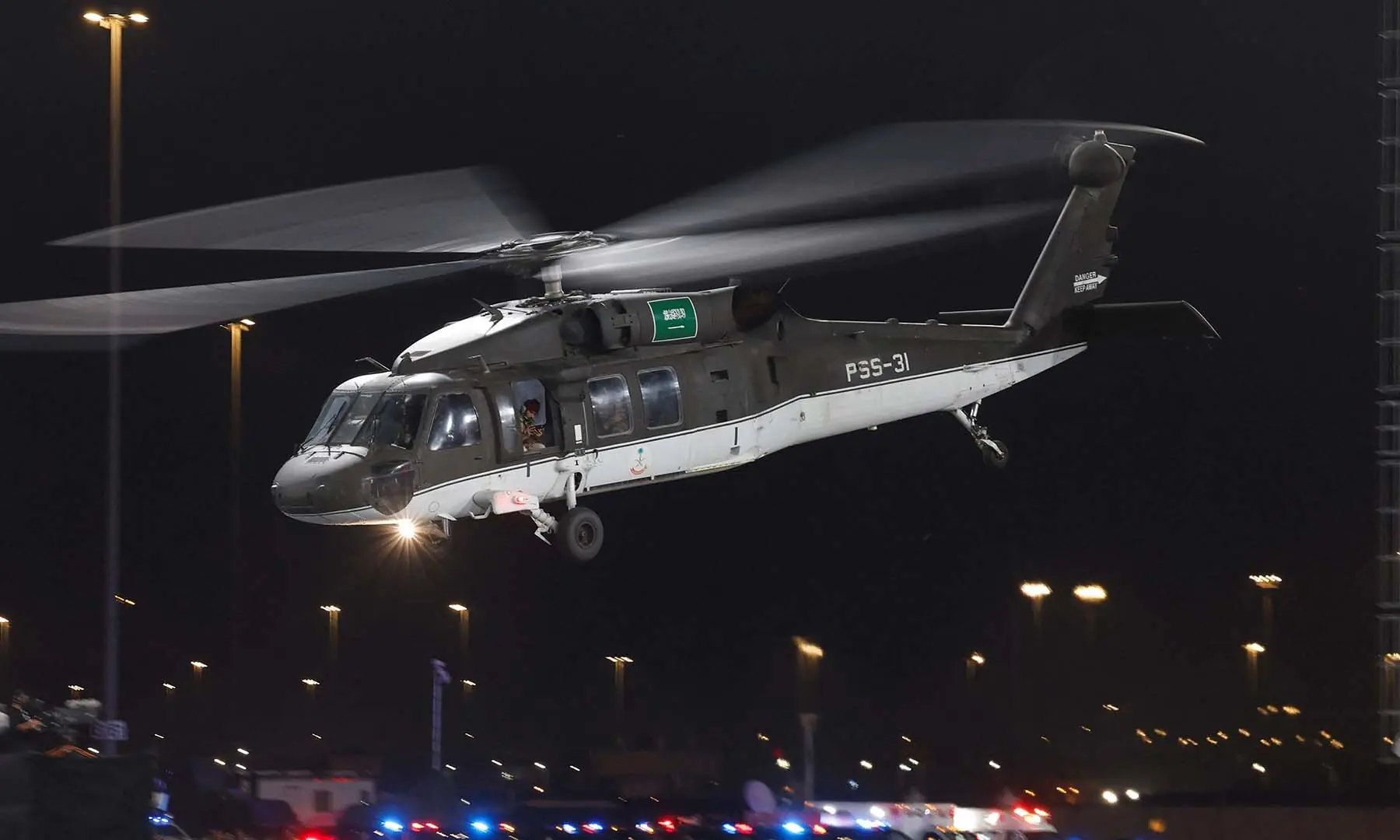
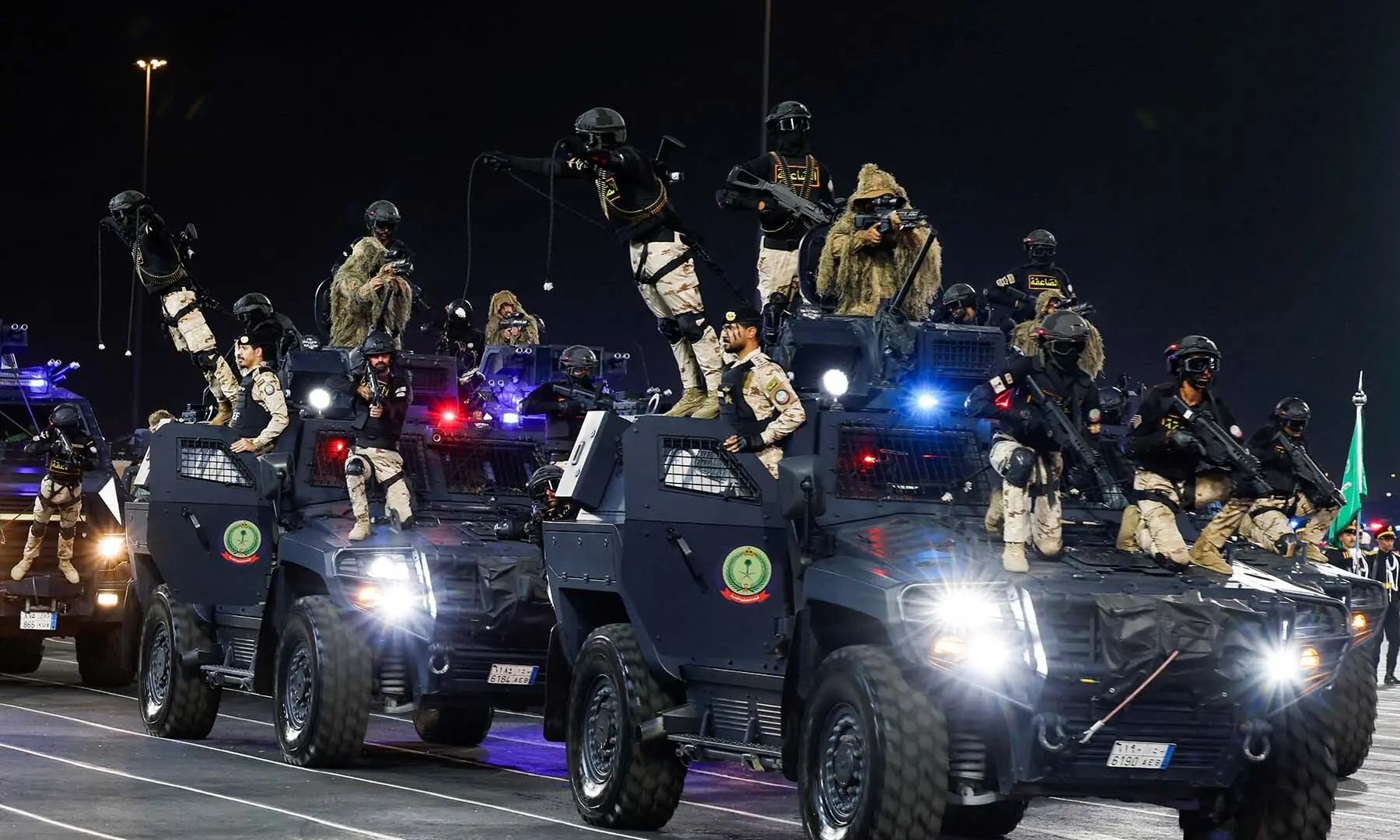
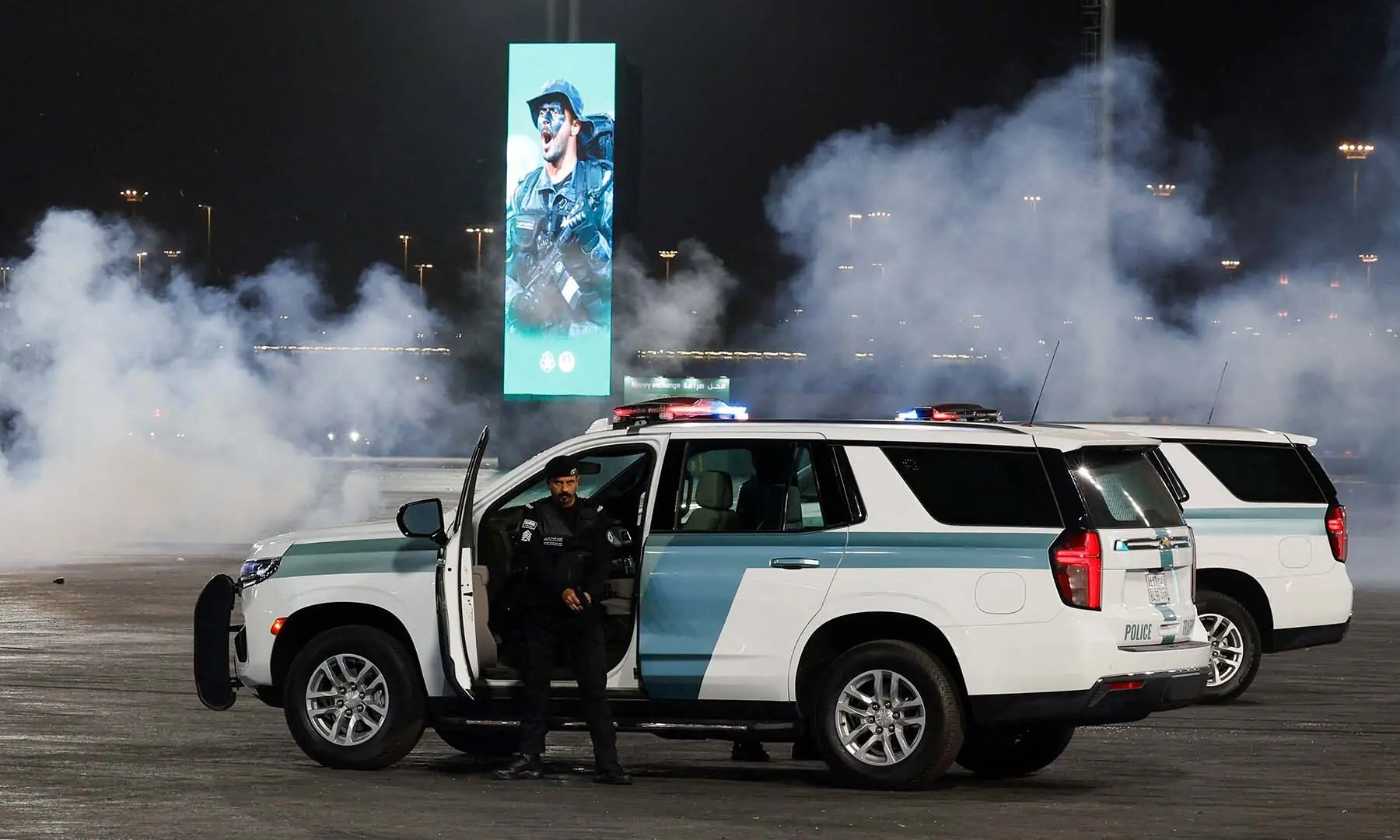
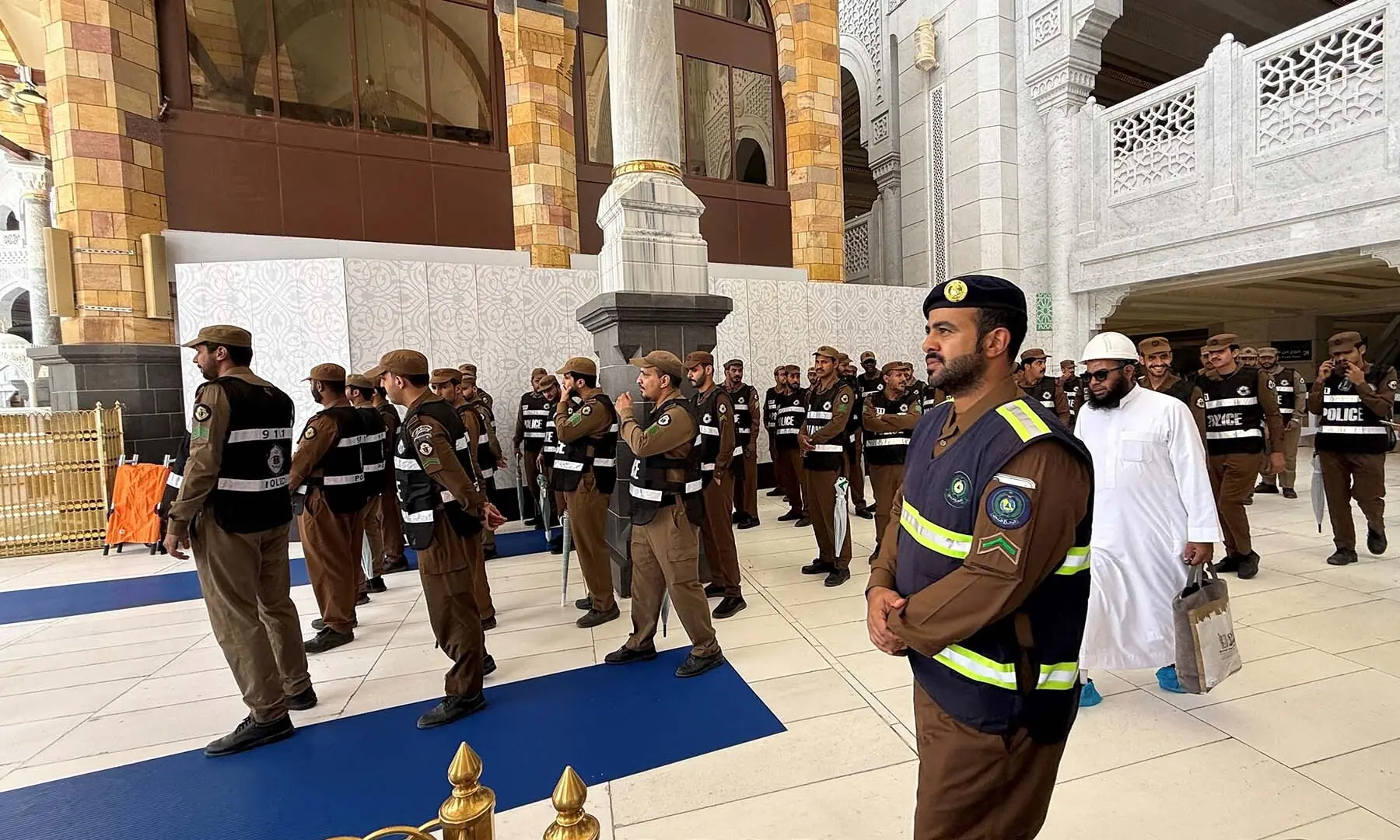
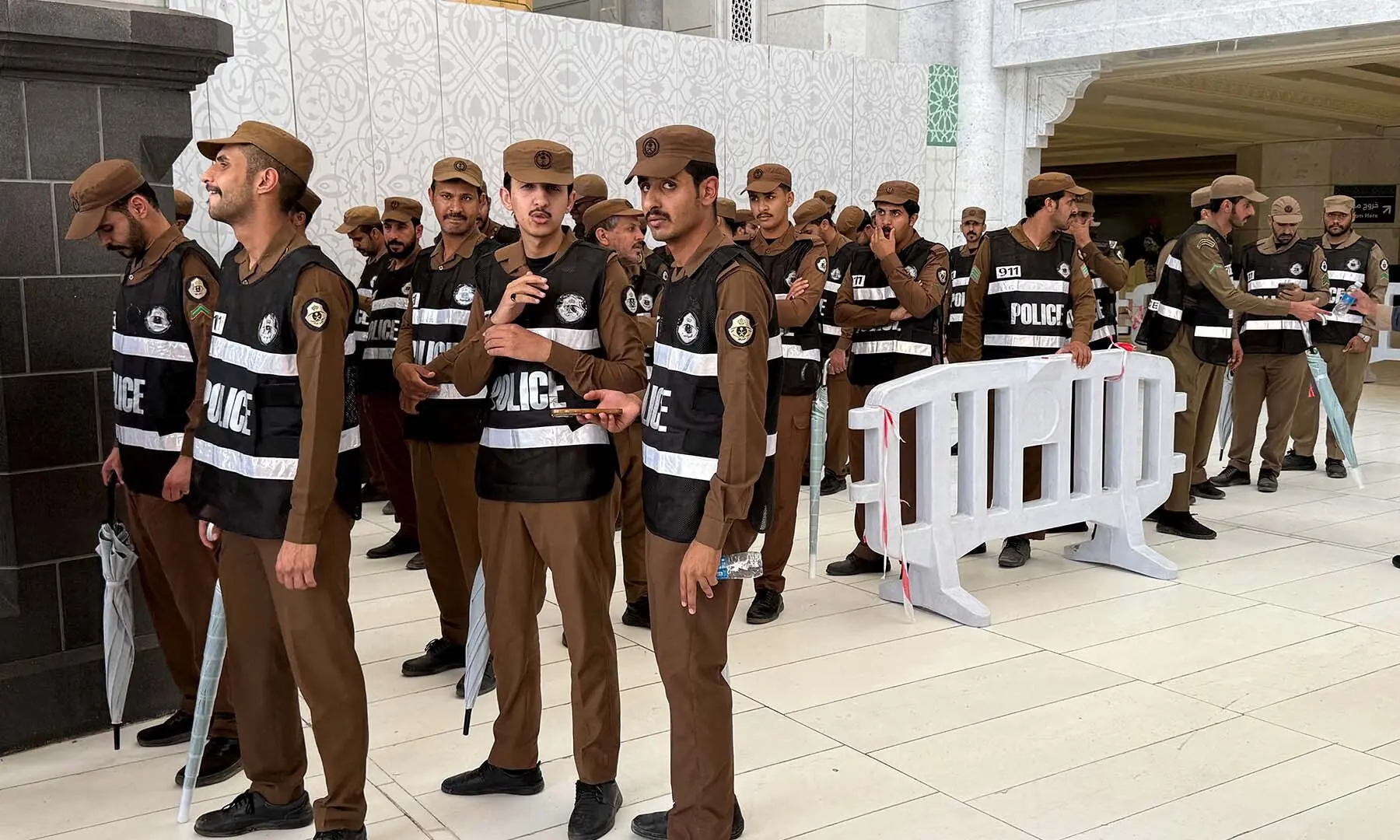
In pictures: Saudi security personnel on alert as pilgrims pour into Makkah for Haj

Over 1.5 million Muslims began filling a vast tent city in Makkah on Monday for the annual Haj pilgrimage.

The white-robed pilgrims on buses or on foot arrived at the sprawling encampment in Mina after performing the tawaf.

This year’s rites, drawing Muslim worshippers from across the world, including Iran, follow waves of attacks on targets in Saudi Arabia and its Gulf neighbours.

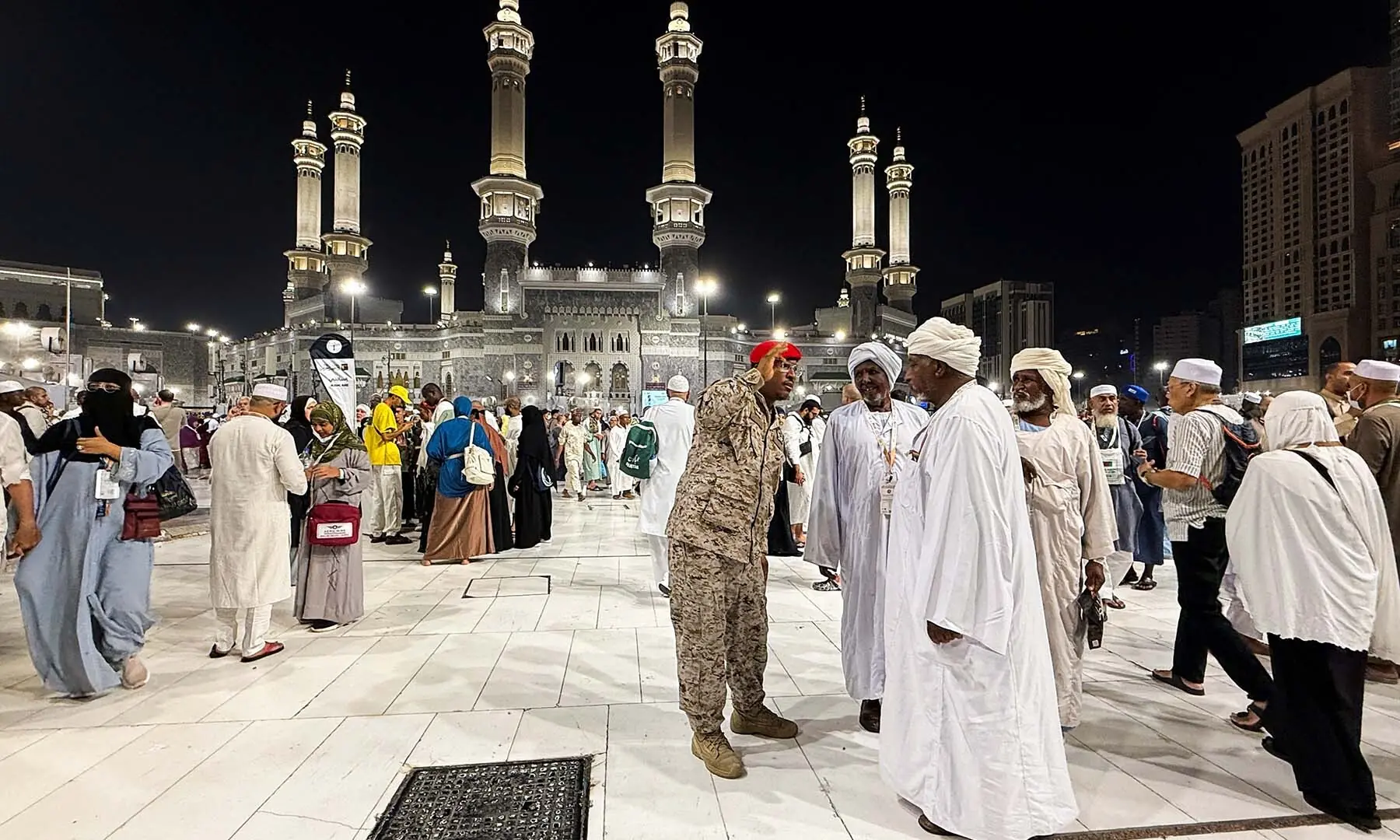
A Saudi security officer speaks to Muslim pilgrims at the Grand Mosque, ahead of the annual Haj pilgrimage, in the holy city of Makkah, Saudi Arabia on May 20, 2026. — Reuters
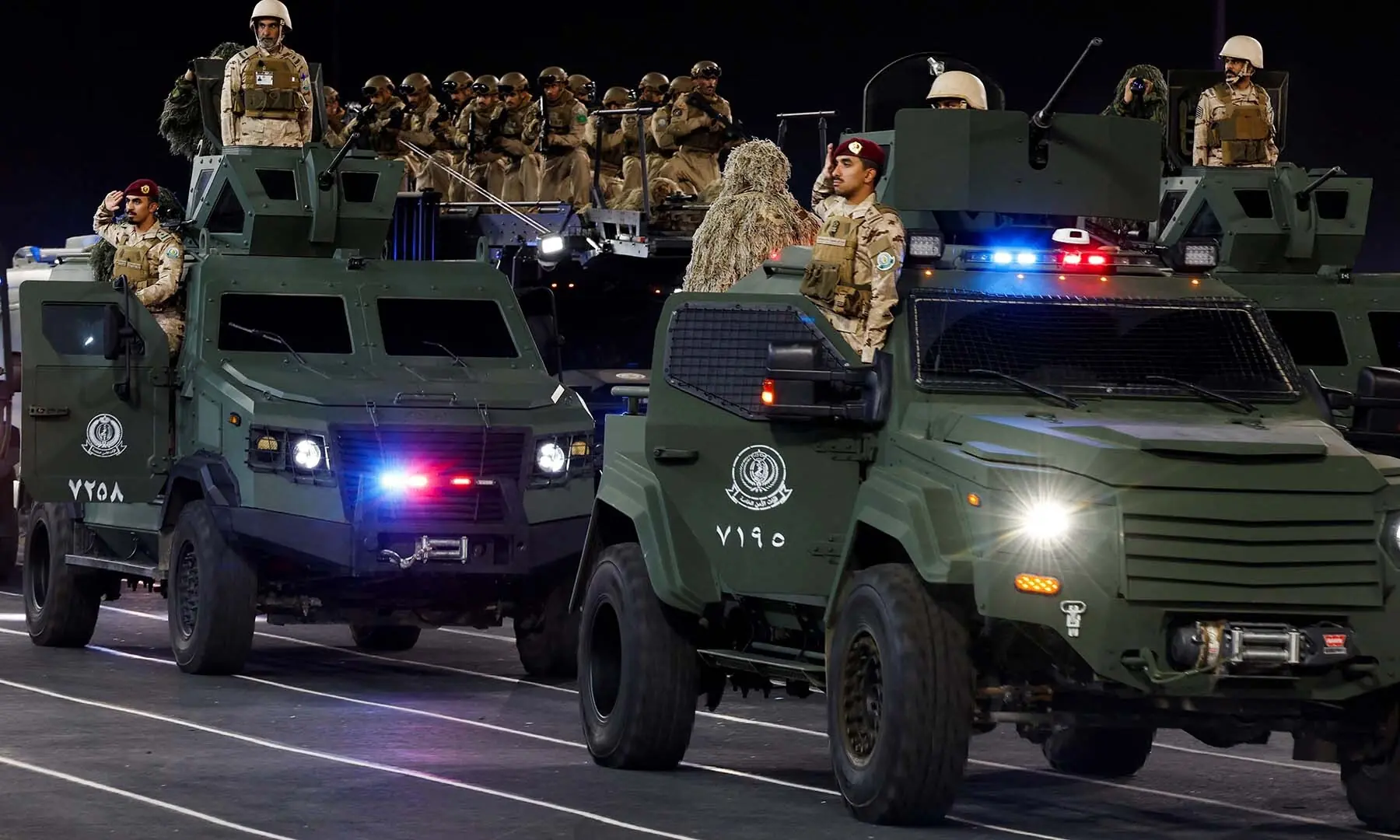
Members of the Saudi security forces take part in a military parade in preparation for the annual Haj pilgrimage in the holy city of Makkah, Saudi Arabia on May 21, 2026. — Reuters
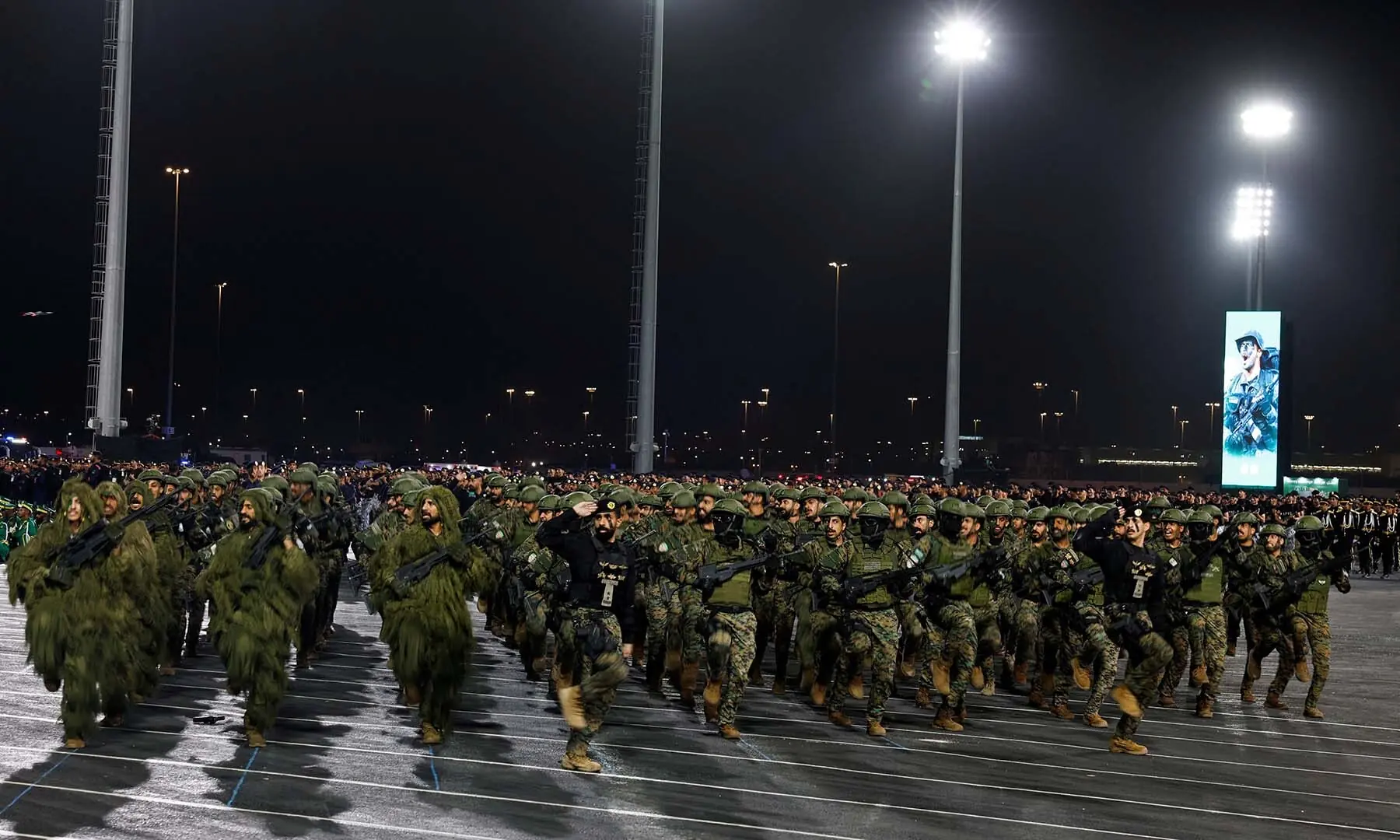
Members of the Saudi security forces hold a demonstration during a military parade in preparation for the annual Haj pilgrimage in the holy city of Makkah, Saudi Arabia on May 21, 2026. — Reuters
A member of the Saudi security forces participates in a military parade in preparation for the annual Haj pilgrimage in the holy city of Makkah, Saudi Arabia on May 21, 2026. — Reuters
Saudi security forces gather and prepare for duty at the Grand Mosque, ahead of the annual Haj pilgrimage, in the holy city of Makkah, Saudi Arabia on May 22, 2026. — Reuters

Header image: A member of the Saudi security forces stands directing Muslim pilgrims, to help prevent overcrowding at the Grand Mosque, ahead of the annual Haj pilgrimage, in the holy city of Makkah, Saudi Arabia on May 22, 2026. — Reuters


from Dawn - Home https://ift.tt/2bK7c43

Sunday, 24 May 2026

Bonds behind financial assistance

Pakistan and China celebrated the 75th anniversary of the establishment of diplomatic relations on May 21. The events held around these celebrations underscore that the relationship between the two countries is entering a new phase characterised by greater financial integration, expanding sub-national cooperation and renewed geopolitical cooperation.

What began as a strategic and political partnership has gradually evolved into one of Pakistan’s most critical economic relationships. Today, China is one of Pakistan’s largest bilateral creditors, a major investor in infrastructure and energy, and an increasingly important source of financial stability for Islamabad during periods of economic stress.

Against this backdrop, Prime Minister Shehbaz Sharif is visiting China these days in a trip that focuses heavily on trade, industrial cooperation, financial connectivity and the future direction of the China-Pakistan Economic Corridor (CPEC).

“The visit is expected to further strengthen and deepen political trust, strategic coordination, expand political cooperation and consolidate the long-standing friendship between the two countries,” a Pakistan foreign ministry spokesman said at a weekly media briefing.

The growing engagement between Pakistani provinces and Chinese regional governments highlights how bilateral ties are extending at the sub-national level

The premier would begin his tour with a business-to-business conference and meet with the Chinese leadership, including President Xi Jinping and Prime Minister Li Qiang. “The two sides will review bilateral relations, and cooperation in political, economic and strategic domains,” the spokesman said.

Many in Pakistan believe that the geopolitical turbulence in the Middle East has created fresh opportunities for closer regional economic cooperation and alternative financing arrangements centred around China.

Foreign Minister Ishaq Dar’s visit to Beijing in late March amid Islamabad’s intensified diplomatic efforts aimed at easing tensions in the Middle East also underscored the two countries’ growing role as regional diplomatic actors. It highlighted Islamabad’s interest in aligning more closely with China on regional stability and economic security issues.

In that context, the recent issuance of overwhelmingly oversubscribed three-year Panda Bond reflects both economic necessity and strategic recalibration. The initiative has allowed Islamabad to raise yuan-denominated debt directly from Chinese investors, helping diversify its external borrowing sources at a time when access to international capital markets remains constrained and costly.

Therefore, Panda Bond is widely viewed as more than a financing instrument. It represents Pakistan’s broader effort to deepen integration with China’s financial system and reduce dependence on traditional Western financing channels. The recent crisis in the Middle East has further reinforced this thinking by exposing vulnerabilities in global trade routes, energy markets and international capital flows.

The strengthening relationship is also becoming increasingly diversified beyond the federal level. President Asif Ali Zardari visited China last month, where multiple agreements and memorandums of understanding were signed between Sindh and Chinese provincial authorities and businesses. The agreements covered areas ranging from trade and agriculture to urban development, technology and investment cooperation.

The growing engagement between Pakistani provinces and Chinese regional governments highlights how bilateral ties are extending at the sub-national level. Analysts view this trend as particularly significant because it broadens economic cooperation beyond large federal infrastructure projects under CPEC and creates new channels for investment, industrial partnerships and people-to-people connectivity.

At the same time, this renewed warmth in Pakistan-China relations is unfolding amid Islamabad’s parallel diplomatic outreach towards Washington and President Donald Trump. For Islamabad, however, managing this balance remains delicate. While Pakistan seeks stronger economic and diplomatic engagement with Washington, policymakers understand that such outreach cannot come at the expense of its long-standing strategic and economic partnership with Beijing. China remains indispensable to Pakistan’s economic stability, external financing and infrastructure ambitions in ways that few other partners can match.

Beijing’s concerns regarding the security of its assets and the safety of its nationals in Pakistan also continue to shape bilateral ties. Attacks targeting Chinese engineers and workers in recent years have emerged as one of Beijing’s biggest concerns regarding future investment expansion.

Pakistan has undertaken extensive security measures to address this issue. Significant progress has been made in improving the security environment for Chinese workers associated with CPEC and other ventures.

Nevertheless, Chinese investors continue to closely monitor the situation, and many believe more sustained efforts will be necessary if Pakistan hopes to attract larger volumes of Chinese private sector investment beyond state-backed infrastructure financing.

Financial cooperation between the two countries has, in the meantime, continued to expand steadily, though the balance remains heavily tilted in China’s favour.

Seventy-five years after diplomatic relations were established, Pakistan and China now find themselves navigating a rapidly changing global order together. The visit of Prime Minister Shehbaz Sharif, Pakistan’s entry into the Chinese capital market through the Panda Bond issuance, expanding provincial-level cooperation and increasing regional cooperation all point towards a relationship that is becoming more financially integrated, strategically consequential and economically diversified than ever before.

Published in Dawn, The Business and Finance Weekly, May 25th, 2026


from Dawn - Home https://ift.tt/ys324FP

LA stadium workers threaten strike ahead of FIFA World Cup

Workers at SoFi Stadium in Los Angeles have overwhelmingly voted to authorise a potential strike during the World Cup , just days before foo...