Sports and 🌎 News: July 2026

Thursday, 23 July 2026

Chenab remains in high flood as rains lash held Kashmir, Punjab

• Flood Forecasting Division warns flows may rise further by July 25 amid new monsoon spell
• Urban flooding likely in parts of Punjab, KP and Balochistan

LAHORE: The Chenab River continued to remain in a high-flood state on Thursday as torrential rains lashed held Kashmir and several parts of Punjab.

“The water level in the Chenab River at Marala and Khanki has subsided to medium flood. However, the river is flowing in high flood at Qadirabad and Chiniot Bridge. It is expected to subside by the time it reaches Trimmu Headworks after passing Chiniot Bridge,” a senior irrigation department official told Dawn. “This is according to a fresh report issued on Thursday evening,” he added.

However, he warned of a possible rise in the river’s water level again at Marala if rains continued in held Kashmir.

“Rains are still continuing in parts of held Kashmir. We will receive Thurs­day’s report from held Kashmir on Friday (today). Let’s see what happens,” he added.

According to the Flood Forecasting Division (FFD) of the Pakistan Meteo­rological Department, the Chenab River at Khanki and Qadirabad is in high flood, while it is in medium flood at Marala.

“The Indus River at Tarbela and Chashma, the Kabul River at Nowshera, the Chenab River at Chiniot bridge and the Ravi River at Balloki are in low flood. All other major rivers are flowing at normal levels at other gauging stations,” the FFD said in its daily report.

Warning

However, it stated that scattered to widespread rain, accompanied by wind and thunderstorms with isolated heavy to very heavy falls, was expected over the catchments of all major rivers due to a westerly weather system coupled with strong monsoon currents deflected from the Bay of Bengal.

“Consequently, river flows are likely to increase significantly up to July 25,” it warned.

The FFD also predicted flash flooding in the hill torrents of Dera Ghazi Khan, streams in Khyber Pakhtunkhwa and northern Balochistan. It also warned of urban flooding in Rawalpindi, Lahore, Gujranwala, Mandi Bahauddin, Sialkot, Narowal, Sargodha, Faisalabad, Okara and Sahiwal.

For the next 24 hours, the FFD forecast widespread rain, wind and thunderstorms, with isolated heavy to very heavy falls over the upper catchments of all major rivers, Islamabad and Kashmir.

It also predicted similar weather conditions in Khyber Pakhtunkhwa’s Abb­o­ttabad, Bajaur, Bannu, Batagram, Buner, Charsadda, Dera Ismail Khan, Hangu, Haripur, Karak, Khyber, Kohat, Kurram, Lakki Marwat, Mansehra, Mardan, Moh­mand, Waziristan, Nowshera, Orakzai, Pe­­shawar, Shangla, Swabi, Swat, Tank and Dir.

The FFD also forecast similar weather conditions in Punjab’s Rawalpindi, Atto­­ck, Bahawalnagar, Bahawalpur, Chiniot, Faisalabad, Gujranwala, Gujrat, Hafiz­abad, Jhelum, Kasur, Lahore, Lodhran, Mandi Bahauddin, Nankana Sahib, Narowal, Okara, Pakpattan, Rahim Yar Khan, Sahiwal, Sargodha, Sheikhupura, Sialkot, Toba Tek Singh and Vehari.

It added that similar weather conditions were likely in Sindh’s Badin, Mirpu­rkhas, Sanghar, Tharparkar and Umer­kot, and Balochistan’s Qila Saifullah, Loralai, Musakhel, Sherani and Zhob.

Meanwhile, regarding water levels and live storage in major reservoirs, Wapda’s daily report said Tarbela Dam had a water level of 1,519.11 feet with live storage of 3.891 million acre feet (MAF).

Mangla Dam’s water level stood at 1,183.90 feet with live storage of 3.297 MAF, while Chashma Lake had a water level of 645.50 feet and live storage of 0.157 MAF on Thursday.

Published in Dawn, July 24th, 2026


from Dawn - Home https://ift.tt/MAFBLoK

UN chief praises Pakistan’s peace initiatives to ‘reduce tensions and create space for dialogue’

UNITED NATIONS: UN Secretary-General Antonio Guterres on Thursday praised Pakistan’s initiative at the UN Security Council (UNSC) to strengthen mechanisms for the peaceful settlement of disputes, saying the move was particularly important at a time when conflicts were escalating across the Middle East and beyond.

Addressing an UNSC open debate held pursuant to Pakistan-sponsored Resolution 2788 (2025), the UN chief presented recommendations aimed at making diplomacy, mediation and conflict prevention more effective tools for maintaining international peace and security.

The resolution, which was presented by Pakistan during its presidency of the UNSC last year and adopted unanimously by the Council, seeks to strengthen the use of peaceful means available under the UN Charter, including negotiation, mediation, conciliation, arbitration and judicial settlement.

Pakistan had argued that diplomacy should not be used only after conflicts erupt but should serve as a means to prevent crises from escalating.

“As conflicts escalate across the Middle East and beyond, military solutions cannot deliver lasting peace,” Guterres said, calling for restraint, protection of civilians and renewed commitment to diplomacy.

“The situation is getting out of control. It’s teetering on the edge of the unimaginable,” the secretary-general warned, noting that the region was being “pulled into another widening circle of confrontation.”

“One crisis feeds another. One escalation triggers the next,” he said, adding that as this dynamic spreads, “the political objectives are becoming increasingly obscured by the confrontation itself.”

“It’s time to step back,” Guterres said, stressing that “attacks on civilian infrastructure are unacceptable” and that “there’s no military solution to the conflict.”

“Fighting must stop everywhere in the region,” he said, while calling for the restoration of “international navigational rights and freedoms in and around the Strait of Hormuz and Bab al-Mandab.”

“Diplomacy is the only way forward,” the UN chief added.

Recognising Pakistan’s diplomatic efforts, Guterres said: “I want to recognise the mediation of Pakistan and countries in the region working to reduce tensions and create space for dialogue.”

“These efforts must be supported and strengthened in pursuit of a peaceful and durable settlement,” he said.

The secretary-general also highlighted developments in the occupied West Bank, saying: “We see creeping annexation with violence, settlement expansion, extensive Israeli military operations and large-scale displacement.”

Pakistan welcomed the secretary-general’s recommendations, with Ambassador Asim Iftikhar Ahmad, Islamabad’s permanent representative to the UN, expressing “profound appreciation” for what he described as “thoughtful, practical and forward-looking” proposals.

Speaking at the UNSC debate, Ambassador Ahmad said sustained implementation of the recommendations would strengthen not only mechanisms for peaceful settlement of disputes but also reinforce implementation of the UN Charter itself.

“These recommendations carry significance far beyond today’s meeting,” he said, adding that they could help “restore conflict prevention and resolution to its rightful place, at the heart of the United Nations, and translate the promise of Chapter VI into practice.”

The ambassador said Resolution 2788 was conceived in the spirit that diplomacy must not be “the instrument we scramble for, after peace has failed,” but rather the means through which failure could be prevented.

He said the challenge was not the absence of mechanisms under the Charter but their “delayed, selective and inconsistent use,” warning that the Security Council often became engaged only after positions had hardened and the space for compromise had narrowed.

Ambassador Ahmad said Pakistan remained committed to peaceful settlement of disputes and cited Islamabad’s recent diplomatic engagement in West Asia as an example of efforts to facilitate dialogue. He said Pakistan, together with partner countries, had played a constructive mediating role between Iran and the United States, helping create space for negotiations.

He expressed regret over renewed hostilities and urged all sides to exercise restraint and return to dialogue, saying that whenever negotiations falter, “the answer is not in less but more determined diplomacy.”

The Pakistani envoy called for stronger follow-up mechanisms for UNSC resolutions, greater use of fact-finding and mediation tools, increased support for the secretary-general’s good offices, and closer cooperation between the UN and regional organisations.

He said the value of Resolution 2788 would ultimately be measured not by the unanimity with which it was adopted but by the consistency with which it was implemented.

“History documents the wars that broke out. It rarely records the war that did not begin because a channel remained open, a mediator persisted, a leader exercised restraint or an institution acted in time,” Ambassador Ahmad said, describing prevention and peaceful settlement as diplomacy’s highest achievements.


from Dawn - Home https://ift.tt/82tgH4n

Wednesday, 22 July 2026

De-escalation efforts

WHILE the exchange of fire across the Gulf — and the wider Middle East — continues between the US and Iran, efforts are also underway to de-escalate matters and revive the ceasefire. An important development in this regard was the series of meetings between Iranian Interior Minister Eskander Momeni and Pakistan’s top civil and military officials on Tuesday.

As expected, the regional situation was amongst the main agenda items, and Mr Momeni indicated that talks will continue. That Tehran sent a senior official to Pakistan shows that despite the hostilities, it is still interested in an off-ramp. Meanwhile, speaking in Manila yesterday, US Secretary of State Marco Rubio used a tough tone for Iran, but did not rule out the possibility of a diplomatic settlement to the conflict.

Revival of the peace process is an incredibly difficult undertaking. Iranian President Masoud Pezeshkian has said his country is in a “full-scale war” with the US, and the growing escalation over the last two weeks shows that the conflict is headed in a very dangerous direction. Yet the recent developments in Islamabad, and the fact that the US has not yet slammed the door shut on negotiations, show that there is still a chance — however slim — of restarting the dialogue process. At the same time, trust levels between Washington and Tehran are very low, and it will take exceptional diplomatic skill to bring both belligerents back to the table.

As hard as the task to revive the peace process may be, the alternative is a regional war which will be far more destructive than the last round. Already the theatre has expanded, with Iran attacking US bases beyond the Gulf, and Yemen’s Houthis enforcing a blockade of Saudi ships in the Red Sea. To prevent an even more alarming escalation, both sides need to silence their guns and give the negotiators a chance to create the framework for a doable peace.

The US must stop attacking Iran and issuing fresh threats, while Iran must refrain from targeting the Gulf states. The escalation may seem controlled at the moment, but in such situations, things can easily get out of hand, and spiral into something much bigger. And just as states such as Pakistan are working behind the scenes to de-escalate, some forces are trying their best to ensure hostilities continue.

For example, US Vice President J.D. Vance recently said in a podcast that some in Israel want “to keep the war going on indefinitely”. The American president should realise that continuing on the warpath with Iran will lead to a regional conflagration, and the only way to end this unnecessary conflict is for the US and Iran to work with Pakistan and other negotiators to find an honourable exit.

Published in Dawn, July 23rd, 2026


from Dawn - Home https://ift.tt/DKAIR0B

Curfew imposed in Mastung’s Khud Kocha after bus attack, bridge blast

Authorities imposed an indefinite curfew in the Khud Kocha sub-tehsil of Mastung district on Wednesday after three people were killed and five others injured in a gun attack on a Karachi-bound passenger bus, while a bridge on the National Highway was damaged in an explosion in the area.

Citing the deteriorating security situation, the Balochistan Home Department imposed an indefinite curfew in the sub-tehsil from 9pm on Wednesday.

Babar Yousafzai, spokesperson for the Home Department, said the curfew would remain in force until further orders to maintain peace and public safety. Residents were not allowed to leave their homes, and all unnecessary movement was prohibited.

“Strict legal action will be taken against anyone found violating the curfew orders,” Yousafzai said, urging citizens to avoid unnecessary travel and cooperate with authorities until normal conditions were restored.

The gun and bomb attacks were reported at a time when security forces killed 10 terrorists and arrested two female suicide bombers, along with their facilitator, during intelligence-based operations in Mastung and Surab districts over the past 48 hours, according to the military’s media wing.

Police said a passenger coach operated by a private transport company was travelling from Quetta to Karachi when it came under indiscriminate fire in the Garo area of Khud Kocha tehsil.

Armed men positioned on nearby mountains opened fire on the bus, killing three passengers and injuring five others.

Security forces and rescue personnel rushed to the scene and shifted the bodies and the injured to the District Headquarters (DHQ) Hospital in Mastung.

The bodies were handed over to the victims’ families after legal formalities were completed, while authorities launched an investigation into the attack and began searching for those responsible.

Bridge damaged

Traffic between Quetta and Karachi remained suspended for several hours after a bridge on the Quetta-Karachi National Highway in the Khud Kocha area of Mastung district was damaged.

A police official confirmed that terrorists had planted explosives under the bridge in the Anjari area of Khud Kocha and detonated them in the early hours of Wednesday.

“The bridge was badly damaged in the explosion, suspending all kinds of traffic on the Quetta-Karachi National Highway. However, no casualties were reported in the blast,” the police official said.

Long queues of buses, goods trucks and other vehicles were seen on both sides of the highway following the blast.

Later in the evening, authorities allowed small vehicles to travel after making alternative arrangements. Security forces reached the area soon after the explosion and launched a search operation to trace those involved in the attack.

Earlier this month, security forces and law enforcement personnel jointly launched Operation Shaban in Balochistan in retaliation for a deadly attack on a police post at the Mangi Dam pumping station in Ziarat on July 6. During that assault, armed attackers kidnapped and killed 27 police officers.

A monthly security assessment released in early June by the Pakistan Institute for Conflict and Security Studies (PICSS) said that after two consecutive months of improvement, Pakistan’s security situation deteriorated sharply in May, driven primarily by escalating terrorist violence in Khyber Pakhtunkhwa and Balochistan.

The report said Balochistan emerged as the most affected province during the month. The province recorded 71 terrorist attacks, compared with 34 in April, representing a 109pc increase.

The deteriorating security situation was further reflected in a surge in kidnappings, it said. Of the 54 abductions reported nationwide during May, 52 occurred in Balochistan alone, highlighting the growing operational reach and confidence of terrorist groups in the province, it said.

On July 9, Prime Minister Shehbaz Sharif said that the country’s civil and military leadership had taken a “mutual and singular decision” to end terrorism after multiple major terrorist incidents in Balochistan.

He made the remarks at a meeting in Quetta of the Provincial Apex Committee on the National Action Plan, with Chief of Defence Forces (CDF) and Chief of the Army Staff Field Marshal Asim Munir also present.

PM Shehbaz’s statement came a day after the military Inter-Services Public Relations (ISPR) Director General Lt Gen Ahmed Sharif Chaudhry addressed a press conference, pointing the finger squarely at India and Afghanistan for being behind recent attacks in Balochistan.

He specifically mentioned “three major terrorist incidents” in recent days — an armed attack on the outskirts of Quetta on July 5, an assault on a police post in Ziarat on July 6, and an ambush of an army convoy in Bela on July 7.


from Dawn - Home https://ift.tt/oYQAInx

US treasury secretary welcomes Pakistan’s economic reforms, return to capital markets

US Treasury Secretary Scott Bessent met Finance Minister Muhammad Aurangzeb a day earlier and welcomed Pakistan’s progress in implementing economic reforms and laying the groundwork for a return to international capital markets, the Treasury said in a statement on Wednesday.

According to a statement, Bessent emphasised the “importance of Pakistan’s work to continue its reforms, become more economically self-reliant, boost growth and strengthen its economic resilience”.

“Secretary Bessent welcomed the progress Pakistan has made in restoring macroeconomic stability and advancing fiscal consolidation, recognising the government’s efforts to implement significant economic reforms,” Treasury said.

The statement added that Bessent also expressed support for Pakistan’s efforts to build greater economic self-reliance and commended the government’s commitment to creating the conditions for a successful return to international capital markets.

The statement, however, did not address Pakistan’s request for a $10 billion exchange stabilisation facility.

Meanwhile, a statement issued by Pakistan’s Ministry of Finance on Tuesday said that Aurangzeb highlighted Pakistan’s journey from macroeconomic stabilisation to sustainable, export-led growth, while noting the economy’s vulnerability to regional geopolitical developments.

The statement added that Senator Aurangzeb sought greater US support for Pakistan’s path to the market, underpinned by improved access to international capital markets, higher foreign exchange reserves and enhanced sovereign credit ratings.

It said both sides reaffirmed their commitment to deepening bilateral economic cooperation, promoting greater US investment and advancing strategic projects.

The proposed $10 billion exchange stabilisation facility would be a financial mechanism under which the US government, through the Treasury’s Exchange Stabilisation Fund, would provide loans or other backstop facilities to Pakistan to bolster its foreign exchange reserves, ease debt pressures, and help stabilise the economy.

Such facilities are primarily used to prevent currency instability and, where necessary, support a partner country’s currency through intervention in foreign exchange markets.

Additional input from Reuters


from Dawn - Home https://ift.tt/XK8jdFI

Tuesday, 21 July 2026

India scrutiny fuels US push to criminalise foreign repression

WASHINGTON: A bipartisan group of US senators has introduced legislation aimed at criminalising efforts by foreign governments to intimidate political opponents and activists living in the United States, amid growing concern in Washington over alleged cases of transnational repression involving India.

The Stop Transnational Repression Act of 2026, sponsored by Democratic Senator Adam Schiff and Republican Senator John Curtis, would make transnational repression a specific federal crime for the first time. It would expand the Justice Department and FBI’s authority to investigate and prosecute foreign efforts to suppress dissent on American soil.

Under the proposed legislation, individuals convicted of transnational repression could face an additional prison sentence of up to 10 years and fines of up to $100,000, alongside penalties for any underlying offences. The bill would also strengthen the role of the US Justice Department’s National Security Division and the Assistant Attorney General for National Security in pursuing such cases.

Legislation proposes to makes repression a specific federal crime for first time

The legislation comes as Con­gress and US law enforcement agencies focus increasingly on a growing pattern of foreign governments attempting to silence critics beyond their own borders.

India, a key US strategic partner, has faced congressional scrutiny following allegations that individuals linked to its government targeted Sikh activists in North America.

In late 2024, the Department of Justice unsealed charges against Indian national Nikhil Gupta, who was accused of attempting to arrange the assassination of a Sikh-American activist in New York at the direction of Vikash Yadav, whom US authorities identified as an Indian government employee.

Yadav was later charged with murder-for-hire, conspiracy and money laundering offences. India has rejected the allegations and announced an internal inquiry.

Canadian authorities have also pursued a separate case involving the killing of Sikh separatist leader Hardeep Singh Nijjar in British Columbia. India has denied involvement in both cases.

Published in Dawn, July 22nd, 2026


from Dawn - Home https://ift.tt/HL07euo

French parliament backs social media ban for under-15s

France’s parliament on Tuesday was set to approve a bill banning social media access for children under 15, making France the first European country to bar children from apps such as TikTok.

President Emmanuel Macron has championed the ban as a flagship reform of his final term in office and pledged to enforce it by September.

The bill was overwhelmingly approved by the Senate on Tuesday, with 243 votes in favour and two against.

The draft law was expected to be adopted by the National Assembly on Tuesday evening, barring surprises.

A growing number of countries are taking steps to restrict social media access amid multiplying warnings over its harmful effects on children.

“France will become the first country in Europe to introduce a digital age limit to better protect our children online,” French Digital Minister Anne Le Henanff said on X.

The ban would be rolled out in two stages, with under-15s blocked from creating new accounts from September 1. The ban would apply to existing accounts from January 2027, according to the text.

Le Henanff said ahead of the vote that the timeline was realistic, “because age-verification tools already exist” with others still in the works, and the onus was on the platforms to impose the rule.

“For four months, all of us in France will have to prove our age,” she told journalists.

“If someone is under fifteen, the account will be closed.” The minister also gave assurances that users’ personal data would be protected.

Enforcing the measure by September would also ensure that one provision of the bill — a ban on mobile phones in high schools — takes effect at the beginning of the French school year.

‘Largely ready’

France’s public health watchdog last year said platforms such as TikTok, Snapchat and Instagram were harmful to adolescents, particularly girls, though it was not the sole reason for their declining mental health.

Lawmakers agreed on the need for regulation but the two chambers had disagreed on the approach.

French senators had opted for a two-tier system distinguishing between blacklisted platforms flagged as harmful to a child’s development, and those that could still be accessed with parental consent.

But the lower house’s blanket ban prevailed and was expected to pass, despite criticism from some on the left over the age verification process, the speed of its implementation and risks of circumvention as well as privacy concerns.

Exceptions to the ban are provided for sites such as online encyclopedias and educational platforms and the text does not provide for any penalties for children or parents.

“The major platforms are, in my view, largely ready,” lawmaker Laure Miller told AFP.

Watched in Europe

The blacklisting system would have taken more time, including fresh consultations with the European Commission on the criteria, and carried a “small risk” of non-compliance with European law, said centrist senator Catherine Morin-Desailly.

The EU has been mulling a social media ban after a push by member states, including France, Greece and Spain, for limiting access.

Last week, EU chief Ursula von der Leyen said children should have “phased and gradual access” to social media.

The European Commission has also unveiled an age verification app that EU member states, including France, have begun testing in recent months.

After Macron’s government suspended a flagship pensions reform last year, a social media ban could be his last major domestic change before he steps down next year.

France will be closely watched by other European states — it is one of 20 countries worldwide to have proposed or introduced such measures.

In December last year, Australia became the first country in the world to require TikTok, YouTube, Snapchat and other top sites to remove accounts held by under-16s, or to face heavy fines.


from Dawn - Home https://ift.tt/YLUThdA

India student protests give opposition a rare opening against Modi

When pent-up youth anger propelled India’s Cockroach Janta Party (CJP) to online fame in May, its founder said his supporters were disillusioned with both Prime Minister Narendra Modi’s party and the opposition for failing to address their concerns.

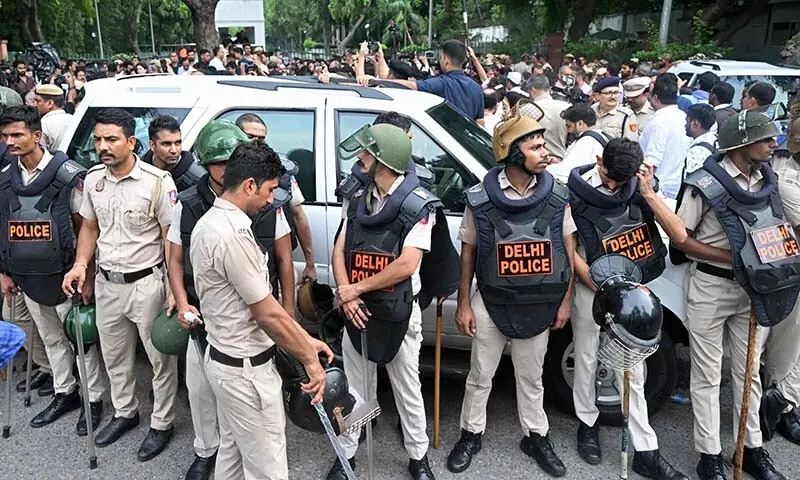
Yet CJP leaders turned to opposition lawmakers and appealed directly for their support on Monday after police used batons and tear gas to disperse protesters marching on parliament to demonstrate against damaging exam leaks and corruption.

Opposition lawmakers were quick to oblige on Tuesday, after many young demonstrators were injured.

Police personnel stand guard as India’s opposition party Indian National Congress stages a sit-in protest calling for Prime Minister Narendra Modi’s resignation outside the latter’s residence in New Delhi on July 21, 2026. — AFP

The show of solidarity with protesters could help opposition parties win valuable young voters and broaden the appeal of the CJP, which has so far focused on demanding the education minister’s resignation over the exam paper leaks.

Tens of thousands of protesters had turned out in Delhi, far more than expected, and images of the authorities’ crackdown spread across social media, prompting nearly all opposition parties to rally behind the movement, which has so far said it will keep out of electoral politics.

An opportunity to gain the youth vote

Analysts said the wider political support for the CJP comes with risks for the movement: concerns central to students, such as preventing exam paper leaks and creating more youth jobs, could be overshadowed by broader political agendas.

But the backing could also help sustain them by providing resources, organisational support and a wider national platform.

For the opposition, which has lost many elections to Modi since he first took office in 2014 on the back of anti-corruption protests, India’s young people represent a significant political opportunity.

Those under 30 are estimated to make up more than half of India’s 1.42 billion population, and many have long been frustrated by a lack of jobs under Modi despite years of strong economic growth.

Cockroach Janta Party (CJP) founder Abhijeet Dipke (back C) looks on during a protest demanding the resignation of India’s Education Minister Dharmendra Pradhan over alleged NEET exam irregularities, in New Delhi on July 21, 2026. — AFP

India’s next parliamentary elections are due by April 2029, but key states like the most populous, Uttar Pradesh, run by Modi’s party, and Punjab, vote next year.

“I think the opposition has got a clear sense that there is a very strong sentiment against the government on this issue at least,” said Sanjay Kumar, professor at the Centre for the Study of Developing Societies in Delhi, referring to the education minister.

“If the movement remains undirected … the chances of a further crackdown on the movement are much higher. So the opposition parties see it as an opportunity and they will try to develop a soft corner among the protesters.”

Some Indian broadcasters sympathetic to the government have already accused the opposition of trying to hijack the movement for limelight.

‘Jump on the bandwagon’

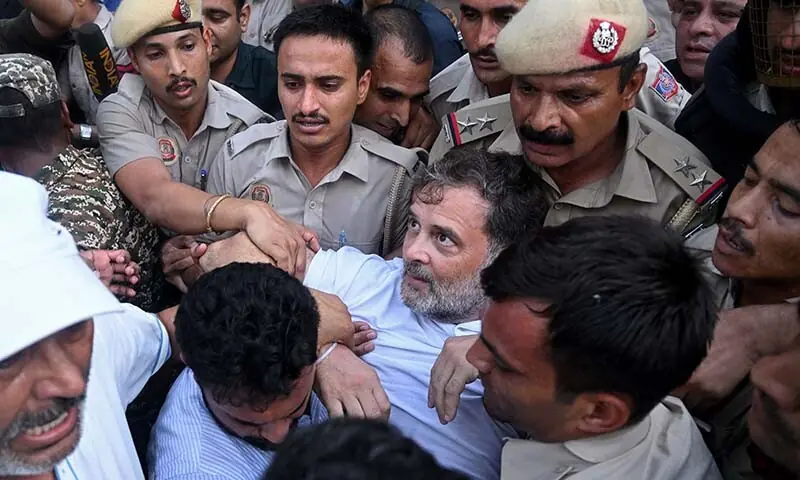
Congress leaders and lawmakers Rahul Gandhi and Priyanka Gandhi Vadra protested outside Modi’s residence late on Tuesday, calling for Education Minister Dharmendra Pradhan’s resignation over the leaks of exam papers for medical courses that affected millions of students and led to a retest.

“An attack on students is an attack on every Indian family,” Rahul said before he was detained by police. “PM Modi believes he can get away without answers, without consequences. He cannot. Not this time. The voice of India’s students will not be ignored.”

Security personnel detain India’s opposition leader Rahul Gandhi (C) as he stages a sit-in protest calling for Prime Minister Narendra Modi’s resignation outside the latter’s residence in New Delhi on July 21, 2026. — AFP

Modi has not spoken publicly about the paper leaks. A cabinet minister said after a meeting of the ruling coalition that Modi told them “strongest possible steps are being taken to protect the interest of the students”.

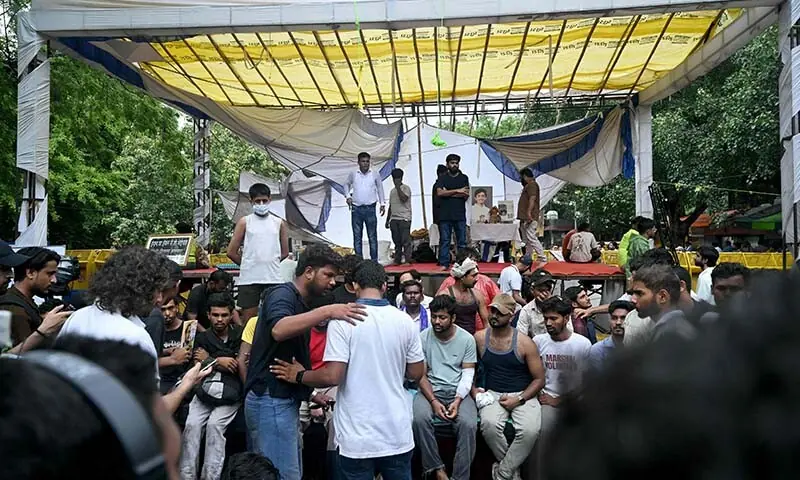
Many other senior opposition leaders visited protesters camped out in extreme heat about three kilometres from parliament. Some lawmakers and senior politicians provided legal assistance to protesters detained by police, while others sent food and other supplies.

“There is now a one-upmanship among political parties over who can best position themselves as the champion of India’s youth,” said Rasheed Kidwai, political analyst and visiting fellow with the Observer Research Foundation.

“Every political party is acting according to its own electoral calculations, particularly with state elections approaching in Punjab and Uttar Pradesh.” The CJP said it welcomed the political support.

“It’s not a political protest. It’s a movement of the masses; it is a movement of students, and we appreciate the support we are getting from the opposition parties,” a spokesperson said.

“It was CJP which invited the opposition, and now they are coming and giving us the support. It motivates us. We won’t let any politics happen here.”

They need to be mindful, said political analyst Sandeep Shastri.

“Whenever there is a movement like this, and given the visibility it is receiving, it is very tempting for every political formation to jump on the bandwagon,” he said.

“So if political parties join this movement, there is a strong chance that the leaders who actually started it, as well as the issues driving it, will take a back seat.”


from Dawn - Home https://ift.tt/OCmHjY1

Monday, 20 July 2026

Rethinking trade policy

THE preparation of the Strategic Trade Policy (STP) for 2026-31 is an opportunity not merely to set fresh export targets but also rethink our export strategy in the light of lessons of the past decade. Any new policy’s credibility depends on fixing structural weaknesses that have repeatedly undermined implementation.

First, policies alone don’t produce results. Pakistan has prepared numerous strategies over the past three decade, but most have fallen short because governance has been weak and institutions ineffective. Good governance is the foundation on which sound economic policies rest. It improves resource allocation, boosts competitiveness, raises productivity, reduces transaction costs and enables efficient functioning of markets. Unless accompanied by governance reforms, the new STP is unlikely to deliver outcomes different from its predecessors.

The new policy should begin with an honest assessment of the previous two STPs. STP 2015-20 envisaged exports of $35 billion by 2020, but actual exports amounted to only $20.5bn. STP 2021-26 targeted exports of $57bn by 2025, but actual exports reached only about $32bn. The government should analyse why earlier policies failed. Were the targets too optimistic? Was production capacity, particularly for non-traditional exports, assessed before targets were set? Were industrial bottlenecks identified and removed? Did the National Export Promotion Board (NEPB), chaired by the prime minister, meet regularly to review progress and resolve implementation issues? Were problems such as excessive taxation, high energy prices, tariff protection, cumbersome regulations and rising cost of doing business effectively addressed?

The review must distinguish between policy failures and external shocks. Covid-19, floods, the Ukraine war and Middle East tensions disrupted global supply chains and global trade, affecting export performance. But they can’t alone explain Pakistan’s stagnation. Domestic policy choices also had a role. Between 2013 and 2018, the exchange rate remained effectively fixed while the real effective exchange rate appreciated steadily, indicating an overvalued currency. During this time, exports were stagnant at around $25bn, imported inputs became more expensive and exports as a share of GDP declined from 13.1 per cent in 2005 to 7.9pc by 2025.

Second is the failure to diversify exports despite repeated policy commitments. Successive STPs identified product and market diversification and technological upgrading as central goals, yet little changed. Textiles, food products and leather still account for over four-fifths of our exports, almost the same proportion as a decade ago. Export destinations, too, remain highly concentrated. The US, EU, China and UAE together account for over 60pc of exports.

The new policy should begin with an honest assessment of the previous two STPs.

The EU illustrates both Pakistan’s success and its missed opportunities. Since gaining GSP-Plus status in 2014, exports to the EU have expanded significantly because of preferential access to about two-thirds of tariff lines. But, Pakistan has failed to diversify beyond traditional cotton textiles. It has not adequately exploited opportunities in synthetic fibre products, technical textiles and other higher-value segments where global demand is growing rapidly. Despite substantial export growth, Pakistan still accounts for only a small fraction of total EU imports.

The broader export basket remains concentrated in low-technology, resource-based products with limited long-term growth prospects. We still lack a meaningful presence in medium- and high-technology sectors such as electronics, engineering goods, pharmaceuticals, chemicals, medical equipment and e-mobility components. These account for a growing share of world trade, offering opportunities for productivity gains and higher wages.

Integration into global value chains offers perhaps the greatest opportunity for export expansion, especially through deep industrial linkages with China. Recent tariff reforms and the Pakistan Single Window initiative are important, but must be implemented consistently. Domestic taxes and tariffs on imported polyester, synthetic fibres and other industrial raw material should be gradually reduced to improve competitiveness. We also need a medium-term industrial policy to encourage investment in upstream industries, including a petrochemical complex that can supply raw materials for synthetic fibres and downstream manufacturing industries. Even the World Bank now recognises that carefully designed industrial policies have an important role in accelerating structural transformation in developing countries.

The third requirement is realism. In an uncertain global environment, single-point export targets have little practical meaning. The new STP should present a range of possible outcomes supported by analysis. Its underlying assumptions should be clear. Industrial, tariff, tax, exchange rate, fiscal, monetary and skills development policies must reinforce and not contradict one another. Regulatory simplification, digitalisation, logistics efficiency, technical skills and higher female labour force participation are equally critical and should be fully reflected in implementation frameworks.

Consultations with exporters should be substantive. Existing and indirect exporters and potential entrants understand regulatory obstacles and market opportunities that policymakers often overlook. Their advice should shape policy design and implementation. The STP should assess emerging global trends including AI, climate change, demographics, geopolitics and supply-chain realignment, to ensure that its assumptions stay robust over the next five years.

Finally, the commerce ministry and NEPB should focus on steps within their direct control. Pakistan must pursue preferential trade agreements with Asean, the GCC, Japan, Korea, the UK, the US, Central Asia and Russia, while seeking more favourable terms under the China-Pakistan Free Trade Agreement. Compliance with the 27 international conventions underpinning GSP-Plus must be a priority.

Export financing should be expanded through instruments like guarantees and export insurance. The Export Facilitation Scheme must be restored with stronger safeguards. The Export Development Fund should finance product development, market diversification, testing, certification, technology upgrading and skills development. The Pakistan Single Window should be extended to cover remaining regulatory agencies. A formal stability clause, committing the government not to make major policy changes without consultation, would boost long-term investment. Finally, strong trade diplomacy needs qualified commercial representatives abroad. Export promotion should be made a central rather than a subsidiary responsibility of foreign service officers and their performance metrics.

Pakistan’s export problem is no longer one of diagnosis. The constraints are well known and the priorities have been identified. The real challenge lies in implementation, coordination and policy consistency. The next STP should be judged not by the size of its export targets but the credibility of its assumptions, the coherence of its implementation strategy and, above all, its ability to produce measurable results.

The writer is a former State Bank governor.

Published in Dawn, July 21st, 2026


from Dawn - Home https://ift.tt/bfgFp0v

Chenab water level likely to surge following ongoing rains in Indian-occupied Kashmir, Punjab

LAHORE: The water level in the Chenab River is likely to surge significantly over the next couple of days following ongoing rains in catchment areas of Indian-occupied Kashmir and fresh spells of heavy rain in parts of Punjab.

“At the moment, the Chenab River is flowing in medium flood. Its flow may surge and enter the high-flood category following forecasts of heavy rain over the next three to four days in both held Kashmir and Punjab,” a senior official of the Punjab Irrigation Department told Dawn on Monday.

“The situation may turn critical if there are heavy rains, as predicted, in the catchment areas of held Kashmir and Punjab,” he added.

Meanwhile, the Pakistan Meteorological Department’s Flood Forecasting Division (FFD) issued a forecast of high flood levels in major rivers, including the Chenab, and nullahs due to heavy rains expected until July 24.

According to the FFD’s Monday flood bulletin, the flows of all major rivers were likely to increase significantly by July 24 due to a prevailing westerly wave coupled with a strong monsoon incursion from the Arabian Sea and the Bay of Bengal over the catchments of all major rivers.

“High flood levels are expected in River Chenab at Marala, River Jhelum upstream of Mangla and associated nullahs of the Jhelum and Chenab (Dora, Dotta, Dowara, Bhimber, Halsi, Aik and Palkhu) and Ravi (Bein, Bassanter, Deg and Sakki). High flows are also expected in River Kabul and its associated tributaries,” the FFD warned.

It also forecast flash flooding in the hill torrents of DG Khan, streams of Khyber Pakhtunkhwa and northern Balochistan, and urban flooding in Rawalpindi, Jhelum, Gujranwala, Sargodha, Khushab, Sialkot, Gujrat, Narowal, Lahore, Okara, Sahiwal, Bahawalnagar and Faisalabad.

The FFD also mentioned the current situation regarding water flows at various gauging stations.

It observed that the River Indus was flowing at “low and below-low levels” at various stations, including Tarbela, Kalabagh, Chashma, Taunsa, Guddu Sukkur and Kotri.

“The Jhelum is flowing in low to medium flood at Mangla and Rasul, followed by the Chenab flowing in medium to high flood at Marala, Khanki and Qadirabad. The Ravi and Sutlej rivers are flowing in below-low flood,” it added.

Meanwhile, the daily water report issued by the Water and Power Development Authority stated that inflows and outflows in the River Indus at Tarbela were recorded at 232,500 cusecs and 210,000 cusecs, respectively. The inflows and outflows in the Jhelum at Mangla were recorded at 57,400 cusecs and 10,000 cusecs, respectively.


from Dawn - Home https://ift.tt/VSAcdys

Trump dismisses NY Mayor Mamdani's threat to arrest Netanyahu

US President Donald Trump on Monday vowed that Israeli Prime Minister Benjamin Netanyahu would not face arrest at a UN summit in New York, after the city’s new mayor said he was investigating the move.

Mayor Zohran Mamdani admitted he was unsure if he had the power to order police to detain a foreign leader but said he was discussing the matter with his legal team ahead of the UN General Assembly in September.

“Benjamin Netanyahu will not be arrested, in any way, shape, or form, while in the United States of America,” Trump said on social media.

“He is fighting against the Islamic Republic of Iran.”

The Hague-based International Criminal Court said in 2024 that it had reasonable grounds to believe Netanyahu was responsible for alleged war crimes and crimes against humanity related to Israel’s offensive in Gaza following the brutal October 7, 2023 cross-border attack by Hamas.

“I believe that Prime Minister Netanyahu belongs in The Hague,” Mamdani told the New York Times on Saturday, referring to the United Nations’ International Court of Justice (ICJ). “He’s a war criminal.”

“And what you will find is that is an opinion that is held by many, purely because of what his actions have wrought over these last many years.”

However, Mamdani said he was unclear on whether he has the legal authority to order the New York Police Department (NYPD), which he oversees, to detain a foreign leader like Netanyahu.

Therefore, his administration was still mulling whether to arrest Netanyahu if he comes to NYC in September, as expected for the 81st session of the UN General Assembly.

“Whatever the law allows me to do in New York City, that’s what we will do, but we won’t be writing our own laws to that end,” Mamdani added.

During his mayoral campaign in September 2025, Democratic Mamdani had said he would order the NYPD to arrest Netanyahu if he arrives in the city.

Netanyahu’s office also dismissed Mamdani’s stance and said the ICC was a kangaroo court.

According to NYT’s Saturday report, Netanyahu also commented on Mamdani’s threat to arrest him, saying he was not concerned. He went as far as even accusing the mayor of supporting Palestinian resistance movement Hamas.

“I think he should look at who he’s condemning, who he’s praising,” the Israeli premier said during an interview this week with Sid Rosenberg, whom the NYT described as a “frequent critic” of Mamdani.

Mamdani had condemned pro-Hamas chants in January, describing the Palestinian group as a “terrorist organisation” when criticised by some circles.


from Dawn - Home https://ift.tt/DQOjoSY

Sunday, 19 July 2026

From Red Fury to a symphony in red: How Spain made themselves perennial World Cup favourites

There was a time when Spain’s football was defined by fury. Today, it is defined by control.

The old La Furia Roja (The Red Fury) was built on passion, aggression and flashes of individual brilliance.

The Spain of today is something more complete: technically immaculate, tactically sophisticated and capable of turning possession into sudden, devastating attacks.

As Spain prepare to face Argentina in the FIFA World Cup final at MetLife Stadium tonight, they do so unbeaten in 37 matches and as reigning European champions.

Their remarkable resurgence is not the product of one golden generation or one exceptional manager — it is the result of a footballing system developed over decades, refined through success and failure, and constantly adapted to the demands of the modern game.

For much of its history, Spain failed to translate the strength of its domestic football into international success. The 1964 European Championship remained its only major title for decades. The transformation began not in the national team dressing room, but on the training pitches of Barcelona’s La Masia academy.

When Johan Cruyff returned to Barcelona as coach in 1988, he brought with him a philosophy rooted in the principles of Total Football. Possession, intelligence, spatial awareness and technical ability were placed above physical strength. The 4-3-3 system became more than a formation; it became a way of understanding the game.

At La Masia, players were taught to read the pitch as much as to play on it. Short passing, positional rotations, movement without the ball and the creation of passing angles became fundamental.

The influence eventually extended beyond Barcelona. The Spanish football federation adopted many of those principles across its youth structures, helping create a common footballing language that transcended club rivalries.

The grassroots blueprint

Spain’s success has been built from the bottom up.

Young players move through carefully structured age groups, where training focuses heavily on decision-making, technical ability and football intelligence.

Small-sided games and exercises that demand quick decisions are prioritised over simply developing physical strength.

The country’s youth football is also intensely competitive. Promotion and relegation structures expose young players to pressure from an early age, while regional federations and the Spanish Football Federation work together to identify and develop talent.

The country’s leading clubs provide another important bridge to senior football. Reserve sides such as Barcelona B and Real Madrid Castilla compete in the professional league system, allowing teenagers to experience the physical and tactical demands of adult football before making the jump to the highest level.

That structure helps explain why players such as Lamine Yamal can enter elite football at an extraordinarily young age without appearing overwhelmed.

They are products not only of exceptional talent but of an environment designed to prepare them for the demands of the game.

The golden age of tiki-taka

The fruits of that system became visible between 2008 and 2012.

Under Luis Aragonés and Vicente del Bosque, Spain produced one of the greatest international teams in football history.

Xavi, Andrés Iniesta, Sergio Busquets, David Villa and their teammates perfected a style that came to be known around the world as tiki-taka.

Spain won Euro 2008, the 2010 World Cup in South Africa — the country’s first — and Euro 2012. In the process, they became the first team to win three consecutive major international tournaments.

Their football was built around the ball. Possession was both an attacking weapon and a defensive strategy. By keeping the ball, Spain denied opponents the opportunity to attack. By moving it quickly and intelligently, they created openings that often appeared impossible to defend.

The team represented the meeting of two traditions in Spanish football: the passion and directness of the old Furia Roja and the technical, possession-based football shaped by Cruyff’s influence.

When possession became predictable

But success eventually created its own problems.

By the middle of the 2010s, Spain’s football had begun to lose its element of surprise. Possession remained abundant, but it increasingly became sterile. The ball moved sideways and backwards without enough penetration or depth.

Opponents adapted. High pressing, compact defensive blocks and a willingness to concede possession in selected areas exposed the limitations of a system that had become predictable.

Spain exited the 2014 World Cup at the group stage. They were eliminated in the round of 16 at the 2018 World Cup and again in 2022, when Morocco knocked them out on penalties.

The old formula was no longer enough. Spain had to evolve without abandoning the principles that had made it successful.

A modern rebirth

Luis de la Fuente, appointed national team coach in 2022, understood that balance.

Having worked extensively within Spain’s youth system, he was familiar with the foundations of the country’s football. His task was not to destroy them but to modernise them.

Spain retained their ability to dominate possession but added greater verticality and unpredictability. Wingers such as Lamine Yamal and Nico Williams gave the team the ability to attack space, beat defenders one-on-one and stretch opponents in ways the old tiki-taka teams often struggled to do.

Spain can now overload one side of the pitch, draw opponents towards the ball and then quickly switch play to create isolated situations on the opposite flank. Possession is no longer an end in itself. It is used to create openings.

Euro 2024 offered the clearest evidence of the transformation.

Spain won all seven matches on their way to a record fourth European Championship title, defeating England 2-1 in the final. They combined technical control with greater speed and directness, while the emergence of Yamal symbolised the fearlessness of a new generation.

The teenager was not merely a talented addition to an established team. He represented the evolution of Spanish football itself.

Spain have carried that momentum into the World Cup.

Their unbeaten run and progress to the final have underlined the depth of their squad and the maturity of their football.

Rodri provides control in midfield, while the attack offers a mixture of possession, movement and explosive pace.

The result is a team that can dominate a match patiently but is also capable of changing its rhythm in an instant.

A model beyond football

Spain’s rise offers a lesson that extends beyond the football pitch.

Its success was not built through a single generation, a quick tactical fix or the discovery of one extraordinary player. It was the result of a long-term commitment to a particular footballing philosophy.

The influence of Cruyff, Barcelona’s academy and the structures developed by the Spanish federation created a technical and tactical foundation.

But the system survived because it was not treated as sacred.

When possession became predictable, Spain adapted. When the old generation faded, a new one was allowed to play with greater freedom. The principles remained, but the interpretation changed.

That may be the most important part of Spain’s story.

The country’s football has evolved from the passion of La Furia Roja into something more controlled without losing its intensity.

The fury has evolved into a refined version of itself.

Today, Spain can suffocate opponents with the ball, break them with speed and defend with the same collective understanding that has defined their football for decades.

Their final against Argentina will bring together two of the most powerful footballing traditions of the modern era.

But whatever happens at MetLife Stadium, Spain’s journey from international underachievers to one of the world’s most consistent footballing powers remains one of the great examples of what long-term planning can achieve.

The Red Fury has become a symphony in red. The anger remains. The difference is that now every movement has a purpose.


from Dawn - Home https://ift.tt/Itnf9LF

How Spain made Argentina look ordinary

The scoreline said Spain had beaten Argentina 1-0 after extra time. The match said something far more emphatic.

For much of the World Cup final in New Jersey, Spain did not merely outplay the defending champions. They controlled the game so completely that Argentina, despite the presence of Lionel Messi in what was expected to be his final World Cup match, were reduced to chasing shadows.

The victory gave Spain their second World Cup title, but it was the manner of the triumph that made it particularly significant. Against a team that had built its tournament on resilience, late comebacks and the individual brilliance of Messi, Spain offered something altogether different: control without panic, possession without sterility and pressure without recklessness.

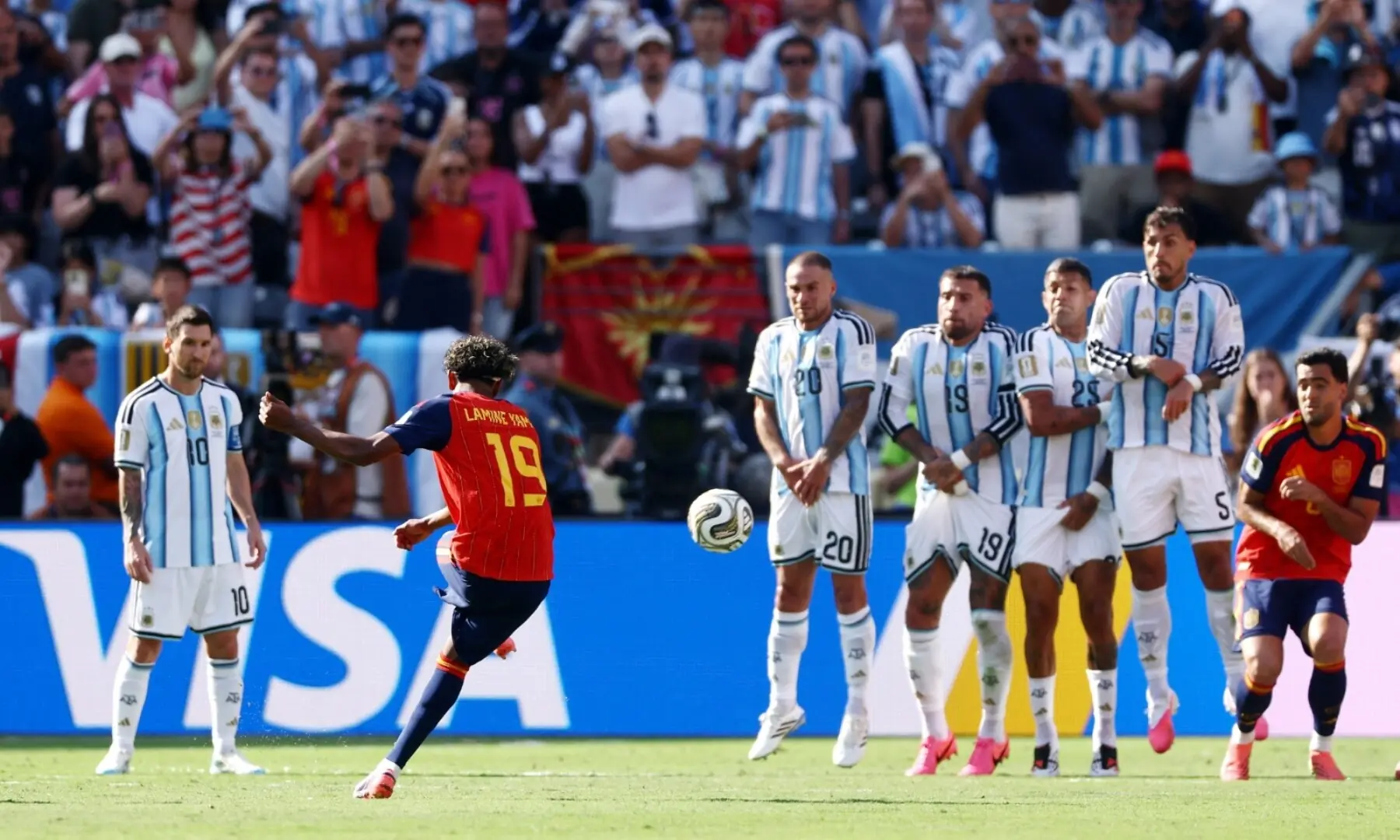
Spain’s Lamine Yamal takes a free kick during the 2026 FIFA World Cup final between Spain and Argentina at the New York/New Jersey Stadium, East Rutherford, New Jersey, the US on July 19, 2026. — Reuters

Luis de la Fuente’s team represented a modern evolution of the Spanish footballing ideal. This was not possession for possession’s sake. Spain circulated the ball with purpose, pressed aggressively when they lost it and constantly moved Argentina’s defensive structure from side to side.

The result was a familiar but increasingly devastating Spanish pattern. Argentina were pulled towards the ball, only for Spain to move it elsewhere. Their opponents were made to run, then run some more. It was the same passing carousel that had left France dizzy in the semi-final, and Argentina never truly found a way off it.

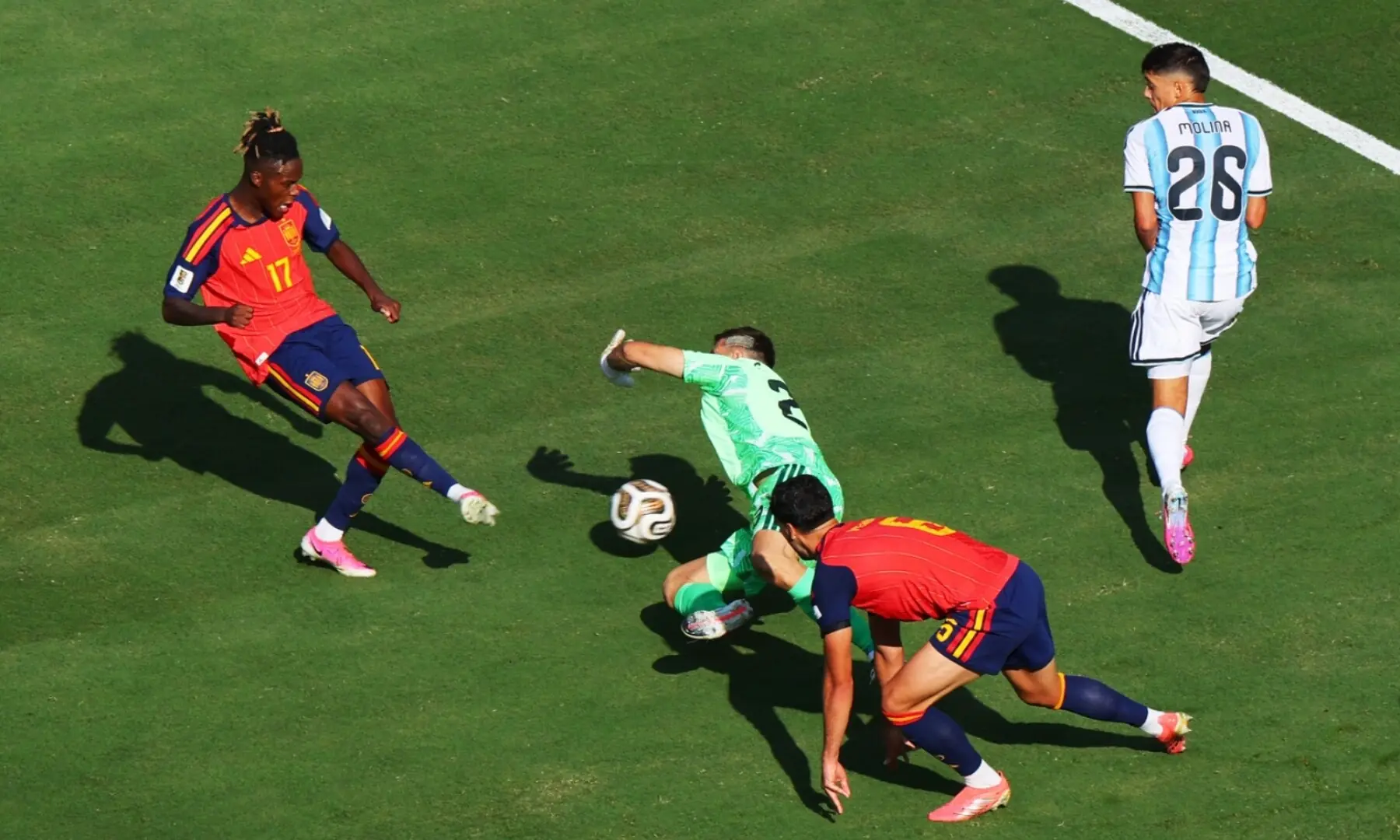
Spain’s Nico Williams scores a goal that is later disallowed during the 2026 FIFA World Cup final between Spain and Argentina at the New York/New Jersey Stadium, East Rutherford, New Jersey, the US on July 19, 2026. — Reuters

Spain’s control began in midfield, where Rodri provided the authority and composure while Pedri and Fabián Ruiz gave the team movement, imagination and technical superiority. Argentina’s midfield, led by Enzo Fernández, was unable to impose itself on the match. By the later stages, the frustration had become visible, with Fernández eventually sent off after receiving a second yellow card.

The imbalance was reflected in the numbers. Spain enjoyed the overwhelming share of possession, created significantly more opportunities and largely prevented Argentina from producing the kind of transitions on which their attack had thrived throughout the tournament. Messi and Lautaro Martínez were repeatedly isolated, while Spain’s defensive line dealt with the occasional threat that did emerge.

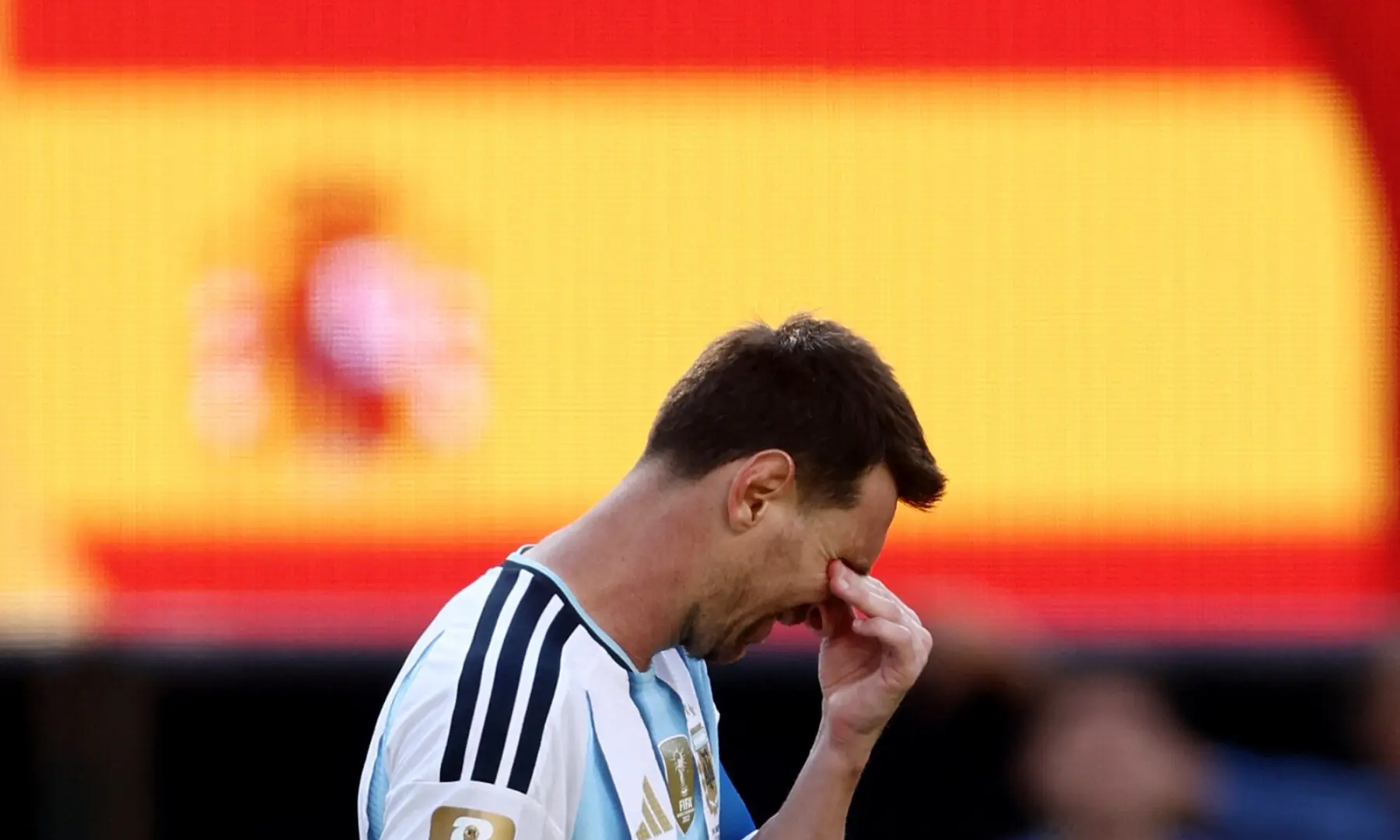
Argentina’s Lionel Messi reacts during the 2026 FIFA World Cup final between Spain and Argentina at the New York/New Jersey Stadium, East Rutherford, New Jersey, the US on July 19, 2026. — Reuters

Argentina had fought their way through difficult moments throughout the competition. They had survived, recovered and found ways to win. But Spain presented a different kind of challenge. There was little to recover from because Spain rarely allowed Argentina to establish any rhythm in the first place.

Even the injuries that weakened Argentina’s defensive stability early in the match could not fully explain their struggles. Spain had simply established a level of control that made Argentina look increasingly reactive. The defending champions were not beaten by one moment of brilliance. They were gradually suffocated by a team that was better organised, technically superior and more comfortable with the demands of the occasion.

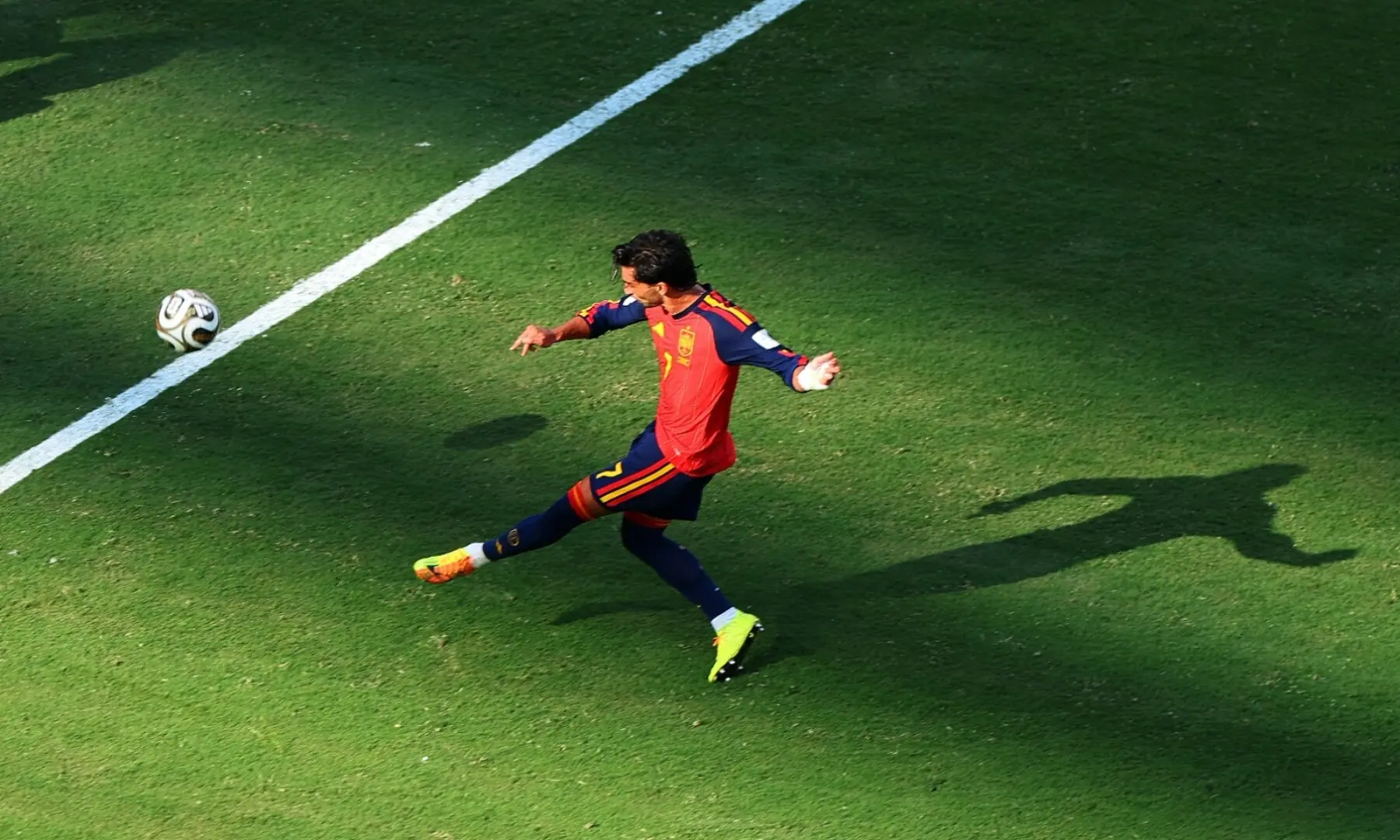
The decisive moment finally arrived in the 106th minute. Ferran Torres, introduced from the bench, finished the move that Spain had spent so long threatening to create. It was Spain’s first goal in a World Cup final since Andrés Iniesta’s winner in 2010 and, given the balance of the match, a deserved reward for their sustained dominance.

Spain’s Ferran Torres scores the winning goal during the 2026 FIFA World Cup final between Spain and Argentina at the New York/New Jersey Stadium, East Rutherford, New Jersey, the US on July 19, 2026. — Reuters

Argentina tried to respond. Even with 10 men, they pushed forward in the closing stages, but their efforts produced little beyond half-chances. The magic that had carried Messi and Argentina to the title in 2022 never arrived.

Messi, appearing in a record third World Cup final and playing in what was expected to be his farewell tournament, was unable to change the course of the match. There was no late intervention, no moment that could tilt the contest back towards Argentina. This time, the collective was simply too strong for the individual.

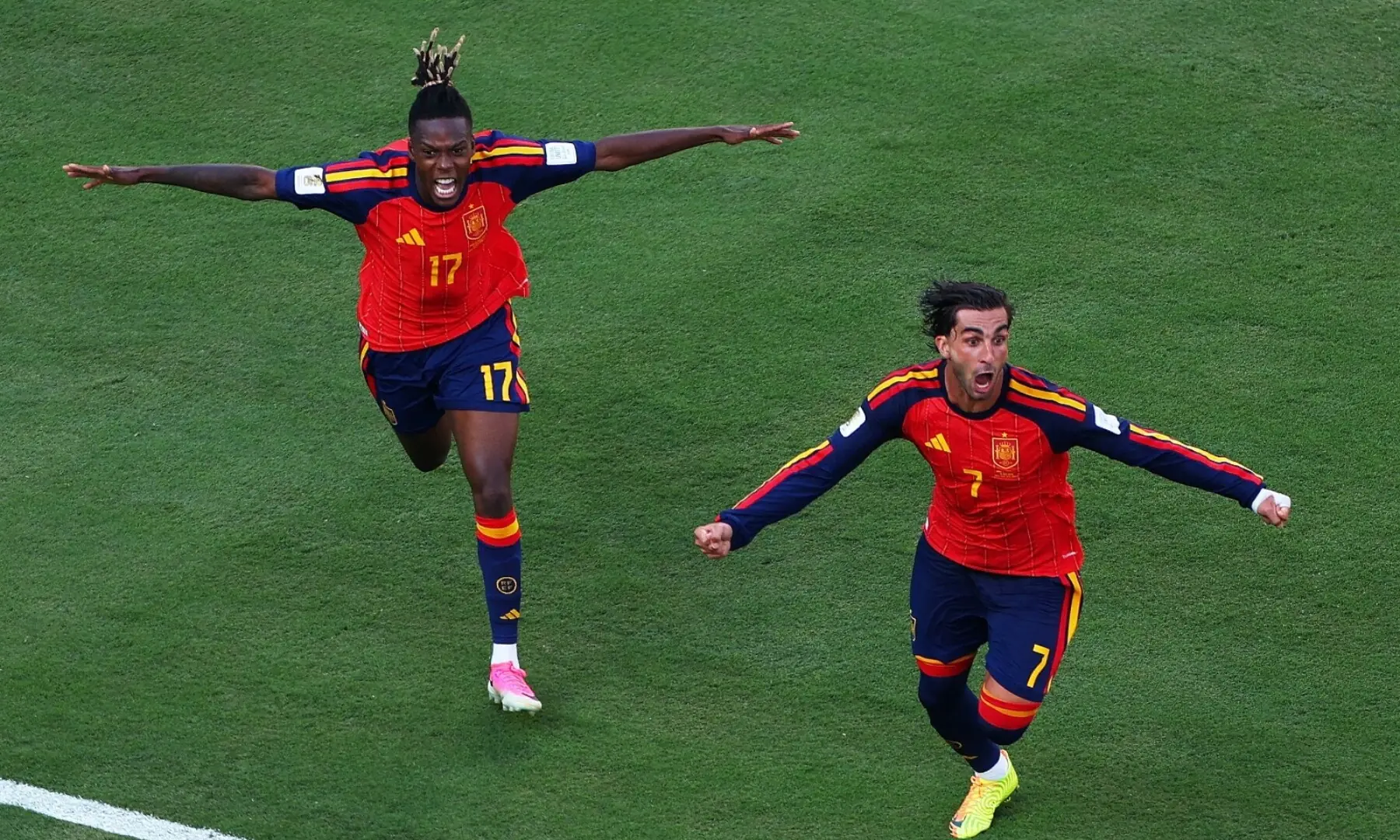
Spain’s Nico Williams (L) and Ferran Torres (R) celebrate winning the World Cup over Argentina at the New York/New Jersey Stadium, East Rutherford, New Jersey, the US on July 19, 2026. — Reuters

Spain had been building towards this moment for years. Their triumph is a continuation of the philosophy that once made them the dominant force in international football, but it is also something new. The old Spanish team was built around the extraordinary midfield of Xavi and Andrés Iniesta. This one possesses a different energy, driven by a younger generation led by players such as Lamine Yamal and supported by a squad capable of combining technical excellence with physical intensity.

The victory also represents a changing of the guard. Messi’s World Cup story appears to have reached its final chapter, while Spain’s next one has only just begun.

Argentina arrived as champions and left beaten. Spain arrived as one of the tournament favourites and left as the team that had made the strongest case of all.

They did not need a classic final. They did not need chaos, drama or a succession of improbable comebacks. Spain won through control.

And by the time Ferran Torres struck in extra time, the final had already felt decided.


from Dawn - Home https://ift.tt/lV1c02J

Saturday, 18 July 2026

Policemen martyred in Ziarat attack buried as Quetta sit-in ends

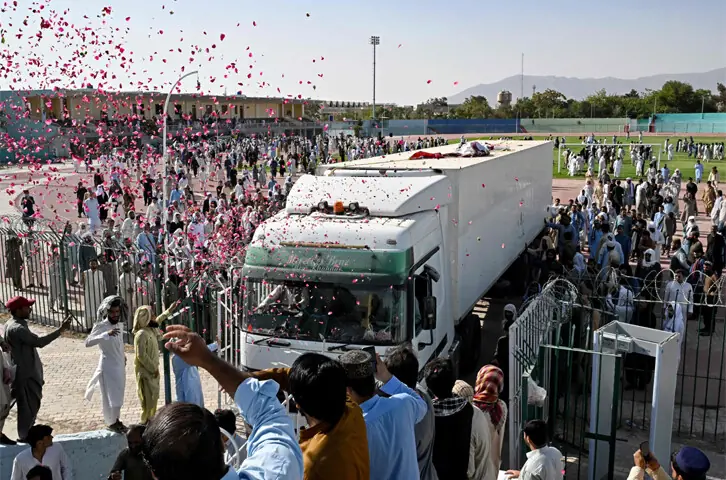
 Mourners shower rose petals on a vehicle carrying coffins of the martyred police personnel.—AFP
Mourners shower rose petals on a vehicle carrying coffins of the martyred police personnel.—AFP

• Thousands attend funeral prayers offered at Quetta’s Ayub Stadium amid strict security arrangements
• Koila Phatak, police stations, educational institutions renamed after martyrs
• Bugti reaffirms commitment to ensuring timely implementation of accord

QUETTA: The pol­icemen who were martyred in the Ziarat terrorist attack were buried in their native towns on Saturday after their funeral prayers were offered at Ayub Stadium, Quetta, attended by thousands of people following the culmination of a 10-day-long sit-in by their relatives.

The sit-in committee agreed to call off the protest after a Friday-night agreement with the provincial government, in which all of their demands, including the call for a judicial probe, were accepted.

Besides other measures, the government also agreed to constitute a judicial commission to probe the attacks in Ziarat and Hanna Urak, in which a total of 32 people — 27 policemen in Ziarat and five civilians in Hanna Urak — were martyred.

Their bodies were brought to the stadium from the Shuhada-i-Ziarat Chowk (formerly Koila Phatak Chowk) for funeral prayers in a big procession. The funeral was attended by thousands of people, including politicians, provincial ministers, tribal elders, and the family members of the deceased, amid strict security arrangements. They were later sent to their native towns for burial with state honours.

The district administration deployed a heavy contingent of security forces, including police and the paramilitary forces, in and around the stadium. It also deployed snipers on the rooftops in the area.

The families of the slain policemen had been holding the sit-in at Koila Phatak since July 9, along with the bodies of the martyrs. It may be noted that 27 policemen were martyred in a terrorist attack on a police post in Ziarat on July 6: nine police personnel were killed on the spot, while 18 were killed by the terrorists after being kidnapped. The attack came a day after armed men attacked the Hanna Urak Valley area on the outskirts of Quetta, killing five people. In response to these attacks, security forces responded with a days-long clearance operation, named Operation Shaban, during which 91 terrorists were killed.

Police stations renamed

The Balochistan government started immediate implementation of the agreement’s provisions. As a “token of acknowledgement of the invaluable sacrifices” of the martyred policemen, it was decided to rename Koila Phatak Chowk as Shuhada-i-Ziarat Chowk with immediate effect, as per a July 17 notification that was issued right after the agreement.

Similarly, it was decided to rename government buildings, police stations, educational institutions, and healthcare facilities in the Ziarat district after the martyrs, who laid down their lives while performing duties in the fight against terrorism. In this regard, the principal secretary to the Balochistan chief minister directed the home, education and health departments to complete the process of renaming the relevant government institutions and obtain approval from the competent authority.

Chief Minister Sarfraz Bugti stated that the government was ensuring full implementation of all commitments and provisions of the agreement made with the families of the martyrs. He said that the martyrs who sacrificed their lives “in defence of the country, for the establishment of peace, and for the protection of the lives and property of the people are a source of pride for the entire nation”.

“Naming public institutions after them is a meaningful tribute that will preserve their legacy and inspire future generations with their courage, dedication, and sense of duty,” he remarked.

The chief minister reaffirmed the government’s commitment to honouring the martyrs and their families, promoting their welfare, and ensuring the timely implementation of all commitments made under the agreement.

On Friday, the Balochistan government accepted all demands of the protesters, including the formation of a judicial commission to probe both attacks.

The agreement was signed by Health Minister Bukhat Muhammad Kakar, while Pashtunkhwa Milli Awami Party Secretary General Abdul Rahim Ziaratwal signed on behalf of the protesting families.

Published in Dawn, July 19th, 2026


from Dawn - Home https://ift.tt/fRWMaAU

England edge France 6-4 in chaotic World Cup bronze match

England beat France 6-4 in a chaotic World Cup third-place playoff on Saturday as Kylian Mbappe became the all-time leading scorer in World Cup history.

Both teams had higher aspirations at the 2026 tournament but suffered painful semi-final exits — France were outplayed by Spain while England suffered a late collapse against Argentina.

Both coaches made multiple changes for the match in the oppressive heat of Miami, with a host of stars on the bench at the start.

England boss Thomas Tuchel left out Harry Kane and Jude Bellingham from his starting line-up while Deschamps, stepping down after 14 years at the helm, omitted Bradley Barcola and Ousmane Dembele.

Arsenal midfielder Declan Rice put England ahead with a goal from distance in the third minute and Ezri Konsa headed home to make it 2-0.

Kylian Mbappe and Michael Olise were a threat as France searched for a way back into the game but they found England’s second-choice goalkeeper Dean Henderson in top form.

The game threatened to become embarrassing for France when Bukayo Saka made it 3-0 after a swift break.

And it was 4-0 in first-half stoppage time when Saka scored his second goal of the game, celebrated with a fist pump by Tuchel.

France coach Didier Deschamps told French TV channel M6 that the first-half display had been “catastrophic”, urging his men to show pride.

He made four changes, bringing on Dembele, Dayot Upamecano, Lucas Digne and Barcola and was rewarded almost instantly when Mbappe scored his ninth goal of the tournament to move clear of Lionel Messi at the top of the Golden Boot standings.

The game had now totally changed complexion and Barcola pulled another goal back, with Deschamps clenching his fist on the bench.

Mbappe then netted his second of the game to become the all-time leading World Cup goalscorer with 22 goals — slotting home from Olise’s pass.

That put him two ahead of Messi in the race to finish as top scorer at the 2026 tournament.

France squandered several chances to equalise and England were handed a chance to extend their lead when Malo Gusto brought down Djed Spence in the penalty area.

Saka stepped up to the spot and converted to complete his hat-trick.

There was still time for Dembele to grab a fourth for France but Bellingham then strode forward to score the 10th goal of the match with an individual effort.

In doing so Bellingham became the first England player to score seven goals at a World Cup.

By finishing third, England secured their best result at a World Cup since winning the tournament in 1966, though they will carry bitter memories of their defeat by defending champions Argentina.

Deschamps led France to World Cup glory in 2018 and finished as runners-up four years ago.

Les Bleus were favourites to win the 2026 tournament after a sensational start but were well-beaten 2-0 by Spain in the semi-finals.

Three-time champions Argentina face European champions Spain in the final in East Rutherford, New Jersey, on Sunday.


from Dawn - Home https://ift.tt/jVA5YTr

Palestinian teen footballer dies after being shot during settler attack in occupied West Bank

A 17-year-old Palestinian footballer died on Saturday, a week after he was shot during an attack by Israeli settlers in the occupied West Bank, according to officials and relatives.

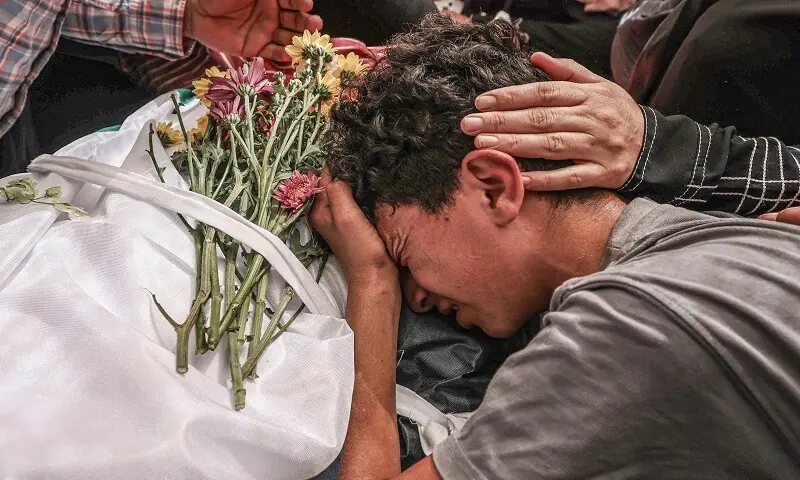
Dozens of mourners dressed in black carried the body of Fadi Hamdallah al-Nassan — a player for Al-Mughayyir Club and a member of the Palestinian national youth team — from the Palestine Medical Complex in Ramallah to his village for burial.

The Palestine Football Association accused Israeli forces of shooting Nassan while settlers were attacking the village on July 11.

The young player was reportedly shot in the thigh during the attack. His leg was amputated, and he later died from his injuries, the association said.

The Israeli military did not immediately respond to an AFP request for comment Saturday.

A relative mourns over the body of 17-year-old Fadi al-Naasan during his funeral in the village of Al-Mughayyir, east of Ramallah in the Israeli-occupied West Bank, on July 18, 2026. — AFP

“He loved football,” his father, Hamdallah Al-Nassan, told AFP.

“When the settlers attacked, he heard the screams of the girls and women,” he said. “He went to the scene of the attack and was killed.”

The teenager’s mother, Hanan al-Nassan, said her son was well-liked in the village.

“He was a good student, good in sports, and loved playing football.
Everyone loved him,” she said.

“May God accept him as a martyr.”

The Palestinian official news agency Wafa also reported that Nassan was wounded and his leg amputated, adding that two other residents were hit by rubber bullets fired by Israeli forces, while a 10-year-old boy was hit on the head by a stun grenade.

Since the start of the war in Gaza in October 2023, the United Nations has reported a sharp increase in violence attributed to Israeli settlers in the West Bank.

Israeli soldiers or settlers have killed at least 1,088 Palestinians in the West Bank since October 2023, according to an AFP tally based on Palestinian health ministry data.

Earlier this week, Israel’s security cabinet approved a budget of $434 million for establishing 34 new settlements in the occupied West Bank, right-wing Finance Minister Bezalel Smotrich said.

UN bodies, Palestinians and most countries view the settlements as illegal under international conventions and a primary obstacle to peace.

Smotrich , who has long opposed Palestinian statehood, is head of the Reli­gious Zionism party that draws much of its support from settlements and is running in the upcoming legislative election on Oct 27.

The planned settlements would bring the total established under his four-year tenure to 103.


from Dawn - Home https://ift.tt/MEDKF6U

Friday, 17 July 2026

Messi eyes glorious farewell as Spain, Argentina clash in World Cup final

Spanish elan meets Argentinian steel in a historic World Cup final on Sunday which sees the reigning champions of Europe and South America battle for football’s ultimate prize.

Holders Argentina are bidding to become the first team in 64 years to successfully defend the title, in what is almost certainly the final World Cup match of captain Lionel Messi’s career.

Spain are aiming to thwart those ambitions by clinching the country’s second World Cup crown following their maiden victory in 2010.

US President Donald Trump will be among a star-studded crowd of just over 80,000 spectators at the MetLife Stadium in East Rutherford as the largest World Cup in history reaches its climax.

World Cup officials have said they are “monitoring closely” air quality from Canadian wildfires affecting the region around the final, which kicks off at 12am PST.

The final will also see an unprecedented 25-30 minute half-time interval for a Super Bowl-style concert featuring the likes of Madonna, Shakira and Justin Bieber.

This combination of file photos shows Argentina’s forward Lionel Messi in Atlanta on July 7, 2026 (L); and Spain’s forward Lamine Yamal in Inglewood. — AFP

But the real action will unfold on the pitch in a cross-continental clash of footballing titans that bristles with sub-plots.

At the centre of the drama will be Argentina’s Messi, the 39-year-old genius regarded by many as the greatest football player in history.

The veteran superstar will become only the second man ever to play in three World Cup finals, matching the achievement of Brazilian great Cafu in 1994, 1998 and 2002.

Messi has enjoyed a vintage World Cup campaign and is on course for the Golden Boot after scoring eight goals in Argentina’s journey to the final.

Repeated escape acts

More significantly, the eight-time Ballon D’Or winner has repeatedly rescued Argentina at moments when they appeared headed for the exit.

Messi was the driving force of an incredible comeback victory over Egypt in the last 16, when the South Americans trailed 2-0 with 11 minutes to go before eventually winning 3-2.

He then provided two assists in a dramatic come-from-behind 2-1 defeat of England in Wednesday’s semi-final in Atlanta.

That victory embodied Argentina’s dogged, never-say-die approach, a rugged resilience forged under head coach Lionel Scaloni.

Scaloni, who has led Argentina to back-to-back Copa America wins either side of a 2022 World Cup triumph, attributes his team’s success to fearlessness.

“This group is difficult to explain,” he said. “It is a show of the collectiveness, the brotherhood that we are in, the willingness to fight to the very end.

“I know the guys. They fear nothing.” Argentina’s astonishing fortitude is likely to face its most searching examination of the tournament in Sunday’s blockbuster.

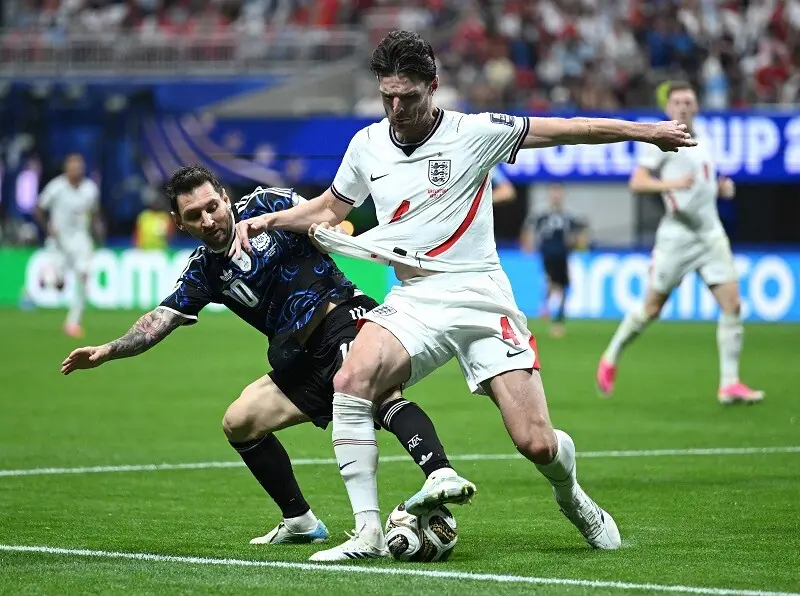
Declan Rice of England is challenged by Lionel Messi of Argentina during the FIFA World Cup 2026 Semi Final match between England and Argentina at Atlanta Stadium on July 15, 2026. — AFP

Spain have gradually built momentum in the early rounds before arriving in the final with a magnificent performance to defeat favourites France 2-0 in the semi-finals.

That performance underscored the strengths of Spain coach Luis de la Fuente’s squad, who neutralised France’s potent attacking arsenal with their trademark brand of skilful possession-based football.

Spain’s superb midfield led by captain Rodri, Fabian Ruiz and Dani Olmo ran rings around France, biding their time before carving the openings which led to the decisive goals.

Ring of steel

Behind them, Spain’s defence has been the best in the tournament, conceding just one goal with six clean sheets in seven matches.

Victory and another clean sheet on Sunday would see Spain set a record for the fewest goals ever conceded by a World Cup-winning team.

In attack, Spanish prodigy Lamine Yamal could well prove decisive.

The 19-year-old Barcelona winger who was the star of Spain’s European Championship-winning campaign in Germany two years ago has not been at his electrifying best in this tournament as he works his way back from a hamstring injury.

But Yamal provided flashes of his brilliance in the semi-final defeat of France, winning the penalty that gave La Roja a crucial lead and having what would have been a superb third goal ruled out after a fractional offside decision.

Spain’s charismatic manager de la Fuente meanwhile will be facing a personal duel against a former student in Argentine counterpart Scaloni.

De la Fuente, 65, who took over as Spain coach in 2022 after a successful stint as youth team manager, mentored Scaloni when the Argentina coach was studying for his professional licence in 2018.

Scaloni, 48, who has strong personal and professional ties to Spain, where he lives, says he will put his friendship with de la Fuente on pause for Sunday’s final.

“He was my mentor, and he taught me everything I know and now we are facing each other in a final,” Scaloni said of de la Fuente.

“Everyone knows I live in Spain and have Spanish family. And I’m very, very sorry, but on Sunday I’m going to try to beat him. “


from Dawn - Home https://ift.tt/cynRw8m

France blocks access to online prediction platform Polymarket

France said Friday it was blocking access to the online prediction market Polymarket, as punters continued to make bets despite a ban already in place.

The national gaming authority ANJ said that Polymarket’s webpage would be blocked on French territory, which adds to a November 2024 ban on financial transactions to the site.

Polymarket is one of a number of online prediction markets which allow people to bet on the outcome of future events.

The ANJ said the site’s continued availability — where betting odds on different events are updated in real time — constituted advertising.

“Advertising, by any means whatsoever, in favour of an unauthorised betting or gambling site is a criminal offence,” the ANJ said, and noted the fines could reach 100,000 euros ($114,000).

The regulator said that despite the ban on transactions from French accounts, visits from French internet addresses to Polymarket’s site have been rising, hitting 578,751 last month.

The betting markets have caused a number of problems.

France’s weather agency, Meteo-France, filed a complaint in April after one of its weather probes was hacked in order to fix bets on Polymarkets.

A US soldier is facing federal charges for using classified information to bet on online prediction markets related to the US operation in January to capture former Venezuelan president Nicolas Maduro. He allegedly made more than $400,000.

The White House said Thursday a teleprompter operator had been suspended over allegations he placed bets with a prediction market on the content of US President Donald Trump’s speeches.

France is one of a number of European countries that restrict or block access to online prediction markets such as Germany, Italy and Spain, according to the ANJ.

France allows online sports betting.


from Dawn - Home https://ift.tt/lAwz0ru

Thursday, 16 July 2026

Barren reforms

PRIME Minister Shehbaz Sharif’s assertion that agriculture and livestock hold the key to Pakistan’s quick economic revival is spot-on. The sector contributes almost a quarter of GDP, employs well over a third of the labour force and remains the largest source of livelihoods. Livestock alone accounts for more than 60pc of agriculture’s value addition, while Pakistan ranks among the world’s largest milk producers, and possesses considerable untapped potential in both milk and meat exports.

Few sectors offer comparable opportunities to generate growth, reduce poverty, improve food security and earn foreign exchange simultaneously. But the PM’s declaration that the economy can be revived within a year through agriculture highlights the gap between ambition and policy execution. The agricultural crisis has never been about the absence of potential. It is the consequence of decades of policy neglect and inconsistency, institutional decay and distorted incentives.

While successive governments have acknowledged the sector’s importance, budgetary allocations, research spending, extension services, water management, market reforms and investment priorities have not reflected that recognition. The current year’s federal and provincial budgets are no exception. Despite repeated references to economic transformation, agriculture barely figures in official priorities. This contradiction is becoming increasingly costly.

Pakistan now imports billions of dollars’ worth of food and raw materials for its textile and clothing industry, and its food exports have weakened over time. This is eroding precious foreign exchange at a time when the economy remains dependent on external financing. Rising production costs, unpredictable pricing, market manipulation, inadequate storage and weak value chains continue to undermine farmers’ incomes. Farmers are expected to increase production while bearing risks that neither markets nor public policy adequately mitigate.

Mr Sharif’s emphasis on technology, AI, disease control and value addition must be lauded. Yet technology cannot compensate for dysfunctional policy. Farmers will not invest simply because AI is introduced into agriculture if fertilisers remain expensive, energy costs continue to rise, water becomes increasingly scarce and markets fail to offer remunerative prices. With industry struggling and exports stagnating, agriculture remains one of the few sectors capable of driving inclusive growth.

But this demands actual reforms. It requires strengthening research, developing indigenous vaccines, improving traceability systems, correcting market distortions, expanding rural credit, investing in climate resilience, enhancing irrigation efficiency and creating incentives for private investment across agricultural value chains.

Every government promises to transform agriculture; few are willing to undertake the reforms needed to achieve that aim. Declarations that agriculture can revive the economy will remain aspirational so long as the authorities continue to avoid policy reforms.

Published in Dawn, July 17th, 2026


from Dawn - Home https://ift.tt/lUoy5RG

Gaza reconstruction plan under Trump’s Board of Peace reduced to pilot project: British publication

The recovery plan for war-battered Gaza, under US President Donald Trump’s Board of Peace (BoP), has been significantly scaled back and, instead of reconstructing the entire territory, now envisions a small pilot project in the south of the besieged territory, the British publication The Guardian reported on Thursday.

The board was initially proposed in September 2025 and formally established in January. Under its charter, the US government serves as its official depository and Trump has designated the Donald J Trump Institute of Peace in Washington as the Board’s headquarters.

A UN Security Council resolution adopted in mid-November last year authorised the board, along with cooperating states, to establish an international stabilisation force in Gaza following a ceasefire that began in October under a Trump-backed plan accepted by Israel and Hamas.

According to the publication, the new pilot project now aims to construct a small temporary camp for a fraction of Gaza’s population, with a Palestinian administration, police and a small contingent of the International Security Force (ISF).

The plan is not expected to take shape before the end of 2026.

However, some steps have been taken in recent weeks to initiate the process, the British publication said. It said some Moroccan and Kosovan officers had arrived in Israel to form the cadre of the ISF, which is intended to protect the pilot camp, while a logistics base is under construction near Kerem Shalom to house the force’s vehicles, equipment and other material.

Construction on the pilot camp, situated near Rafah, to house civilians has yet to begin. “Satellite images of the area show disturbed earth but no new structures. Substantial progress is not expected before Israel holds elections on 27 October, which could bring down Benjamin Netanyahu’s far-right coalition government,” said The Guardian in its report.

An unnamed diplomat quoted in the report said that the BoP had “no choice but to make the most of very limited progress, as an admission of failure would open the way for extreme factions in the Israeli government with radically different plans for Gaza”.

“The aim is just to keep something going, keep the ball in play, because if you stop there are others with a more extreme agenda just waiting to jump in and take over, and they are talking about wholesale population transfer and colonisation,” the diplomat said.

There are growing concerns that Netanyahu, facing the prospect of electoral defeat, may launch another full-scale offensive in Gaza ahead of the October vote, the report added.

The publication’s report further added that Israeli officials have repeatedly suggested that a return to war is inevitable, citing Hamas’s refusal to disarm. Hamas, however, has said it is willing to lay down its weapons under certain conditions and participated in negotiations in Cairo over the weekend on possible disarmament mechanisms.

However, the Palestinian resistance group is unlikely to disarm as long as Israel keeps carrying out strikes in Gaza and continues to occupy large swathes of Gaza.

In January, Trump’s son-in-law Jared Kushner pledged that aid access would be expanded and basic infrastructure, including water, sewage and electricity systems, hospitals and bakeries, would be restored across the Gaza Strip within 100 days.

The pilot camp outlined in the current blueprint would comprise portable cabins for tens of thousands of displaced Palestinians in Gaza and would be established in the buffer zone along the ceasefire line near Rafah, said the publication’s report, adding that the camp would be overseen by the ISF and a specially trained Palestinian police force.

“Preference for settlement in the pilot camp would be given to former residents of the Rafah area, but it is not clear what other criteria would be used in vetting Palestinians wanting to move there,” added The Guardian.

The report also touched upon funds for the reconstruction of Gaza, stating that very little of the $17bn originally pledged for Trump’s 20-point peace plan for Gaza has actually materialised.

Pakistan is among the 14 countries that signed the charter of the Board of Peace on January 22 on the sidelines of the World Economic Forum in Davos, becoming a founding member of the body.

The list of founding members also includes Argentina, Armenia, Azerbaijan, Albania, Bahrain, Belarus, Bulgaria, Cambodia, El Salvador, Egypt, Hungary, Indonesia, Jordan, Kazakhstan, Kosovo, Kuwait, Mongolia, Morocco, Paraguay, Qatar, Saudi Arabia, Turkiye, the United Arab Emirates, Uzbekistan, and Vietnam, spanning the Middle East, Asia, Europe, Latin America and the Caucasus.

The board was originally conceived to oversee the ceasefire and reconstruction of Gaza, but its charter expands its mandate to peace-building in all areas affected by or at risk of conflict.


from Dawn - Home https://ift.tt/xiCe2A9

Chenab remains in high flood as rains lash held Kashmir, Punjab

• Flood Forecasting Division warns flows may rise further by July 25 amid new monsoon spell • Urban flooding likely in parts of Punjab, KP a...